Hearing Wellness Journey Podcast
21- Why Is My Ear Clogged for Days? Sudden Hearing Loss Explained
Listen and Subscribe on Apple Podcasts
Listen and Subscribe on Spotify
#21: Why Is My Ear Clogged for Days? Sudden Hearing Loss Explained
SHOW NOTES:
Dr. Dawn Heiman: [00:00:00] Okay, so here's the debate. Do we do a short, quick podcast on why it is important if you have a sudden change in your hearing to see an audiologist? Or do we make this a long podcast or do we do a two part where I feel like the information needs to be out there? So if you guys don't mind, we do a short podcast about.
What should you do if you notice a change in your hearing? What is the most efficient use of your time? Because a sudden sensory neural hearing loss, if that's what you have, 'cause we don't know. If you text me and you say, your hearing feels clogged, I don't know. And you're living in Manhattan and I'm in Chicago as an audiologist, what am I gonna tell you?
So I think this, let's do a short podcast here and hopefully it can help some people and we'll get straight to the point, but then we'll do another one where we get into the long version of answering all the the questions of how and why.
[00:01:00] Welcome to the Hearing Wellness Journey podcast, an exploration of determination, hope, self discovery, and triumph. We'll share the personal experiences of those that are living with hearing loss and provide a haven for their stories to show others that they are not alone in this journey.
Dr. Dawn Heiman: So. Okay, so the last, like, I feel like four to six weeks, I've had four people reach out to me from around the country that have had a clogging in their ear, and they're asking me what should they do?
Dr. Emily Johnson: Agreed. And I think it's important to note that like it's a sudden change. It's not, oh, I've had hearing loss and like, eh, [00:02:00] I think it's gotten worse over the past year or two. It's like, you went to bed, totally fine. You woke up and you couldn't hear out of your left ear, or you couldn't hear out of both ears or everything was kind of muffled, just kind of out of the blue.
Um, and not a gradual change in your hearing. Yeah's what? '
Dr. Dawn Heiman: cause
Dr. Emily Johnson: if
Dr. Dawn Heiman: is a big deal, right? It is a big deal. And sometimes though people are like, well, I'm just gonna wait. I'm sure it's just wax. But days is the critical period. If that hearing has changed and we find it came from, the inner ear treatment needs to be started right away.
Dr. Stephanie Michaelides: Yeah. Otherwise, it can definitely stay permanent hearing loss. That's why it's, it's, it is kind of an emergency, unless you're, I would say, used to getting wax or something like that. You just feel a little bit blocked and you go every three months and get your ears cleaned. You could just have wax in there.
Yes. But that's a thing until we look in there, we don't know. And that can mean your, your, your hearing. [00:03:00] That could really mean that that's, it's gonna take your hearing if you don't do something like immediately about it.
Lindsey Doherty, HIS: And so what is the recommendation for that? Is it to go to their primary? Is it to go straight to an ENT?
Are there things that they should be saying on the phone when they call the schedule?
Dr. Stephanie Michaelides: I think they definitely need to. See a start with your primary care if you're, you have one. Um, sometimes insurance companies might require, um, a primary care referral for ENT, so it just kind of depends on what your insurance is.
Um, but I definitely try to get into some, you know, someone that can look in your ears and say, this is wax, or this is not wax or fluid, or any other sort of middle ear issue. Yes. Because it might be something that simple. Yes. If they don't see
Dr. Dawn Heiman: wax, if you don't see wax, ask them to get you into an ear, nose and throat, which is an otolaryngologist office right away.
Mm-hmm. If they don't preventatively, they [00:04:00] should call ahead, find out, talk to, um, whoever's there to find out even if they can start oral steroids. Right. Like if they don't see wax, you shouldn't. Or fluid or get deployment. Yeah. You wait three months, you've lost that window of opportunity to get that hearing back.
There's a chance the hearing won't come back. But there's a really good chance that if you start treatment asap, um, it makes a difference. But everybody wants to see the ENT, but usually depending on the time of the year, it's gonna take you three months to get in. You don't have that kind of time.
Dr. Emily Johnson: Right.
So when you call, say I had a sudden change in my hearing. And specify if it's one ear or both ears. And like it happened overnight, it happened in the middle of the day. Because when they hear sudden change, that's gonna trigger kind of alarm bells and red flags when the scheduler hears those types of words.
Because that we know that it is an emergency [00:05:00] that we get you in sooner rather than later. And you know what, maybe. You show up, you get in, and it is just fluid and it can be addressed and it's not a big deal. Great. That's a lot better than waiting for six months and then finding out, ooh, well, if we had just gotten you in, we would've been able to do something about it.
But now, unfortunately, we're outside of the critical window.
Dr. Stephanie Michaelides: And keep in mind that this also happens to all different types of age range. This is just not for the elderly population. This could be someone in their thirties, someone in their twenties. Um, we've even seen it young in children too. So this is something that, you know, it goes across the whole board.
It doesn't spec specify anyone and like specifically it can affect anyone. One,
Dr. Emily Johnson: in fact, I feel like it's. More young people than older adults that I see who have had this type of change. Um, I had a patient many years ago. She went in for an unrelated surgery, nothing to do with her ears. Um, she woke up and she couldn't hear out of her right ear.[00:06:00]
And so we were able to get her in and essentially her hearing aid bottomed out. Luckily she was admitted to the hospital and we were able to get her into CENT same day and then send her over to audiology and get a hearing test. She did start steroids and while her threshold, so the softest sounds that you can hear when you push the button did improve a little bit.
The biggest thing is that she went from 0% word recognition to 80, so she was able to understand speech on that side because we were able to get her in and get her on the appropriate medications. Soon and like immediately after it happened, because you really do have, I think it's like up to 72 hours for optimal results and two weeks for promising results.
It's like, it is a really quick timeline, not something to just kinda wait around and see if it'll get better, unfortunately.
Lindsey Doherty, HIS: So when you go into your primary and you're like, ah, my ear, you know, I'm not hearing well, and [00:07:00] they say, here are some antibiotics though. How much do you push to get that referral to ENT?
When do you push to get that referral to ENT? Or do you wait a week? Would to see how antibiotics,
Dr. Stephanie Michaelides: well, it depends if they have fluid, do they have flat temps? I mean, all of this, there's lot some factors to take into it, but they're
Lindsey Doherty, HIS: primary, right?
Dr. Emily Johnson: PCP won't do that. So I always say, go see an ENT if you can go see one.
Go see one. That's
Lindsey Doherty, HIS: your your one. The worst that
Dr. Emily Johnson: happens is. That they tell you it's just wax, they remove it or they do a temp and they say it's fluid and they recommend how to treat it. But for me, I am somebody who's like, always go see an ENT, call 'em and let 'em know you've had a sudden change. I'd rather be way safe than way.
Sorry.
Dr. Dawn Heiman: I agree. I, and with all due respect for primary doctors or even MinuteClinics and. ERs and all of that. Like they have to know a little bit about everything. Mm-hmm. And they're not a specialist. [00:08:00] And it doesn't hurt if they say, oh, I see fluid. Oh, I think it's an ear infection. If they're gonna write a script for antibiotics, it does not hurt you.
Prove me wrong. But it does not hurt you to also get at least a script for steroids to get it started until you see that ENT. Because how many times have we seen people who came in and they're like, oh yeah, well it's changed. And then I went to the doctor. I went to the er and they said it was an ear infection and they put me on antibiotics and they go back in.
It still didn't work. So they put me on more antibiotics for, you know, it's been three months. Yeah. And there was never a middle ear infection. It could be an infection of the inner ear, it could be some kind of, um. Neuritis. It could be. So, it could be so many things. And honestly, from my understanding, they're not really sure why steroids help, but it does give you more nutrition and blood flow to the inner ear.
But it doesn't hurt to try and, [00:09:00] and the hearing doesn't always come back, but like you said, 72 hours, that's a big deal. Personally, if it was me and I had a change, and I know that these clinics. With, these are otolaryngologists, these are surgeons and And they're sometimes ologists and they're surgeons.
Of the surgeons. Right? They're the specialists. The specialists, and they really are kind of like royalty in the ear world. Like they're very hard to get an appointment with. I would push for talking to a nurse. I would get on, speak to somebody who can work that schedule right now and they hear I had a sudden change.
Sometimes the schedulers. Bless their hearts. They just are doing their best to to schedule, and maybe it's their first week and they don't understand sudden sensory neural hearing loss. They don't understand the ramifications of this person's life going forward, because unfortunately, if it's gone, it's gone.
Hearing aids don't help when you have no speech. Understanding ability. Right, [00:10:00] like we want to bring back that speech, understanding ability. We wanna bring back the, the hearing levels, and we wanna do it as soon as possible. And sometimes, many times there's still re residual hearing loss, but give us something to work with.
You know, hearing and communicating is, is a basic need that most of us have the luxury of having our entire life and when it's gone. It's, it's hard. And, you know, we work with people all the time that the, it's, it's hard for them where we're struggling. Did your lights just go out? Um, they're struggling to hear in background noise because they only have one good ear, right?
Dr. Emily Johnson: Right.
Dr. Dawn Heiman: Autoimmune disorders. Um, there are so many reasons why it could happen, but. If we tell you nothing, if you listen to no other podcast episode that we do, remember this, write it down. Someone has a sudden change in their [00:11:00] hearing. If it's you, a loved one, a coworker, tell them to have someone check for wax.
If there's wax, remove it. Then find out is the hearing better If it's not. See a specialist as soon as possible and see if they can start some treatment. Have them call ahead and ask, what do you recommend If this is a, a primary doctor, a nurse practitioner, a pa, someone that can write a script, find out what PI type of dosage and what they should order.
Take it very seriously. Absolutely. So like if you came to our office, we're going to get you in to see an ENT. We will help confirm that this is something that needs to be acted upon quickly. But audiologists don't write scripts. We don't th this, there's this whole team approach that we have and we refer to, um, the, uh, physician [00:12:00] MDs to help in this part.
Then they send back to us with whatever the, um, the residual hearing. Becomes, and then we help treat that. They don't treat, um, with hearing aids or tinnitus treatments or, um, auditory processing, um, treatments. Um, we rely on them for what they're really good at, and they rely on us for what we're really good at.
All right, so I hope you save some hearing today. If we get the word out, sudden sensory neural hearing loss is an inner ear change that happens outta nowhere, but there are treatments and uh, time is money. Absolutely. All right, so not to be glum. Have a fabulous day. Listen to your music, make your endorphins going.
If you're having a gloomy day, find your favorite song and listen to it twice the entire way through. Change your [00:13:00] mood and enjoy um, listening to the podcast like this, audio, books, and music. Have a good day.
Bye.
Thank you for joining us on this episode of the Hearing Wellness Journey podcast. For more information about what we do and the services we provide, please visit our website@hearingwellnessjourney.com slash podcast. Where you can find more resources based on today's discussion, as well as request to be a member of our Hearing Wellness Journey community on Facebook.
That's available for our listeners exclusively on hearing wellness [00:14:00] journey.com/podcast.
Resources Mentioned:
Our Mission:
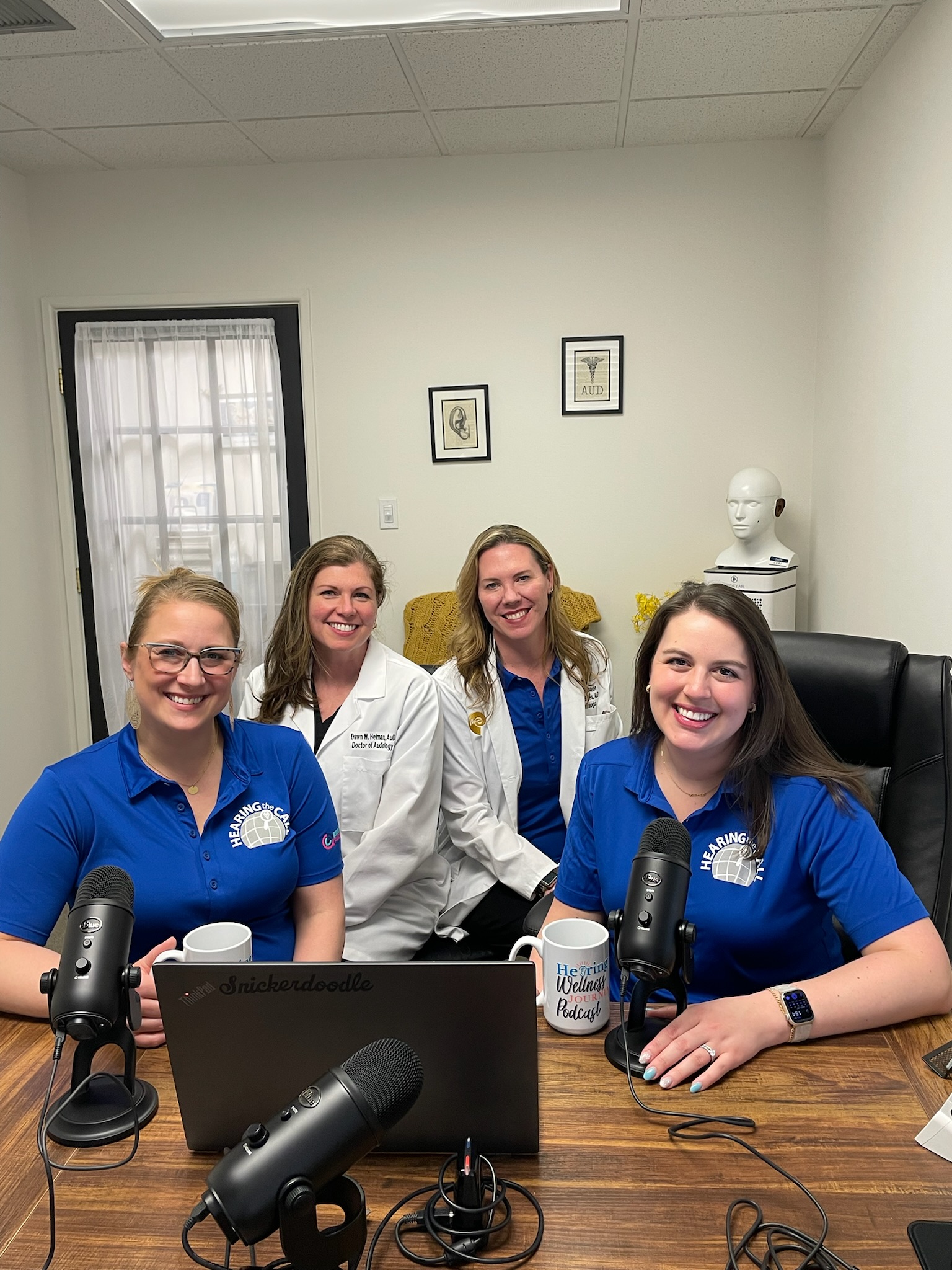
Our Hosts
We are blessed with the opportunity to help people every day who have varying degrees of hearing loss and hearing disorders. We moderate this podcast to give you the ability to listen in on others' stories of triumph and perseverance.
Stay Connected
Never miss a podcast update, webinar or the latest news
We do not share any personal information with third parties.
CHECK OUT OUR
Resources
Advanced Audiology Consultants
Our Team of Audiologists are located in Oak Brook, Illinois and are here to help you hear.
EntreAudiology
Practice Locator
Need a recommendation for a qualified audiologist? We have a practice locator to help you find a reputable practice.
Hearing Aide Certification Online Course
Teaching nurses, CNA's, and caregivers how to help assist someone who wears hearing aids.
Hearing Wellness Journey Aural Rehab Course
Teaching you everything you need to be as successful as possible with your hearing aids with a series of videos.
Contact Us
Would you like to be a part of our podcast?
We welcome you to share your story too!