Hearing Wellness Journey Podcast
22- Over the Counter Hearing and Headphones
Listen and Subscribe on Apple Podcasts
Listen and Subscribe on Spotify
#22: Over the Counter Hearing Aids and Headphones
SHOW NOTES:
Dr. Stephanie Michaelides: [00:00:00] So it, I, it depends because some of the new devices, like I know with the Apple AirPods or whatever, you can actually do kind of a self hearing test.
Welcome to the Hearing Wellness Journey podcast, an exploration of determination, hope, self discovery, and triumph. We'll share the personal experiences of those that are living with hearing loss and provide a haven for their stories to show others that they are not alone in this journey.
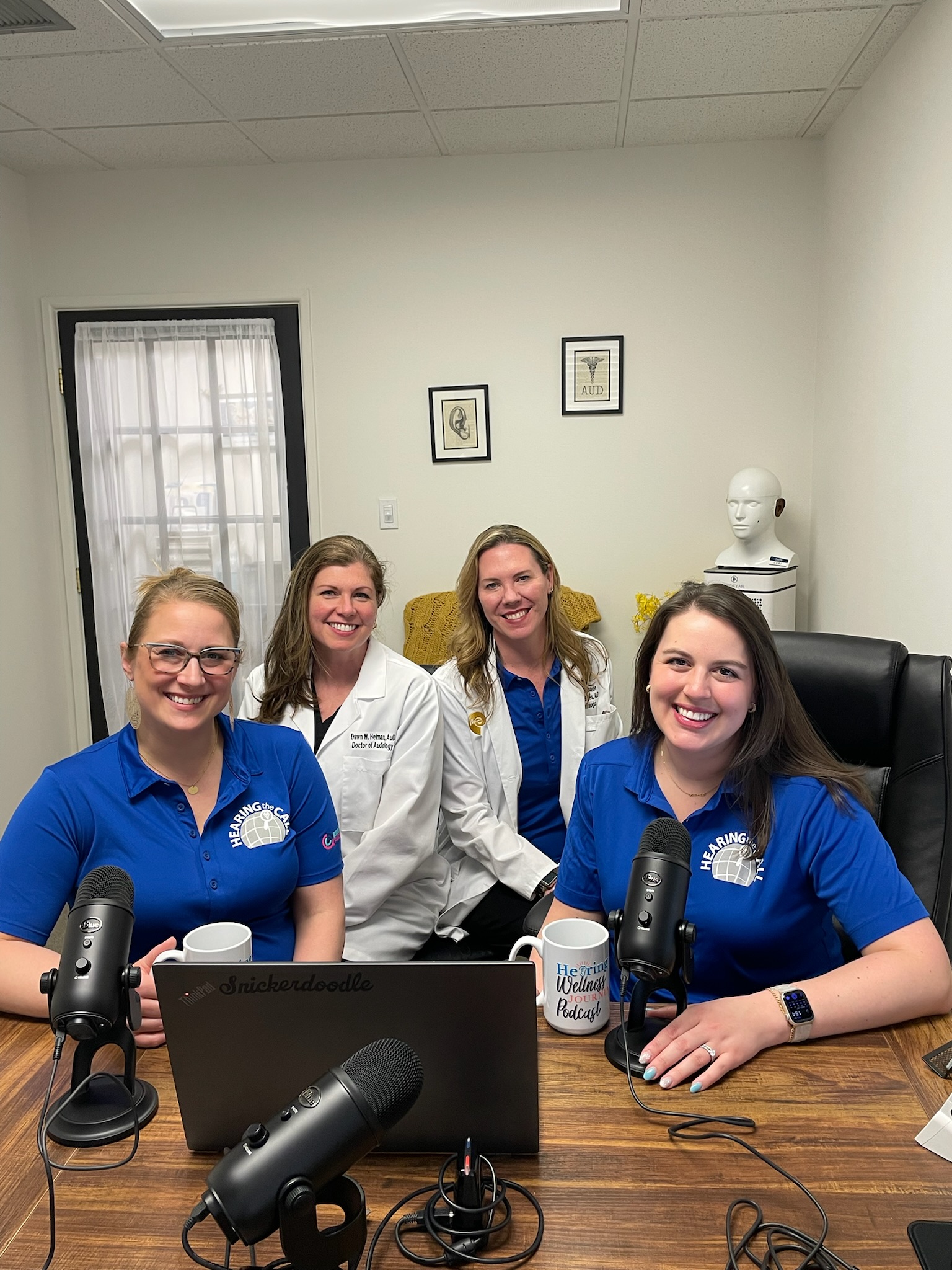
Dr. Dawn Heiman: We're back for another episode of The Hearing Wellness Journey podcast with my co-hosts Lindsey
Lindsey Doherty: Doherty,
Dr. Dawn Heiman: Dr.
Dr. Stephanie Michaelides: Emily Johnson. Dr. Stephanie Michaelides.
Dr. Dawn Heiman: And my name is Dr. Dawn Heiman, and today we are discussing OTC hearing aids or what you could call them over the counter hearing aids.
Um, what's involved, what's it like to be fit with some, why someone would choose them, how maybe [00:01:00] you could troubleshoot them if they're not working for you, and just what, what we recommend overall from what we've looked at, seen, tried, or even heard about. Mm-hmm. So anyway, who wants to start?
Dr. Stephanie Michaelides: I think over the counter hearing aids are a great start for someone who is, might have just a mild hearing loss, having a little bit of trouble, um, and just wanna try something cheap that they can, you know, actually hear, um, and just go from there.
Um,
Dr. Emily Johnson: yeah. I think it's important to remember that OTC hearing aids are targeted at self-perceived mild to moderate hearing loss. Yes. So whatever that means to you will determine if it's a right fit or not. If you feel like your hearing loss is mild to moderate, then over the counter hearing aids would be something that might be a really great entry point to [00:02:00] helping you hear a little bit better and getting that access to sound, speech language, all the world around you without.
Fully committing to a professional hearing test and prescription hearing aids.
Dr. Dawn Heiman: If I might add though, um, when they were looking at this and, um, there were federal hearings about over the counter hearing aids, perceived mild to moderate hearing loss is very different than actual mild to moderate hearing loss.
Mm-hmm. Um, perceived is actually worse than. So if I could encourage anyone to, if you perceive that you have a mild hearing loss, please do something. Definitely try these out. Yeah. But I think the point of all this is if you have a greater hearing loss than that, you really do need to see a professional.
But this is a good starting point.
Dr. Emily Johnson: Yeah. And actually we had talked about this previously on the podcast, um, before OTC devices came out. Um, in that we were actually kind of excited about it because it would get. Hearing devices [00:03:00] in front of people more and instead of like holding off, because we do know there's typically a seven year gap between when somebody starts to notice an issue to action, to um, you know, working to better themselves for that.
Um, so hopefully this is, it is a good option for some people and, um, could be short term, could be long term, but kind of a positive thing we feel. Yeah. I think it also, there's such a stigma against hearing loss and hearing aids. Yeah. And so going to see an audiologist and having your hearing tested and getting your results kind of makes it a official that you officially have hearing loss.
And that can be really scary for some people. Or maybe you are super busy and you just aren't gonna prioritize to find the time to come in and do an appointment, and you're like, you know what? I'll give these a go. Yeah. [00:04:00] So if it increases access for somebody who's either gonna choose to do nothing or pursue OTC hearing aids, then I definitely think there is a right market for it.
Our biggest concern is. Well, you've perceived mild to moderate, but you're actually severe and you're like, I try these and maybe it doesn't work out, and then you don't give it another go. You don't pursue that next level prescription. And so I think it's just figuring out, you know what? I'll give this a try and if this doesn't work for me, where do I go from here?
And what are my options?
Dr. Dawn Heiman: I think what just bumped in my head is that whole Nike slogan. Just do it. Yeah. Because you're like, um, you're gonna do something and it's kind of like DIY, do it yourself. Mm-hmm. Right over the counter is try something out, see if it works for you. If it doesn't work, it's like me going into Home Depot thinking, I'm gonna like, wait.
I don't laugh, but you don't even
Dr. Emily Johnson: need to say [00:05:00] anything. We know where this is. Or
Dr. Dawn Heiman: Joanne fabrics and making a necklace, because I don't wanna spend the money on something. I'm like, I could totally make that. And they find out you totally can't. But at least I found out the value in having a professional Make something Yes, but just do something.
Dr. Emily Johnson: Yeah. Do it.
Dr. Dawn Heiman: Yes. Is what the, the big
Lindsey Doherty: overlaying Yeah. Slogan should be here. And, and so leading into how do they do it? How do you approach it, approach getting over the counter devices? What do you need to do before you do that? Um, we get that. I had,
Dr. Dawn Heiman: uh, I've had people who schedule an appointment with me.
Yeah. Um, like a video call just to ask what should I buy? Or I've had emails they want me to reply to, what should I get? Dr. Michaelis, where do you think they should start?
Dr. Stephanie Michaelides: So it, I, it depends because some of the new devices, like I know with the Apple AirPods or whatever, you can actually do kind of a self hearing test.
Yeah. That, that's kind [00:06:00] of the basic, you gotta start with getting your hearing tested. Right. Right. Um, and I feel like coming to a professional place would be, I mean, you coming in to see us doesn't mean that you necessarily are walking out with hearing aids. Right. And we don't even know what's going on.
You could have wax. You can have something else going on. Right. But at least getting, um, a hearing test by a professional I think is definitely the starting point. Most of insurances pay for it, um, once a year. So it's not like you have to even pay anything out of pocket. But we can also kind of evaluate the whole situation.
Like maybe it's, it's, it's wax, maybe it's, um, you have a, a ear infection even, or something going on that we can, and, you know, find out. And then if you do have a mild hearing loss. Um, you know, we can give you options, but if there's, it's something more severe, something else going on, then we can also give options for that as well.
Um,
Dr. Dawn Heiman: true. Let's have a look in your ears. You know how many people I've seen and they're like, I just saw my primary doctor a couple months ago full of wax. Full of wax and you know, it's been there for years and we're like, do they really look in your ears? Mm-hmm. And we removed the wax and they're like, I can hear.
Yeah.
Dr. Stephanie Michaelides: And my tin is gone. Yeah.[00:07:00]
Dr. Emily Johnson: Yeah, I think, I mean, Google is friend or foe of, there's a lot of Dr. Google. There's good information out there, but there's a lot of information that's misleading as well. And so there's actually a website. Hearing tracker. Yeah, that does Look at how some OTC devices perform and if you're gonna go that route, I suggest that you do your research because there's such a variety that exists and exists in the cost aspect as well.
Dr. Stephanie Michaelides: Like $99 to like $2,000 to
Dr. Emily Johnson: 2000. Yeah. And for a lot of people, $2,000 isn't. Just chump change. You are gonna wanna buy a quality device if you're spending that type of money out of pocket and investing in your hearing. And so I suggest that you look at, or even talk to like [00:08:00] you, a 15 minute complimentary, say, is this even the right thing for me?
And we can help guide you of, yes, coming in to see us is gonna probably be your best bet based on your history. Or you know what? Give OTCs a try. And you know what? I've heard really good things about X, Y, and Z. We've had them come through our office and one of the things that makes us us is we do something called real ear measurements.
And so a lot of over the counter hearing aids have like self adjusting features that you can do in the app that it's connected to on your phone. And what we can do is actually hook up. Your ears and your OTC hearing aids to read out. Are these hearing aids even appropriate for you? And if you're not finding benefit, let's figure out why not.
And can your OTC hearing aids get you there? Or is it time to invest in a prescription pair? And kind of what are your [00:09:00] options? So even if you don't get them through us, we're still here to help you and guide you along the way, because ultimately better hearing care. Is our end goal and whatever it takes to get you there is what we're gonna do.
What's the number one thing you always tell people if before you purchase? I. Know the return policy. That's what I was just going to say. We've been through this before, so, and that's good luck getting your money back sometimes. That's the hard part. And so as Dr. Johnson mentioned and Dr. Michael Le, there's a wide range of price points, right?
And so I'm assuming maybe the. Less expensive, maybe don't have quite the return window that the others do.
Dr. Dawn Heiman: Right. So there's a more expensive one. So there was a $1,900 one that wasn't giving anybody their money back. That's true. And so,
Dr. Emily Johnson: because you wanna make sure that you haven't invested in something and then you're just gonna throw it in a drawer and shut it down.
Mm-hmm. And then, and then just be [00:10:00] angry. Right. Because then you feel like, and then you feel like, oh, it can't get better. It can't get better. But it can't. Yeah. So just like
Dr. Dawn Heiman: Dr. Johnson said, like, we don't want you to try something and then it doesn't work, and then just give up and say, well then look or tell the whole family, I tried, they didn't work right.
Because what if like Dr. Michaelides was saying, what if the hearing wasn't assessed correctly? Right. What if you don't have a right diagnosis? Yeah. Right. Didn't you say you had a patient that came from a different place and Yes, they had hearing aids and there was, and hearing aids,
Dr. Stephanie Michaelides: but they were just occluded with bin.
So they just had wax. Yeah, they took out the wax and the hearing was pretty much normal. So what a waste. So what if you just have
Dr. Dawn Heiman: wax? Yeah. And you just paid 9 95 at Walgreens for a boose set of hearing aids you don't even need. Right. Like start somewhere. I also think some of these apps, a lot of 'em, they do like Boose.
They have you do a self test, which is cool. Yeah. Right. But did you do it in a quiet situation or a loud situation? How loud were your headphones set? Mm-hmm. Like it's not calibrated. Were your headphones even working correctly? There's a lot of questions. So [00:11:00] why not have your hearing tested first and then put that hearing test results into your cell phone.
Dr. Emily Johnson: So let's say that they've done that, they've had their hearing tested, um, they are programming them at home, but still finding issues. So maybe they're getting a lot of squealing. Um, maybe they're, you know, it's, it's fallen out of their ears. What do we do?
Dr. Stephanie Michaelides: Oh yeah. 'cause there's no, it's not, you're not gonna make custom.
You're not gonna get custom mm-hmm. Pieces that you would from an audiology or doctor's office. Yeah. Um, so yeah, so the fit could be poor. You could have pain, you could have a lot of different things with the over the counter hearing aids that you wouldn't get if you decided to get a prescription as from an audiologist.
Dr. Emily Johnson: And I think it's important to note that. So all of the OTC hearing aids are gonna come with something called domes. Those are the little silicone pieces that go into your ear canal that let in or out an appropriate amount of sound and air. And they usually come in the generic sizes of like extra small, small, [00:12:00] medium, large.
And most of them are perfectly round. And I have yet to meet a perfectly round ear canal. Yes, still waiting for that day, but it just. Isn't the size and shape that we usually need. Or maybe you are an in-between size and anybody who's shopped for women's clothing knows what that means is that one size is a little too big, but then the other side is a little bit too small and you need that perfect fit.
And so, or one ear is different than the other. Oh yeah. Yes. Right. And they're like, that couldn't
Dr. Dawn Heiman: be, well, look at my nostrils. One smaller than the like, that's our ear canals, right? Yes. And you think, well, it came like this, so this has to be.
Dr. Emily Johnson: It's not a match pair, it's not mine. These are the options. No.
And so when you purchase over the counter, you're gonna get that manufacturer's options only. Mm-hmm. But as all of the students that I've worked with and my lovely colleagues here, know I am not a. [00:13:00] Like dome purist, I will mix and match between manufacturers because certain manufacturers have a different texture, a different shape, a different feel to them that would be best for a different person's ear canal.
And when you get something that just comes out of the box OTC, if it's not working, it's not working, and you don't have a bunch of different options. So it's just something to consider of. More personalized versus DIY.
Dr. Dawn Heiman: So she's not a dome purist. I'm not a domme purist. I've never heard that before. So what are you then?
Oh, I, you're a radical dome fitter. I don't trust her
Dr. Emily Johnson: radical accepter. I am just, I like to cross contaminate between different manufacturers, I guess. Like I just, I think that certain manufacturers make different shapes. That are really nice. Yes. Mm-hmm. And for different years. For different years. And so, and the degree of the hearing loss, it just really varies of like the configuration.
Okay, [00:14:00] if we do Oticon and Oticon and it works great, but sometimes we need to throw in a yx to get the different shape or the different silicone materials. Some of them are gray, some of them are clear. Some come with dyes that people can't tolerate. And so it just, you get a more personalized approach when you come.
In office and if you have something OTC and it's not working for you. Don't let that be the end of the line,
Dr. Stephanie Michaelides: but we're also able to do customized ear molds as well. Yes. So even with all of those things and all that cross-contamination going on, like, I can't think of a better word than that, but match, but sometimes those still don't work either.
So if that's still not working, then we're able to go in and if you have like really, really tiny ear canals or really big ones or whatever the case may be, or all it's different, um, that we're able to go in and actually make customized ear molds to make it a perfect fit, um, every time.
Dr. Dawn Heiman: Can I just say. If it's not a right fit and it gets stuck in your ear canal, it is not a medical emergency.
No. Right. You [00:15:00] do not have to go to the ER and wait for someone and then they're just gonna refer you to, they're not gonna know what to do. An audiologist. Yeah. Um, just give a call. I find an audiologist, they'll just pluck it and pull it out. Mm-hmm. Um, gosh, what was the number I think I have had at most.
Five domes
Dr. Stephanie Michaelides: in one ear. One ear. Yeah. I was gonna say mine's four. The
Dr. Dawn Heiman: floor man came up from Florida. Yep. Someone gave him extra domes. You just kept putting 'em in. Didn't know where it went because the ear, sometimes the ear traps, it grabs it and then when you pull the device out, it keeps the mold. Mm-hmm.
Or the, the dome. So anyway, we have fun plucking that on people's ears too. It happens.
Dr. Emily Johnson: Yeah, it happens. In talking about the fit of those though, to make sure that they're the right fit, that also affects. Like that squealing that I mentioned. Mm-hmm. Right. Feedback. So that's that feedback that's happening that could maybe be resolved because there's wax build up or because you just need a different size and that is something that a hearing care professional can help out with.
[00:16:00] Sorry, proper insertion. Yeah. So. Some people are very aware of where their ear canals are in space. Other people not so much. And so how many times, especially on like TV or movies, do we see people with hearing aids that are just sticking out of their ears? Mm-hmm. And you're like, I just wanna give that a nice little push into the correct place.
So sometimes if you're getting the squealing, maybe the dome does fit. But you're just not pushing it into your ear canal confidently enough, because nobody's walked you through that.
Dr. Dawn Heiman: Also, if I can, um, the domes, the, the part that goes in your ear could be the most important part of this entire process.
Yes. It'll make or break your, your success. Number one, like what you're saying, um, if this was a statistic, I'm sure somebody's gonna tell me I'm wrong, but this is what I heard. Um, if. The dome or that part is coming out of your ear, even one millimeter, you're [00:17:00] losing nine decibels of sound, probably. So if you put it in correctly and if it stays properly, you have consistent hearing, number one.
Number two, there are little holes in some of these domes for a reason. Sometimes it's like a double scoop of ice cream. Sometimes it's just one scoop of ice cream. Sometimes it looks like a little flour with holes in it. Those acoustical modifications are important depending on the type and degree, uh, configuration and degree of your hearing loss.
We look at that and we're like, whoa, that's wrong. We're like, how do you know that? I'm like, I can see it a mile away. Like, that's not gonna work for you. Right? Yeah. And we know that's why your voice is echoing, or this is why you have no volume, or this is why, and we go in and we can change those super quick.
And you're like. That's, that's amazing, right? Yeah. All, and this is the stuff, it's kind of like an electrician or a plumber or anyone comes into your house and they're like, well, I knew that I needed this tool and this because, or anyone that's ever tried drywalling, there are people, they have techniques and they know what to do in what order to do it because they've been doing it for years and they're a professional.
[00:18:00] So, but we can help you with that. Um, but it's over the counter is a great, great, great start for you. Especially, um, I think we did just did a podcast asking how do you help someone who maybe won't address their hearing. Maybe you could just set up a pair of Apple iPod Pro AirPod Pros you already have in your purse.
Mm-hmm. Sit with them, do the little hearing test. I think it's AirPod Pro Twos. Yeah. Yeah. Something like that. Yeah. You do the hearing test and then you can let them hear the improvement or even start to use the start line. Listen. And they now have a remote mic. Like you can suddenly show them, this is why this is a great thing.
Mm-hmm. Let them play with that. Now, maybe those AirPod pros, um, the battery's not gonna last all day long, or it might make their voice. Sound. Little, little basey and occluded. Or even the thick could be
Dr. Stephanie Michaelides: weird.
Dr. Dawn Heiman: It can be weird, right? Sometimes we do even custom, [00:19:00] um, molds just for those devices, but it's a starting point.
It's a wonderful way to start the conversation or show them their life could be easier.
Dr. Emily Johnson: Mm-hmm.
Dr. Dawn Heiman: Agreed. Agreed. All right. So I guess we'll see you, um, soon and, uh, have a happy hearing day. Turn on the music, dance, sing, and have great conversations. Hi, bye.
Thank you for joining us on this episode of the Hearing Wellness Journey podcast. For more information about what we do and the services we provide, please visit our website@hearingwellnessjourney.com slash podcast. Where you can find more resources based on today's discussion, as well as request to be a member of our Hearing Wellness Journey community on Facebook.
That's available for our listeners exclusively on hearing wellness [00:20:00] journey.com/podcast.
Resources Mentioned:
Our Mission:
Our Hosts
We are blessed with the opportunity to help people every day who have varying degrees of hearing loss and hearing disorders. We moderate this podcast to give you the ability to listen in on others' stories of triumph and perseverance.
Stay Connected
Never miss a podcast update, webinar or the latest news
We do not share any personal information with third parties.
CHECK OUT OUR
Resources
Advanced Audiology Consultants
Our Team of Audiologists are located in Oak Brook, Illinois and are here to help you hear.
EntreAudiology
Practice Locator
Need a recommendation for a qualified audiologist? We have a practice locator to help you find a reputable practice.
Hearing Aide Certification Online Course
Teaching nurses, CNA's, and caregivers how to help assist someone who wears hearing aids.
Hearing Wellness Journey Aural Rehab Course
Teaching you everything you need to be as successful as possible with your hearing aids with a series of videos.
Contact Us
Would you like to be a part of our podcast?
We welcome you to share your story too!