Hearing Wellness Journey Podcast
24- What is an Auditory Processing Disorder (APD)?
Listen and Subscribe on Apple Podcasts
Listen and Subscribe on Spotify
#24: What is an Auditory Processing Disorder (APD)?
SHOW NOTES:
What is an Auditory Processing Disorder?
===
[00:00:00] Welcome to the Hearing Wellness Journey podcast, an exploration of determination, hope, self discovery, and triumph. We'll share the personal experiences of those that are living with hearing loss and provide a haven for their stories to show others that they are not alone in this journey. Please welcome your hosts. there. My name is Dr. Dawn Heiman. And I am Dr. Emily Johnson, and we're back for another podcast, and we have had a lot of questions about auditory processing disorders. It's that time of the year that we're receiving a lot of referrals, and people are wondering why would they go to an audiologist for an auditory processing evaluation?
What is an auditory processing disorder? What happens in an appointment. And, so Dr. Johnson and I figured we should just jump in here and answer your questions right now because it is that time of the [00:01:00] year and we wanna make sure that, people are, are receiving the proper referrals, we're going to the right professional, if there are some struggles.
So Emily, Dr. Johnson, what are you hearing? What are people are asking you? I frequently have been getting, I feel like it comes in waves of where we have adults who come in who say, I'm having difficulty hearing, yes, I've had my hearing tested before. They told me it's normal and they don't know why I'm having difficulty and that I should just try to focus more.
And I'm also seeing a lot on the other end of the spectrum, a lot of younger pediatric kids coming through because it's that end of the school year evaluation time and a lot more free time for pediatric patients to come in and get the testing and to be prepped for kind of the next school year to have them set up for [00:02:00] success.
And then we have like family barbecues and it's like I, there's a lot of background noise and I'm having difficulty hearing, but. Nobody can tell me that there's anything wrong. So that's what I've been seeing a lot of recently. Same, yeah. Historically. you're right. for the kids, the school teacher notices that this child isn't acting or developing like the others when it comes to reading skills, they don't seem to be able to pay attention and summertime's a great time to have an evaluation because going into the next school year.
We don't want the child to hate school, right? We don't want them to be delayed. And so we're not the only professionals that are being suggested. neuropsychologists can do psychoeducational evaluations. Speech pathologists are doing speech and language evaluations. We have occupational therapists that are involved reading specialists.
If the kiddo doesn't seem to be able to, put the sounds together, they. Right. They're doing terribly on their [00:03:00] spelling tests or they're just looking like they're out to lunch when they're asked a question and they're not responding appropriately and everyone's going, what is happening? This is a cute, nice child.
Like, what is happening? And they're trying to like crack open that brain and figure out what's happening. Yeah. And I've seen a lot of. Increased difficulties with like reading skills and phonics. And I know when I was in elementary school when we looked at like dyslexia and reading difficulties, it was kind of fourth grade wait to fail.
And I feel like we're introducing reading skills, phonics phone name sounds, all of those things earlier and earlier in the school system. So I think that those. Difficulties are being identified a little bit earlier, which I think is a plus to get those kids back on [00:04:00] track and see is it an auditory processing difficulty?
Can they not integrate what they're seeing visually with what they're hearing and kind of those different ways that it gets processed in their brain? And the sooner that we can get them back on track and trained with the proper therapies and interventions, the better it's going to be for that child.
So I'm absolutely glad to see that we're starting to do some identification a little bit earlier on than many moons ago when I was in elementary school, when we kind of got pushed off and waited until we were so far behind to do anything at all.
A diagnosis. This was not something that people looked at. I was the kid who was quiet in the back of the room and was, called upon or yelled at for not paying attention. I was the kiddo who, I remember my second grade teacher just laying into me because I wouldn't read loud enough. I [00:05:00] heard my voice really loud in my head.
Mm-hmm. And now I know looking at the scarring on my eardrums, I had a lot of ear infections. Right. I now know when you have fluid in your ears, you hear your voice a lot louder than you hear anyone else. I also know you're gonna struggle with understanding what's being said, and you're gonna have a delay in listening.
You're going to, kind of check out sooner and look out the window easier if you just go into auditory fatigue. It's a thing. So many moons ago. Yeah. Early intervention is key. But I'm one of these adults living with an auditory processing disorder that wasn't diagnosed way back when, and we see a lot of them.
They're like, I swear this has always been my life. And I'm like, I feel, yes, I know. I know. I believe you. But let's do the testing and find out. And then we get to the testing and we're going through the different types of tests and they're like, this is so validating. Like these are the exact situations [00:06:00] that I'm struggling in and have been for 20, 30, 40 years and nothing has been done.
I think that that's why I really enjoy auditory processing evaluations because it kind of gives a glimpse or a look into something that somebody may have been struggling with for a really long time, and there was no validation in that. It's not something that can be visually seen as a difference.
They have normal hearing, do the peripheral test. It's normal. It's totally normal. They're like, oh, you're good. You're normal. Go home. You should be thankful that your hearing is normal. However, I will say in my history, if I ask, Hey, do you know, or could you ask your mom? Do you remember ever being told that you had a lot of ear infections?
If they did that right there shows like. Developmentally growing up, they had fluctuating hearing loss or they're like, I remember failing hearing screenings, but then I would pass one and, that fluctuating change in [00:07:00] hearing sets you up for difficulties with understanding the speech sounds correctly.
Identifying them correctly. Yeah. Or being able to hear in background noise. Absolutely. And I think if we asked even anybody who works in our office or any other adults to. Put in earplugs every other day. Wear them 24 7 for 48 hours straight, and then take 'em out and then repeat the same process three days later.
That would drive you bonkers. Even more so, but that's what the kids are going through. Go through, go to a grade school cafeteria, see how loud that is? So loud, you know, and then, and your ears are muffled, and then go out on the playground and then you're in trouble because you didn't hear the teacher calling your name and you were being obstinate and you weren't paying attention.
So now you're in timeout. They don't know why they're always getting yelled at The kids who had impacted ear wax in their ears. And the tears taking that stuff out.
I'm like, why didn't the pediatrician say something? Why didn't someone refer this kid? taking that out and then following up with the families [00:08:00] later. Finding out that was it. The kid couldn't hear because they were plugged with wax. They weren't born with a hearing loss. They acquired one.
Simple. Go in and have. A test, have someone look in the ears to start, but then keep moving on if you have a hearing test, ears are clear, hearing is normal, and they say, good job, you're normal and you're baffled going, but that's not my life. See a specialist. And have an auditor rep processing evaluation.
I've seen many people who unfortunately, had chemotherapy and they just can't process speech like they once did. They feel like they have foggy brain or head trauma concussion, they have aphasia because of a stroke and now the speech is back, but they can't seem to be able to process what they're hearing.
I know you know that very well because you're working with someone closely right now. this is not easy. And [00:09:00] the positive about the auditory system is that it can be trained. And that it can be strengthened like a muscle. And there's a variety of different interventions. And what I think a common misconception is that auditory processing disorder is a broad.
Term when in actuality there are a lot of sub diagnoses, categories within that They all describe different difficulties.
So you could have three people in a room who all have some sort of central auditory processing disorder. They could all fall into a different category and present somewhat differently. Yeah, and I think that that's important to remember is that it's not a broad term that can just be given to somebody.
All of the different sub tests are gonna show us exactly where we need to strengthen. Focused intervention of like, here are your weaknesses, let's strengthen them and make your life easier.
Yeah, and I think that needs [00:10:00] to be out there more is that it doesn't have to be this difficult forever. But I love that analogy. Like I'm in physical therapy right now and if they ask me to work on my legs, they'd be like, why? Like I, we're wast time. I don't have difficulty with my legs, my legs, my shoulder, and my arm.
Right? Like that's so true. If they don't get the with anything. If you don't get the diagnosis correct, the treatment won't be effective and nobody has time to waste on stuff that it's, you know, it's baffling. How many kiddos have we seen that they were diagnosed with a D, H, D? Yep. They couldn't pay attention, and again, their ears were plugged with wax.
The kiddo was, going into auditory fatigue, or they were getting in trouble for not staying on task and doing something else because they didn't understand the instructions and they're asking their person next to 'em, what did she say? And now they're in trouble for talking, you know?
Right. Yeah. There's some people, they have a decoding issue and basic decoding like I'm, there are different subcategories of [00:11:00] auditory processing sources. You know this, Emily, I know this, but truly having a hard time being able to hear the sounds and decipher the words. And a lot of times we see those same parallels with those are the kiddos that are struggling to learn to read.
They're on title one reading. They have a reading specialist. It's the same brain, you know, whereas there are other people that, are kids that, they do great on that. Like they, their strength is reading. But they're having difficulties if you add some background noise, if you're adding anything that's competing.
can you talk about like what your, your test battery looks like? Like what you're thinking and when you're choosing what? Yeah, so I. In grad school, I was trained on the Bella Ferry model of auditory processing. And then there's another model called the Buffalo Model. And I like to do both of those in combination.
And I know that you do as well. I do too. I love it. 'cause I think that [00:12:00] both models are lovely for different reasons and they offer a comprehensive look at the system of where. One of the subcategories under one model might not capture that child or adult's performance the way that the other model does.
And I think to get the most representative and accurate depiction of difficulties, I like to do both. So I'll do some the Buffalo model first, and we'll look at words and noise. We will have two overlapping words in presented one ear to then to the other ear. And then we also do what Dr. Hyman was just referencing, looking at the decoding through something called pH synthesis.
And so you hear the different phoning sounds individually, and then you have to blend them together into the real word. And it always blows my mind seeing other people do this because I struggle with being able to blend it all together. And I'm like, [00:13:00] oh wow, they're gonna have a lot of difficulty here.
And then they knock it out of the park. I'm like, wow. That's really impressive that people can hear that and just boom, they know what the word is. Like. That's crazy. I rock at that. I'm really good at that. Don't put me in background noise though. But I was always a strong reader. I got by because I could read the content and learn it on my own, not because I was listening.
Mm-hmm. You know, and now that's something that I really, really work on. But yeah, I've done both, you know. A lot of this testing on my patients who have hearing aids, which it used to be, it was like, if you have normal hearing, then you can have an auditory processing eval. But what about those people who grew up with a lot of ear infections and then happen to have some change in their inner ear and they have a hearing loss, but they, they're showing signs of an auditory processing disorder.
So many of them are struggling with that one task, especially. Like, it just blows my mind that they should be able to [00:14:00] do this and they can't, and we have to work on that too. So that's where like, I feel like our office is definitely standing out because we're working with those who not only have the normal hearing, but those who, we've even worked with those with cochlear implants,
This is, this is not easy work though. Proud of us. Honestly, we've both like stepped, we we're working hard on this to try to meet the needs of what people have. 'cause everyone else said, well, that doesn't exist. Well, it exists and it's relatively fixable, at least to improvement.
Never perfection. But we strive for progress and. Able. I mean, if you go from 20% word understanding to 65, 70 5%, that's a huge noticeable improvement. Yeah. And that's only gonna correlate to better quality of life. We want you to to be social. Exactly. But someone doesn't work on the [00:15:00] foundation. Right. If we don't find out what's wrong, if you're always mishearing, wls and Rs.
If we at least point that out to you and we change your foundation of this is what these sounds are, and you're like, what? Yeah. Oh, like, oh my gosh, no one ever showed that to me. Nobody ever, well, barely anybody. There's, there's a few people that, that they're, they're in the severe category, but most people don't come to us because they have a problem in quiet.
Right. But if we don't work on find out what's wrong and quiet, they're not going to ex excel or even hang in there for some of the time when they get to a family party, like you're saying, being social, going to, any kind of restaurant, they're just gonna choose to not go, and that's not fair. I've had 13 year olds, a couple of 'em.
It's a very interesting age. Mm-hmm. these kiddos that are not kiddos anymore and they're becoming adults, they're trying to be independent, but they are immature and they're not sure sure of [00:16:00] who they are, but they've always had an auditory processing disorder. And we not only do therapy with them, but the families have asked for low gain hearing aids.
Yep. And for. These, especially these girls coming in saying, I have friends. Because it's not just when you're in the classroom and if there's any speech pathologist or audiologist listening, I want you to know that yes, the rule of thumb number one, we want to, make the signal improved above the background noise, and that's gonna fix a lot.
But go to the mall, go to the cafeteria, go anywhere where there are other people, gym class, and these kids are crumbling. Socially, they are crumbling. They hate going to school if they don't have their friends, and what a difference it makes to be able to empower them with something that they can use and they can more clearly hear what's being said so that they [00:17:00] appropriately respond.
Especially, yeah, like 12, 13, when we're going from. Middle school to high school. I mean, that's a huge jump. Elementary school to middle school to high school. it gets harder and the harder that school gets, the more difficulty processing auditory information becomes as well.
if we can start it earlier, we're gonna be setting them up for success in the classroom and truly evaluate. Where do they actually need support in that classroom? Because it might not be with the content. they just don't have access to the content to begin with. they can't hear the lecture because, you know, the decoding kiddos, right.
there's a point at which you can no longer memorize every word in your vocabulary. Like your vocabulary starts expanding. and the vocabulary in the content is expanding. if they can't sound out a word. If they can't decode because they're just gonna [00:18:00] jump and guess. And as they're trying to read, they're jumping and making these lumps of whole word guesses and they're getting it wrong.
Yeah. between third and fourth grade especially, but if some of these kids are sixth, seventh grade and they're reading at a third, fourth grade level, it's super hard. When it starts to make sense and it starts to click. They're no longer learning to read.
They're reading to learn and it makes a huge difference. But even more so, if they could then hear their science teacher like right, for these kids to go. I heard, I understood what my science teacher said. I got an A MI math test. You know, now math is different than language, but when you're in these classes, if you're not learning what they're teaching you, you can't apply it on the paper.
This is a really crucial time in their lives. Absolutely. And so I think that that's kind of the point that we wanna drive home, is that if you have someone in your life, if you [00:19:00] have somebody who comes through as a patient, as a client. And they're reporting these concerns. They have a hearing test and that came back normal.
Encourage them to seek out additional specialty testing because there might be something going on behind the scenes that we actually do have training and intervention for. And if it's not through us, then we have referrals and different people and different providers that we trust to provide exceptional care to help.
And I think that we saw a big shift when people were working from home with COVID. And then as more companies are now moving back to the in-office model, all of a sudden people are realizing how much they were struggling at work initially, and it's affecting job performance and it doesn't have to.
So if that sounds like you or somebody, you know. Reach out, we'd be happy to [00:20:00] chat and see if this is even something that's right for you. Because it might not be, and we have other suggestions, but if it is, your life could be so much easier because there are many different subcategories of auditory processing disorders and figuring out what we need to strengthen for you is really going to make the difference in the end.
That's why I love working with them. Yeah, absolutely. I know one of the, we have a couple of more tests that we usually do in the office. I know you didn't mention, or they're not in the model. Yeah, They're not in the typical model. So, for instance, Doctors, Christina Rup and Gail Whitelaw at the Ohio State University found that there were a lot of people that, passed the normal test battery for an auditory processing disorder, but then they applied the listen, it, localization lateralization,
Tests that's out of Australia and found that people, were crumbling when they were in background noise and couldn't [00:21:00] localize or hone in on who they were listening to. When there's all that background noise and we definitely offer that. Different people have different issues. Sometimes it's a short-term auditory memory issue.
They, they're told forceps and then they get upstairs and they can't remember what it was, or they only heard the first three. Now they're in trouble because they're asking like, what are we supposed to do? and so we work closely with Neuropsychs. neuropsychologists will do evaluations for IQ and processing speed.
They look at, a lot of. executive functioning skills, And they'll do a screening for auditory And they say everything's fine, but I'm curious about this. And they'll send them over and we look at that part, or we'll read their report after.
I try not to read the vet report, but if someone's sent over, because I wanna have my own unique, study and then. Show my findings and then I read and I'm like, this is the same person. Oh yeah, I saw that too. we try to control when we're testing for, hyperactivity, taking the [00:22:00] meds, whether it's an adult or a child before the test, making sure that we're testing, how well they're even following the steps.
Can they wait? So the beef, yes. Before they respond. Yes. You know, there's a lot that's involved and we're trying, we're not saying that everybody has an treat processing disorder and it doesn't. if you talk to a speech pathologist, and they're right, if they're looking at, it's a receptive language disorder, and for us, we're like, it's an auditory processing disorder.
It's like, okay, well it's the same person. So, working together to try to get the right intervention, seeing the kiddo as as they are, and then trying to find the best ways to help them in their life. Is is super important. Like some people, they've, they've had a brain aneurysm or something. They're working with a speech pathologist.
And the speech pathologist knows a lot, but they haven't been trained in the hearing portion. So that's where we like, kind of work together and figure this out for them. there are, Some people who have come to me because they were worried that [00:23:00] they were gonna lose their job. Like you said, going back into the workforce after working from home, and now they have, they're in a little cubicle.
In a huge vat, open floor plan, and they can hear their neighbor louder than the person they're on the phone with and it's very overwhelming and distracting. Or they're a barista and they're working at a loud Starbucks and the music's super loud.
Thanks. And sometimes we can document it and they talk to their managers. Sometimes we have to counsel about realistic expectations and is that job right for them? You know, but without a diagnosis, they just feel like they're failing. Right. It's super hard. So we can test kiddos that are having academic difficulties.
We can test adults that feel like they've hit a ceiling in, their job, and they wish they could do more. one woman that we worked with, still work with, She actually said that there's a glass ceiling, and she goes, I don't feel like there should be a glass ceiling. I wanna keep going, but [00:24:00] when I'm up on a stage and I'm answering questions, I can't hear most of what people are saying.
I can't understand, so I'm not answering the questions correctly. She's like, I'm leading these huge teams and I wanna keep going, but I don't want my ears to limit me. And she had a ton of ear infections. She actually had been diagnosed 20 years prior. And wanted a new evaluation. And then, we found that like Logan hearing aids were working, for her.
we use an audiometer, I don't know if a lot of people know what that is. it's a two channel audiometer that we use. we have a couple of them, but I know that speech pathologists and occupational therapists can do a screening for auditory processing, but. it's different. Do you wanna explain the two channel versus just headphones?
One channel? like CD player? Yeah. So having two channels is really important when, especially when we're looking at something called dichotic. So when you have different information presented to different [00:25:00] ears. And for these types of tests, we'll either tell you to listen to everything and repeat back everything that you've heard, or we'll isolate an ear and we'll say, ignore what you hear in your left ear.
Tell us only what you hear in the right ear. And so it's really important to be able to separate that information completely to see if you can separate out. Dichotic information from each other, or are you able to integrate dichotic information, hear different things in both of your ears at the same exact time, and yet be able to remember them individually and spit that information back out?
And so without being able to truly present it in a dichotic fashion, it's difficult and almost a po. You can't do it. So, and you can't separate one ear over the other. Right. You can't just focus on the left ear and see how it's doing in that dichotic, condition and then the, right, So it's important to be able to separate that [00:26:00] out, truly to know can you really separate out information if you're presented different stuff in each ear.
And, and by the way, we have normative data that is based on age groups. Yes. And so, a 6-year-old is going to have, larger, amounts of errors that they can have over, 25-year-old, let's say. And, and I wanna dispel a myth that there's so many myths about processing when it comes to treatments, like you were saying,
there have been different people in our field and just on the outside of our field, even showing that treatments are effective. for example, when I, first started doing central auditor processing evaluations a long time ago, actually 26 years ago, The thought process was we have to evaluate these kids before the age of 12 because once they hit 12, you no longer [00:27:00] can correct it.
they thought it was a neurodevelopmental, delay, and once you hit 12, you've hit your maturation peak for your auditory processing abilities. And so now we just, give remediation strategies. But now we know, even from Dr. Nina Kraus, who is not even an audiologist, but she works at, she has this Brain Volts lab at Northwestern University and looking at, you know, applying different types of sounds and words and things like that, looking at the cortical levels that music, and for instance, at any age, if you start learning to play a musical instrument, you can rewire your brain.
Yep. You could play ukulele, you could play a harmonica, you could sing and a choir, and it will improve your abilities to, stay balanced. You fall less, you increase your chances of taking your medications correctly, and you can hear in background noise better. So, and you could be 65 and that's happening.
So saying once they're [00:28:00] 12, put 'em out to pasture. That's it. Not true. Totally not true. We have seen adults who always had a hard time hearing. They, they learn these phm, so, so there are alphabet letters, right? Phonemes are sounds. So you could have three letters creating the same sound, like k.
The cus sound could be a C. It could be a K, or it could be like A A QU. Right? The is a phony, and sometimes people have misheard these sounds forever. And if we can help teach that, that's great. Mm-hmm. We can coach them and train them on. Nobody likes listening in background noise, but we make it super hard.
And if weekly they're listening in background noise, it's just like running sprints. On a track or running stairs or hills, you could be a professional athlete and you still hate those workouts. Because [00:29:00] it's always hard, but sometimes you have to climb stairs, sometimes you gotta run down the street because I don't know, like you're gonna have a fun game with the ice cream truck.
Exactly. We haven't seen one yet. And I am waiting for, I have heard the music ice cream truck. Connor was like, is that the ice cream truck? I'm like, we have stuff in the freezer, buddy. We're fine. you gotta chase something down. Right.
And sometimes. It's still gonna be hard at that time, but you could hang in there faster, longer if you practice. So if people practice listening and background noise and it is a controlled place, and they're practicing with, let's say, dichotic listening and things, they'll find that when they get to the family wedding, they can hold a conversation longer.
Yep. Or they at least get to a point where they're like, all right. Let's go to the outdoor area where there's nice lighting and couches and come with me. I really wanna have this conversation rather than fighting the DJ and all the speakers, because there are limits. I mean, we're [00:30:00] not, like you said.
We're not perfecting anything. We are improving quality of life, and we're also able to coach and teach about strategies and realistic expectations. It depends on why the ear or the brain disconnected. Why is this person struggling to be able to understand in a situation that most people are able to clearly understand?
Great. So the takeaway here is. If this sounds like you or somebody, you know, you are not the only one. And if you're like, wow, I've always been somebody where background noise has been really difficult and it's starting to impact your social life, the things that you want to do, you are not alone and you may not have to struggle forever.
Seek out help, even if it's just to discuss what's going on and direct you in the. Best way for your specific case. We are here to [00:31:00] help and the best way for us to help is for us to chat. Let's see if this is the right fit, and make sure that we can get you back on track as best as we can. I also, if you want, we can send you functional assessments.
There are different ones that you can take on behalf of someone else. Like we have ones just for the school teachers. Fisher's checklist. Find out if this is maybe on the radar. If it doesn't look like it's a PD. we have the Buffalo model, assessment that's, looking at many different areas.
A person's life and then it's amazing how it adds up at the bottom. I don't look at the results after, let's say a parent does it for their child or a person does it for themselves. Then when we do the assessment, I look and I'm always like hot. Damn. Look at that. it's true.
Like they know themselves or they know their child. Yeah. You know, but we can just do let you do the functional assessment and give you the results right away and saying whether or not it looks like this would be an auditory [00:32:00] processing disorder. And it kind of like leans us into even what category you might be in.
So then we could give you an estimate of like what types of treatment would be involved. If there are options out there, you do not have to struggle with hearing in background noise, reading difficulties, anything like that. There's a lot more research options, opportunities, interventions available now than there ever have been before.
So. And we work closely. I mean, if you, seriously, if you're an educator, if you're a school social worker, speech path, if you are in private practice, speech pathology, if you're a neuropsychologist, if you're a neurologist, if you're a primary care physician or a pediatrician, if you're an otolaryngologist or an audiologist that's working in those clinics too, and you're like, I have this patient.
It doesn't make sense. What we're seeing with their word recognition abilities, especially in noise, don't match up to their age group. Or they're just functioning, functioning in [00:33:00] a unique way. Send them over, or at least call us. We'll explain what happens. How do we treat someone or how do we even evaluate them if they have a cochlear implant?
How do we do it? If they have hearing aids, how do we do it? If they have normal hearing, like, I would love both. Both of us would love to, have a conversation with you and, we can talk about your specific, person and, or even just if you're just curious, give us a call. And we can chat. We can come to the office if you want and bring your cookies or something.
I don't know. We don't get out. Let's, we like coffee. Yeah, we like coffee. We can come to you. If you like coffee, we'll bring it. But let us know, because the more we talk about this, the more that we can answer your questions, the easier it is to make the referrals and the more you understand what's going on.
If you wanna come to our office and you want a tour and you wanna see what it looks like for a potential referral. By all means, let's schedule it. We'll bring you in, then you have a better idea of, or just feeling better about making the referral. We [00:34:00] will send reports, we will follow up and we have a nonprofit and we've used it many times for those who are struggling financially to be able to, come up with the money for the evaluation, let alone the treatment.
So if someone qualifies, we can use that as well. Yeah. Okay. It's, you know, a lot of people say, oh, it's so expensive. I guess it's only for the, the rich and famous. No. With all of our services in our office, we do have a nonprofit. It's called Hearing the Call if you wanted to donate or look into it.
we would love to have some help on that. and we do it locally as well as internationally. this is something that we are very passionate about and that is helping people who are struggling to hear, It doesn't matter what walk of life they come from, whether they can afford us or not, we will find a way to help.
Truly. Yep. Absolutely agree. All right. any, any [00:35:00] final words, anything that you were thinking of Dr. Johnson that we didn't touch on that you wanted to mention? I don't think so, but if you've listened this far, thank you so much and I hope you feel validated if these concerns are something that you are going through, or at least you've been provided with additional knowledge, which is really.
Why we like doing these podcasts, why we like doing tech talks, why we like doing all of the things that we do in our office. Because education and knowledge first and foremost, is going to be the foundation for improvement in hearing, quality of life, everything. And so we're always here to chat and make sure that you get the education and information that you need.
Personalized to you. And if it's not us, we've got friends and auditory processing disorders are real. All of your feelings are valid and let's figure out how we can make a [00:36:00] difference together. Uh, and to piggyback that, we, like she said, we have friends. We have friends all over the world that do this.
Yes. If you are listening to this and you are not in the Chicago area, we will find you a provider near you. Promise, just, send us, a message. email us if you can call us. That'd be great. And, we will help find you the correct, office and provider. So with that, have a fabulous week and, look for our next, podcast.
That's coming soon. Bye bye. What do they say on Smartlist ba I dunno. You don't watch that podcast? Oh, come on. I am not a podcast person. You should be. I'm surprised. I, I I understand that. I, I don't know. Okay. All right. Sometimes. you know what? It's great for the auditory processing.
I know abilities to listen [00:37:00] to spoken language without visual. I'm sure, which is what I need help with, but a less, I'd rather listen to my jams in the car. All right, I'm gonna stop recording now. Bye.
Thank you for joining us on this episode of the Hearing Wellness Journey podcast. For more information about what we do and the services we provide, please visit our website@hearingwellnessjourney.com slash podcast where you can find more resources based on today's discussion, as well as request to be a member of our Hearing Wellness Journey community on Facebook.
That's available for our listeners exclusively on hearing wellness [00:38:00] journey.com/podcast.
Resources Mentioned:
Our Mission:
Our Hosts
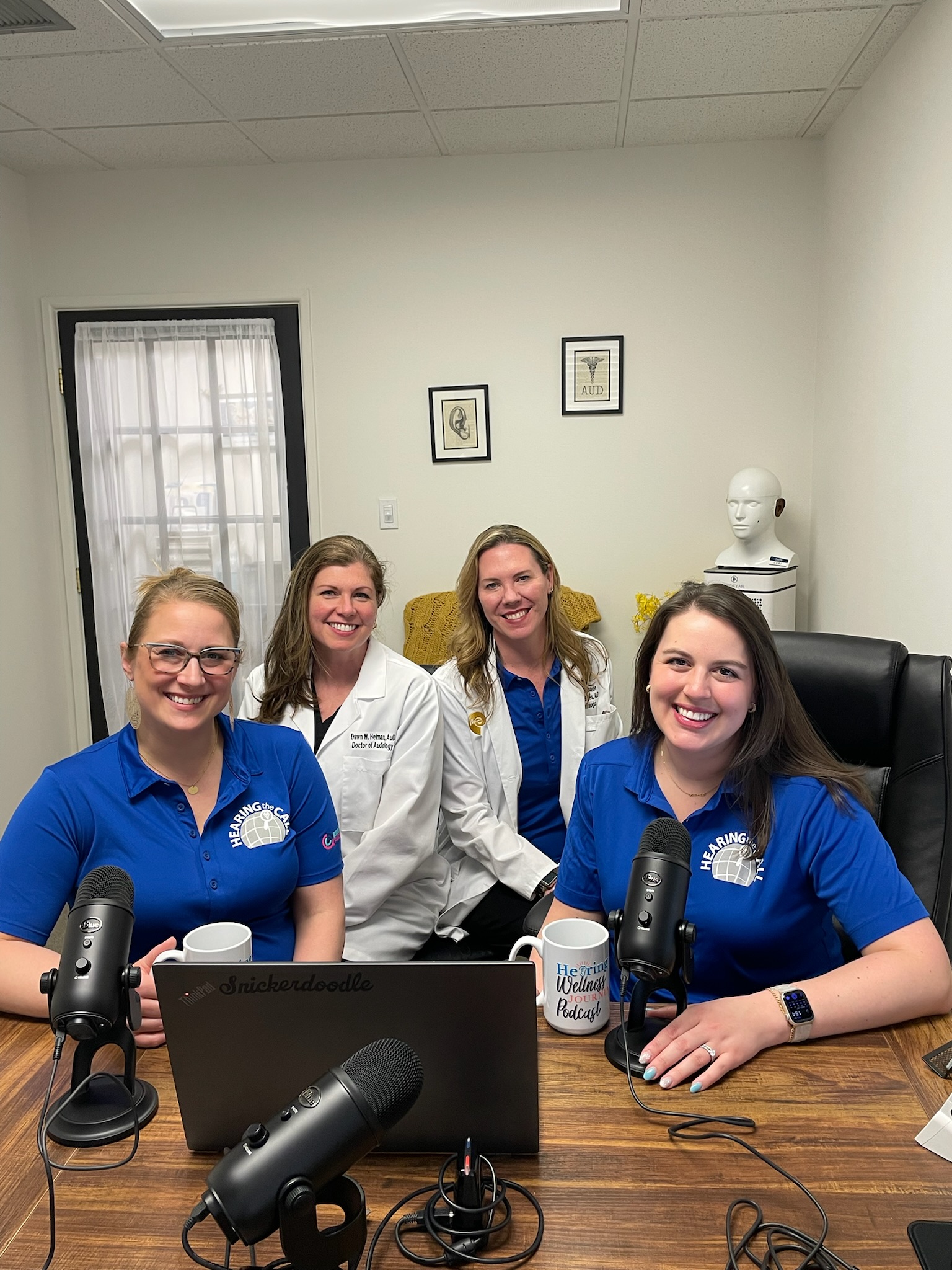
We are blessed with the opportunity to help people every day who have varying degrees of hearing loss and hearing disorders. We moderate this podcast to give you the ability to listen in on others' stories of triumph and perseverance.
Stay Connected
Never miss a podcast update, webinar or the latest news
We do not share any personal information with third parties.
CHECK OUT OUR
Resources
Advanced Audiology Consultants
Our Team of Audiologists are located in Oak Brook, Illinois and are here to help you hear.
EntreAudiology
Practice Locator
Need a recommendation for a qualified audiologist? We have a practice locator to help you find a reputable practice.
Hearing Aide Certification Online Course
Teaching nurses, CNA's, and caregivers how to help assist someone who wears hearing aids.
Hearing Wellness Journey Aural Rehab Course
Teaching you everything you need to be as successful as possible with your hearing aids with a series of videos.
Contact Us
Would you like to be a part of our podcast?
We welcome you to share your story too!