Hearing Wellness Journey Podcast
23- Overcoming Concussion and Hearing Loss: Linda's Journey to Wellness and Sound Recovery
Listen and Subscribe on Apple Podcasts
Listen and Subscribe on Spotify
#23: Overcoming Concussion and Hearing Loss: Linda's Journey to Wellness and Sound Recovery
SHOW NOTES:
Overcoming Concussion and Hearing Loss: Linda's Journey to Wellness and Sound Recovery
===
Nancy: [00:00:00] A warm place. But one morning April 18, four years ago, was rainy day and I was hurrying to feed her and I slipped and fell and see that air conditioner unit. That's what I hit my head on and I woke up, I don't know how long after that, and I was soaking wet and I had. huge headache and I was experiencing ringing in my ears and it was, I knew right at that moment that I had a pretty bad concussion.
So, I fed Pearl, crawling Fed Pearl, and I thought to myself, I don't wanna. Die in this alley. So I crawled out of the alley and up through flights [00:01:00] of stairs and texted, my family
Welcome to the Hearing Wellness Journey podcast, an exploration of determination, hope, self discovery, and triumph. We'll share the personal experiences of those that are living with hearing loss and provide a haven for their stories to show others that they are not alone in this journey. Please welcome your hosts,
Dr. Emily Johnson: my name is Dr. Emily Johnson and I am an audiologist at Advanced Audiology Consultants. this is an episode of the Hearing Wellness Journey podcast. I am joined by Lindsey Doherty, our wonderful patient care coordinator, extraordinaire coordination of everything in the clinic and a hearing instrument specialist.
we are also thankful to have Linda joining us today to give us a. Personal perspective into her journey with hearing loss and all of the difficulties that she endured and how things have [00:02:00] changed for the better. I am going to hand it over to Linda to give us her story.
Nancy: Well, first of all, thank you.
So very much, for inviting me, to the podcast, but also, to be able to share this because I really believe that, once you experience, Hearing treatment, you understand how much it can enrich your life. It can change your life, it can enhance your life because you don't realize how much hearing loss really does affect, how you function in your daily life in so many aspects.
So, I'm really, happy to come and share my story today. to give you a little bit of background, I use some of them, for a different presentation, because I am trying to really advocate for, sports. Medicine professionals to, [00:03:00] better, evaluate and refer out to other healthcare professionals like audiologists, sports psychologists, sports dieticians like me and other healthcare professionals for athletes.
That experience concussion because it was kind of a full circle moment for me, because I used to work with athletes, who experienced concussion and I. None of what I'm about to tell you today, really. I didn't understand it until it happened to me, and now that I do understand it, I, that's why I'm advocating for, athletes with concussions or really anybody that has experienced, hearing loss and tinnitus to, to seek out, audiologists.
So to give you a little bit of background so you understand, where I came from I have been a dietician, a registered dietician for over 35 [00:04:00] years, fast forward to the last 16 years I have been, in private practice as a sports dietician. And what that means is I work, with athletes specifically and help them, achieve their performance goals through, personalized hydration and nutrition plans.
So I started working with Iron Man triathletes for the first 10 years, which is a very complicated, athlete, what their nutrition needs are. And then out of the blue, I got a call from a professional boxer, um, in Chicago here. And, I worked with Andrew Fon Farra for four years, as his, sports dietician, as he worked his way up the ranks from, WBC ranked 22 in the world to number two in the world.
And he [00:05:00] fought for the world championship for light heavyweight. And so I was. Along on that wild journey, and Andrew is really amazing because he has given me permission to, talk a little bit about, what he experienced also, so that I can, help educate other healthcare professionals.
And one of the things that Andrew experienced, in his journey up the WBC, world boxing. championship, journey was he experienced concussions and as most boxers experienced, concussions and many other types of athletes. But, I didn't understand quite what he was going through at the time because I had never experienced a concussion, but retrospectively, wow.
It just. Everything makes sense now. And so that has even propelled me, [00:06:00] even more to work, and spread this word. so while I was working with Andrew and other boxers, I also, was a consultant for Gatorade and Gatorade Sports Science Institute, where I used to conduct sweat testing, which is.
Sounds very unglamorous and it was. But, we would patch test professional football players and professional, basketball players and understand, you know, how much they sweat and the electrolyte loss. I did that for many years for them and that led me to, working, With Northwestern University Athletic Department, where I taught them how to do sweat testing and body composition change.
Like I worked with Andrew as he cut weight to make his weight. And so my experience, at Northwestern University Athletic [00:07:00] Department was wonderful because, you know. All of that experience helped, me teach them those skills and work with those athletes. And while I was there at Northwestern University, is when something happened and, this is Pearl.
And this is where Pearl lived and that is my building on the right where I used to live in Chicago Pearl was a feral cat that lived in our neighborhood. I took it upon myself to feed her and water her every day. She was elderly and I built that house for her. So she had some place to live in the winter.
A warm place. But one morning April 18, four years ago, was rainy day and I was hurrying to [00:08:00] feed her and I slipped and fell and see that air conditioner unit. That's what I hit my head on and I woke up, I don't know how long after that, and I was soaking wet and I had. huge headache and I was experiencing ringing in my ears and it was, I knew right at that moment that I had a pretty bad concussion.
So, I fed Pearl, crawling Fed Pearl, and I thought to myself, I don't wanna. Die in this alley. So I crawled out of the alley and up through flights of stairs and texted, my family and let 'em know what happened. And then I did what you're not supposed to do. And I went to bed, and I woke up the next [00:09:00] morning, thank goodness, you know, somebody had a reason for me to, to be here.
I woke up the next morning and, these are some of the symptoms that I had. I had a headache, what's called visual convergence where I would look at my computer screen, I could read words, but I couldn't really understand what the words were. I had sensitivity to light, sensitivity to sound ringing in the ears, and just difficulty concentrating.
Everything was like slow motion processing and a mental fog. I had sleeping disturbances and really overall it was this overwhelming grief because I was really understanding. That my loss of function could be permanent. And then, you know, there are other, common symptoms to [00:10:00] concussion. academic challenges, mood changes, depression, anxiety, thoughts of suicide because of all these radical changes, people have dizziness, balance issues, appetites.
are affected either decreased or increased nausea, social isolation. I mean, everybody's concussion hits 'em differently. And so what I wanted to focus on today though was, the hearing changes that I experienced. I woke up to this world that sounded so painfully different and everyday sounds were incredibly overwhelming to me.
everything was really loud and, Irritating. I was really struggling to kind of, because I had that additional layer of tinnitus, [00:11:00] it's hard to describe, but it was kind of like having to swim through the tinnitus so I could hear what the other person was saying and then transcribe it in my brain again, it was the most.
Bizarre feeling. So it was very exhausting to, even have a functional conversation, let alone listen to music or go to a restaurant where there were multiple sounds coming at me that I had to transcribe and work my way through. because of. All of those challenges, you know,
It can be really distressing and I had a lot of anxiety and just like. Trying to figure out what to do. And it was interesting because I visited [00:12:00] my neurologist and, she helped, she knew right away what was going on. And I think neurology is very focused on one area of symptom treatment.
but they really don't. Talk to or address the audiology issues. And it wasn't until two years post-concussion that, I just happened to be sitting next to an audiologist at a wedding. she saw. That I was having a really hard time. I was literally sitting there like this because the music and all the sounds from the wedding reception was like really making me sick.
She picked up on it and she said, Is [00:13:00] the sound bothering you? And I said, yeah. I told her what happened, and she's like, and you've never seen an audiologist? And I said, no, I've never been referred. And this is two years after the concussion. And so she really encouraged me. she was from outta town and she was like, you really have to go see an audiologist.
This is really important. And she talked to me about, long-term effects that could hurt my overall health if I didn't seek out. Audiologist help. And it really, struck me how lucky I was that I sat next to her and she told me about this 'cause I wouldn't have known.
So I went, to my neurologist and said, Hey, can I get a referral to an audiologist? And she did. And she gave me one who was in the [00:14:00] healthcare system Unfortunately it wasn't, Dr. Johnson, but I went to the audiologist and it wasn't a great experience, unfortunately because, I was basically told that, she couldn't help me with the tinnitus.
she pretty much just gave me, a sheet of paper that had prices of different hearing aids and said, you know, this is the best one and, you can choose to have the best care or, something lesser. it was just a jarring experience for me. I didn't feel cared for, I didn't felt listened to.
I left and I didn't get hearing aids. And I remember driving home from that appointment and I cried the whole way home because I was like, [00:15:00] well, that was it. What I expected. I expected, That somebody would understand and listen to me and ask me further questions and delve in deeper.
So, being outside was one of those things that helped. Me in this process, it helped clear my head when the jumble of post-concussion really affected me, I could go and take a walk and breathe and it helped to calm my brain a little. So I ended up, taking my dog to Dog Park and at Dog Park my.
these two women that I had seen for the past two years, they saw that I was, not myself, and they asked me what was wrong, and lo and behold, these two women both had hearing aids and I never knew that they had hearing aids. And [00:16:00] so they encouraged me, they said. Go see a different audiologist that one audiologist might just not have been the right match for you.
And they said, this is a journey. We'll help you through this. you know, and they started talking about their journeys and I, it really kind of empowered me to seek out. Somebody that specialized it. And that's how I found Dr. Johnson. I started really googling to find audiologists in my area that specialized in tinnitus.
And, I met Dr. Johnson it changed my life because she took the time to really ask me loads and loads of questions. The assessment was. Multilayered and so much [00:17:00] more in depth than I had experienced, with the other audiologist. And she taught me, what different things meant and why I was experiencing what I was experiencing, and then why hearing aids could help.
So. Dr. Johnson, do you wanna add anything before I go through some of the different symptoms that I was experiencing that you taught me about?
Dr. Emily Johnson: Sure. And I think it's important for everybody to think about, like, just as like when you have a concussion, your symptoms.
There's this whole array that you could experience of different levels, right? And the same thing goes for tinnitus, hyperacusis, hearing loss. There are certain symptoms that overlapped or certain commonalities between different stories, but each person's [00:18:00] journey is unique. And one of the biggest things is finding the right audiologist.
Yes. That you feel heard with, that you feel like has the right education experience that makes it easier for you specifically. And I think that that's what's really important is that audiologists are wonderful across the board, but you have to find your audiologist.
Lindsey Doherty: Yes.
Dr. Emily Johnson: The practice that you feel most comfortable at that has different types of testing and being able to go in depth are testing process. The initial one is two hours and other places just don't have that luxury to go that in depth, but it makes a difference for somebody who has. A complex history like we were working with more than just hearing loss.
We were working with hearing loss, we were working with tenderness, we were working with your [00:19:00] sensitivities to sound and just kind of the medical aspect of the concussion as well. That adds so many layers to it. And so it's like if you see an audiologist, and maybe it wasn't the experience you're hoping for.
I would hope that you just don't write it off and never return, that there are wonderful people in this profession and you just have to find the right one that's the best fit for you and your needs. And I'm glad that she did, and I'm glad that it was me.
Nancy: It's, it really, was so interesting to me that, the difference that, advanced audio. Audiologist consultants, your, practice philosophy is so different. It's so different than the other practice that I had been through. And, you know, that's what made all the difference in the world.
And I look back and if I hadn't had that experience, it was like A godsend [00:20:00] really, that I met these two women
Lindsey Doherty: With
Nancy: hearing aids that I didn't even know that they had hearing aids. I knew 'em for over two years. I had no idea. And if I hadn't gone there because I was so distraught and they hadn't,
You know, I don't know what would've happened to me. Mm-hmm. I really don't. But it did lead me to the right place. to your second point, Dr. Johnson, everybody is different. And with mine situation, it was so complex because so many things were going on
like you mentioned, hypers is, and I might be pronouncing that wrong, But that was one of the biggest deals, with me. And as you see here, it's a condition which the brain overreacts to sound causing normal environmental noises to feel uncomfortably or painfully loud.
And that was such a bizarre experience for me because walking into the grocery store or a restaurant [00:21:00] was overwhelming and actually painful for me, because of this, condition and it is simply. Are not simply about hearing. Well, it reflects a loss of sound tolerance due to changes in how the brain processes auditory input, often following head trauma, which I had.
sensitivity To specific frequencies. The base really affected me a lot. distortion or wrong perception of sounds including speech or music, physical discomfort or pain with sudden or loud noises, that actually is a continued thing, but it's much lessened now.
Oh, pardon me. Emotional responses such as anxiety, irritability, and fatigue. And at the beginning that was huge for me and I can tell you that when I was working back at Northwestern University, [00:22:00] that was something that really affected my ability to function. For example, when I was working with men's basketball, I was there to do sweat rate tests and pre-practice, they turned the music way up.
So I'm listening to this pounding rap music, and I literally had to leave for a few minutes and go shut my door into a closet, a storage closet to kind of like breathe through it and prepare myself that I had to go back out there and complete this.
Very painful, which, you know, work and, and actually because of that, that's why I decided I had to leave Northwestern because at the time I couldn't even function, during my job. this is a very real thing. And with time I. In treatment, which I'll get to in a moment.
This subsided significantly, [00:23:00] and I probably could do that job again, but I couldn't at the time. tinnitus was And is another, issue, and that's where the perception of sound, we get ringing or buzzing. Mine is a two layered, tinnitus, without an external source. So we're not hearing it from the outside.
We're experiencing it from the inside, and it is common after head trauma and can be caused by disruptions in both. The Inner Ear and central auditory pathways. And Dr. Johnson, if you wanna jump in and explain that a little bit more.
Dr. Emily Johnson: Yeah, so Tinnius has become a lot more common and historically, unfortunately, there really, I.
Weren't a lot of concrete treatment paths for Tinnius. A lot of people 20, 30, 40 years ago were told, well, I have it too. Just deal with it and move forward. Don't let it affect you. Just try to ignore it, which is not [00:24:00] helpful when you have this bothersome sound that is going on in your ear. from an audiologist standpoint, it's difficult because everybody's tenderness is a little bit different.
Yours has multilayers. Like you mentioned, there are some people where it's just a pure tone. Sometimes it's cicadas, sometimes it is a whooshing sound, and it changes and there's variety to it. And because for the grand majority, it's subjective. I can't put my ear to your ear and hear what you're experiencing in order to know what best way to go about it.
I'm thankful now that we have a lot more different treatment plans, whether it's through the use of hearing aids, whether it's through masking noises, whether it's through the linear and a variety of different treatments for tinnitus. But it is something that's very, very complex and challenging, especially from the patient standpoint that [00:25:00] you hear it, you can describe it.
Nobody else experiences what you experience, and I think it's important to find someone who's willing to try to figure out as much as they can about what you're experiencing, to determine what is your specific tinnitus is going to respond best to. And I mean, with the basketball and the hyper cuss, I feel like basketball courts are just really loud in general, as a normal hearing person
What I think is normal sound tolerance. That is, that just gives me anxiety just thinking about it because those gymnasiums are not built for comfort. It is a hard floor. We've got hard seating. It is like a big echoey room, and then when you have music on top of the sounds of basketballs, it's just. So much.
And I think a lot of people are kind of [00:26:00] surprised when like you have a loss of hearing and then you have an increased sound tolerance. So like, but everything's a little bit quieter. How can it be louder and painfully different? And it's like, well, you just went from a big range like this to now your range is like this, but we're still fitting in all of the same amounts of sounds.
And so like the loudness didn't change, but the floor did. And I think that that's something to think about that like, yes, you can have a loss of hearing where in general the world is quieter, but your tolerance to different sounds is heightened.
Mm-hmm. And just like that anxiety of like, do I wanna go to this wedding? Or is it gonna be too loud that I'm not gonna have a good time?
Nancy: Yes.
Dr. Emily Johnson: And it starts to really impact that like social emotional part of your everyday life that before the accident you didn't think about it. Like you never would've thought twice about going to a [00:27:00] wedding that you were invited to, like for those aspects, which I think is something to consider that it impacts like your daily life.
And like events you're excited about
Nancy: You know, it's very interesting too because,
How people respond. before I had the hearing aids, I would constantly have to say, oh, I didn't catch that. What did you say? And after a while, people get tired I had to learn how to lip read It's great if you're looking at people, but if you're in a lecture hall and your, instructor is, writing something and you're not.
Seeing them, you know, academically that can really disrupt, your ability to learn and hear what's going on. to your point about socializing and, the progression of. learning and life, it is so different. And we used to go to concerts all the time. [00:28:00] Mm-hmm. And suddenly I couldn't go to concerts anymore.
socially it really was a huge disruption. And, for my work life, it was a complete disruption. I couldn't work. I'm a lifelong learner and so my learning ability, 'cause I would always be taking classes of something or. Going to webinars and things like that.
So that was a huge disruption. So it kind of all fell into this next thing here. central Auditory processing disorder. And so that affects how the brain interprets sound, even when the ears function properly. People with CAPD may struggle to understand speech, especially in noisy environments, and this condition is increasingly recognized as a.
Consequence of even mild traumatic brain injuries. so that was, definitely, an issue for me. There's a couple [00:29:00] other things here that I just wanna touch on before I get into how treatment has changed. My life. the sensory hearing loss, or sensorial hearing loss involves damage to the inner ear or the auditory nerve pathways that carry sound signals to the brain.
Post-concussion. S-N-H-L-L may be due to the physical trauma, changes in blood flow or neural disruption, and mine was more, we believe the neural disruption. and so we had to recreate those neural pathways, which to me is mind blowing that we can teach our brain to, you know, reconnect The visual work that I did, when, I couldn't read the words on the screen and understand what they meant.
That was recreating neural pathways. And then this here with the treatment that Dr. Johnson gave me. Helped [00:30:00] recreate those pathways. And then all of this goes under the umbrella of post-traumatic auditory dysfunction, and this umbrella term encompasses the range of hearing related symptoms that may follow a head injury, including tinnitus.
Hi, hyperacusis. Mm-hmm. Difficulty hearing speech and overall hearing loss and working with an audiologist like Dr. Johnson May can be instrumental in diagnosing and managing these issues. So all of those, I had no idea, even after visiting the first audiologist, I had no education on any of this. No. diagnosis to, you know, educate me as to what was happening.
when I met with, Dr. Johnson, she was able to explain all this to me and then, you know, really [00:31:00] dial in what type of treatment that I needed. So it was sound therapy. there's a wonderful educational program that I went through, to walk me through these different treatments.
gradual sound Desensitization and the hearing aids and the other devices, which changed everything. I'm gonna show you really quick what one of those devices are. This is my favorite, this is a little device that I just. Put into the USB at my computer and it helps me connect with the computer and my hearing aids.
during Zoom calls, I can hear so much better what's going on, and it has been life changing for me. my ability to, lock in, my computer to my hearing aids. If you wanna jump in, talk about,
Dr. Emily Johnson: Yeah. I [00:32:00] think it's important to view treatment for auditory dysfunction as like, a puzzle and there are multiple layers to it.
And in our office we have a proven process. You mentioned the, oral rehabilitation that our patients get after you come in and we enroll you in these things. And for some first time people they're like, this seems like a lot. And then you get on the other side of it and you're like, that was fantastic.
Because it's not just, here's a device, put it on, see you in six months. You saw me a lot.
And in person, those first few weeks to months, it takes that next level of care You are an individual human. You're not just a hearing test on a piece of paper, and we gotta work with your brain and how fast your brain gets on board with different things.
It's going to vary by person, especially since we were [00:33:00] working with like post-concussion.
Rather than like a gradual hearing loss due to aging or meds or anything else. The best practices with real ear measurements, making sure that we're taking into account your specific ear canal size and shape, and making sure that it's comfortable, that it's not too loud, especially since we have some sensitivity with the hyperacusis and retraining that brain and those neural pathways, which thank goodness our brain is a wonderful thing.
It is very flexible and teachable. We have to reteach it what we want it to hear and how things are supposed to be, and then life gets easier.
Nancy: Yes.
Dr. Emily Johnson: It's a lot of work on your end in the beginning, but after we hit that nice stability, you're coasting.
And that is really what we hope for. Our patience is that we put in a lot of work in the beginning to make your life [00:34:00] easier for the long term. And working with auditory processing, it's like we're missing parts of sound and speech because of the hearing loss. And now also our brain has to get back on board of, well, what does an F sound like?
What does a th sound like if given access to it? And that's another. Layer because it's like, yes, we can give you all the sound access that you need, but if your brain doesn't know what to do with it, it's not all that helpful. And so watching you go through all of the steps in the process, and I think it was one of the first few appointments that you came back, you're like, my tinnitus is, is so much better.
Yes. Like it is not bothering me. During the day anymore. It's not something that's front of mind.
Lindsey Doherty: Yes.
Dr. Emily Johnson: And. It's just like a really complex treatment puzzle of, let's see, how about these [00:35:00] programming settings? How about this? How about this? To make sure that you are being taken care of, of whatever you need in that moment and in the future if something needs to adapt.
Nancy: Yeah. That was like such part of this where, you know. Before the hearing aids and all of the treatment that I went through, the forefront was the tinnitus. That was like, I heard it all the time, but, after the hearing aids specifically, because I could hear so much more, it wasn't in the forefront.
And now it's kind of like. You know, background noise, and it doesn't bother me it's fascinating too, because when I take out my hearing aids before I go to bed at night, I hear it again. It's just like, here's your old friend Tinnius. But, during the day, I can function so much better because I don't have to swim [00:36:00] through it
communicate and, function. And so that was, huge. And with the sound desensitization, now I can go to weddings and enjoy them, and I can listen to music in my car again, and we can go to concerts. in one year my life has completely changed again and I can function.
And even though, you know, I had to put in a little work to get there and it was, a little weird because I heard, at the beginning I heard myself chewing and that's normal. But afterwards I don't hear any of that stuff anymore. It's background and I only hear what I need to hear again.
Dr. Emily Johnson: Yeah, and I think that's why it's a hearing journey. Yes. It's not just a hearing moment or, all right, you come in, you get something, you move on. Because [00:37:00] we don't want to focus on like it's a hearing aid. It aids you in what we need it to. But also us as humans, gotta put in some type of work. Yes.
To get our brain back on board, especially when we're dealing with post-concussion head trauma. Your brain is all jumbled from that initially anyway. Yes. And then we throw in a hearing loss on top of it. And then we bring sound back and I It was about three years after the concussion.
Yes. A year ago. Yeah. So three years of living with the hearing loss. Mm-hmm. And trying to get back out. But we often think of like hearing loss and hearing aids, treating the hearing difficulties. But what we don't think about is. Giving you kind of that color in your life back.
Being able to work the way that you want to, being able to communicate with your loved ones, [00:38:00] being able to go to sporting events, music, weddings, all of these things where that's a huge side effect of.
Untreated hearing loss is you start to socially isolate. Yes. 'cause it's no longer fun going to those events because you're right. People do eventually stop wanting to answer
Lindsey Doherty: Yes. When
Dr. Emily Johnson: you're like, I didn't hear you. Can you repeat that? And then you get hit with a nevermind.
Like, well, no, nev no. I, I wanna hear and I wanna have a conversation.
But if nobody else is gonna put in the effort, then it's frustrating for you.
Nancy: Yeah,
Dr. Emily Johnson: so it's like all of these little bonuses of, I don't want your hearing loss, your tinnitus, your hyperacusis, anything like that to hold you back from living the life that you wanna do, that we often don't think about when we're like, oh, somebody has a hearing loss.
It's like, let's get them hearing better, but also let's bring in the things [00:39:00] that they wanna do in their everyday life without the difficulties.
Nancy: one more thing that I just wanna add is that, technology is just Amazing. like I showed that this one little piece has, changed my life,
Hearing aids, you don't even see 'em those ladies that I knew for two years, had no idea and nobody really knows that I have hearing aids. They don't see it, because technology is in such a really cool place now. this is my app. You can see it where I can change, how, my hearing aids work in different situations.
So like, this is for a party setting. I can switch it. Or music setting or, part of that sound desensitization on here also. but it's really helpful for me. So when I go to a movie, I know how to adjust it to make it right for each different situation. [00:40:00] So, it's much, much different than, you know, your, your grandpa's hearing aid much different.
Dr. Emily Johnson: And I still get that when I recommend hearing aids for somebody, they assume that I'm gonna come in and bring like these big honk and beige devices. Stereotypically is used in movies in different media because when they're trying to portray that somebody has a hearing loss, they make it wicked obvious that something is going on behind their ear.
And then when I show them what the options are, like, oh wow, that is much better than I thought. I'm like, I know, like we've gotten smaller, we've gotten cuter, we've gotten a variety of different colors. And to your point, there are people that you socialize with routinely for two years and you had no idea.
Nancy: No idea.
Dr. Emily Johnson: And that is so common. They're like, I just found out that cousin Joe has hearing aids and he's had 'em for three years and nobody knew. [00:41:00] And I think that that's an important part to drive home is that people are more likely to realize when you go, huh, what? I didn't hear you. And ask for repetition then.
Having a small piece behind your ear that just makes your life a little bit easier.
Nancy: it's interesting because I've been vocal about my story to, friends and family because they know what I've been through several of my friends and family have come to me and said, you know what, I have hearing loss too, my.
Wife or my husband has complained because I keep on turning the volume up can you help me through that process again? And it really, by finding, like, hearing mentor, really helps because we can talk about it and, encourage, during the process.
Dr. Johnson and the staff is really great and the number of times, like she mentioned that we had interactions and I could always email her. I think I [00:42:00] emailed you a couple times. Yeah. a few, issues and questions that I had and that was great because I got that hope.
it's okay for us to talk about it because then hopefully it'll inspire other people to take the step to get it done because you will not regret it. It is life changing and so I'm just glad that I was able to share my story today and be able to. Say thank you again to Dr.
Dr. Emily Johnson: Yes. Well, I am very thankful that I get to be a positive part of your story and hopefully this podcast, this interview, this discussion with Linda, as well as discussing with your friends and family can increase the awareness that.
There's no shame in finding an audiologist and having your concerns about your hearing and your ears or your tinnitus addressed, and there are a variety of [00:43:00] audiologists out there. There's a variety of different treatments out there, and don't stop looking until you have found the one that you feel confident in because it is life changing
Getting you back to where you need to be is of utmost priority. So I thank you so much for taking time out of your day to do this and share your story with the world. Depending on how far this reaches, I appreciate it and it's wonderful knowing that our interaction is only going to help others in the future and make people feel less alone.
On their journey, whether it's post-concussion, especially younger athletes. And anybody who experiences any difficulty with any part of their ears, there's plenty of hope out there and we are here to help you along the way.
Nancy: Thank you. Thanks for having me. [00:44:00] And I will see you again soon.
Dr. Emily Johnson: Yes, that sounds good.
All right, so that is where we will cut it. Is there any part that you don't want us to share? Are you okay with,
Nancy: I think I'm okay. You just added away what?
Dr. Emily Johnson: okay. Because the people who are gonna be watching this are either current patients, prospective patients, or people who just need.
A little bit more information about ears and hearing loss, and I think it makes it more relatable. Yeah. When they see like a patient journey where there's pronunciation questions of like, is it tinnitus? Is it tinnitus? Any other variety of the way people pronounce it, versus like a professional saying that like, this is how it's pronounced and this is how it needs to be.
It makes you more. Real and approachable, and I think that that's helpful for anybody who's worried about going to see an [00:45:00] audiologist and the unfortunate shame around going to see one.
Nancy: Yeah. Well, I hope that this was helpful.
you did such a great job at explaining the reality of it.
Dr. Emily Johnson: thank you. we will get this edited and I will let you know when it goes live.
Nancy: Okay. Sounds good.
Dr. Emily Johnson: Great. Thank you. You have a wonderful rest of your day, and I'll see you soon.
Nancy: Thanks Dr. Johnson.
Dr. Emily Johnson: You're welcome. Bye bye.
Thank you for joining us on this episode of the Hearing Wellness Journey podcast. For more information about what we do and the services we provide, please visit our website@hearingwellnessjourney.com slash podcast. Where you can find more resources based on today's discussion, as well as request to be a member of our Hearing Wellness Journey community on Facebook.
That's available for our listeners exclusively on hearing wellness [00:46:00] journey.com/podcast.
Resources Mentioned:
Our Mission:
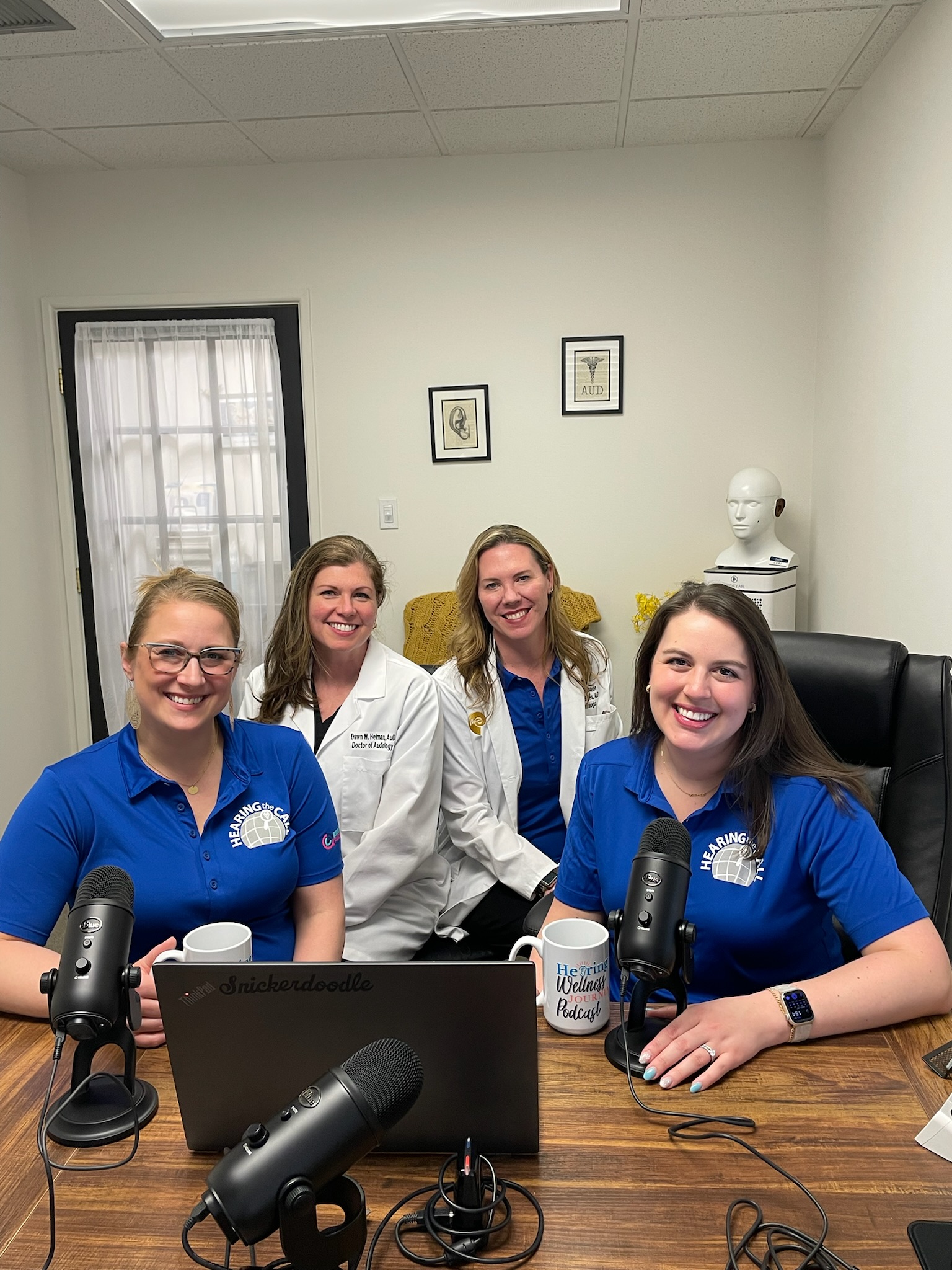
Our Hosts
We are blessed with the opportunity to help people every day who have varying degrees of hearing loss and hearing disorders. We moderate this podcast to give you the ability to listen in on others' stories of triumph and perseverance.
Stay Connected
Never miss a podcast update, webinar or the latest news
We do not share any personal information with third parties.
CHECK OUT OUR
Resources
Advanced Audiology Consultants
Our Team of Audiologists are located in Oak Brook, Illinois and are here to help you hear.
EntreAudiology
Practice Locator
Need a recommendation for a qualified audiologist? We have a practice locator to help you find a reputable practice.
Hearing Aide Certification Online Course
Teaching nurses, CNA's, and caregivers how to help assist someone who wears hearing aids.
Hearing Wellness Journey Aural Rehab Course
Teaching you everything you need to be as successful as possible with your hearing aids with a series of videos.
Contact Us
Would you like to be a part of our podcast?
We welcome you to share your story too!