Hearing Wellness Journey Podcast
31- How Do I Get Affordable Hearing Aids?
Listen and Subscribe on Apple Podcasts
Listen and Subscribe on Spotify
#31: How Do I Get Affordable Hearing Aids?
SHOW NOTES
In this episode, the Hearing Wellness Journey team dives deep into affordable hearing solutions, helping listeners understand how to maximize benefits, compare hearing aid prices, and secure high-quality care—no matter their financial situation. The conversation highlights real patient experiences and demystifies the increasingly complex landscape of insurance, third-party programs, and budget-friendly device options.
Understanding Hearing Aid Prices and What You’re Really Paying For
Many patients believe that “expensive means better,” but our clinicians explain how pricing is often tied to packaging—not actual outcomes. Insurance programs may advertise generous benefits, yet these often come with limited services, outdated technology, or strict provider rules. Some plans reimburse audiologists at rates so low that proper care becomes impossible, which directly affects the quality of fittings and follow-up services.
The team stresses transparency and education—making sure every patient understands not only the cost, but also the pros and cons behind each option.
Cheap Hearing Aids vs. Over-the-Counter Hearing Aids: What to Know
Cheap hearing aids and over-the-counter (OTC) options can work well for certain hearing losses, but they require realistic expectations. As the clinicians share, patients often purchase devices elsewhere and bring them in for professional programming—something many don’t realize is allowed. This blend of low-cost devices with expert care often provides better long-term outcomes than purchasing the “cheapest” option without guidance.
Alternative Funding: Nonprofits, Payment Plans, and Community Support
For many listeners, budget constraints extend beyond insurance. The episode outlines practical pathways to overcome financial barriers, including:
- Medical financing options with low- or no-interest plans
- Hearing The Call, a nonprofit offering donated devices in exchange for community volunteer hours
- State-level programs, including vocational rehab for working individuals
- Veterans’ resources and VA coverage
- Local nonprofits for those outside the Chicago area
These alternatives provide meaningful access to high-quality devices when traditional insurance or retail programs fall short.
Why Professional Expertise Still Matters—Even on a Budget
Device choice matters, but professional fitting matters more. The clinicians provide examples of patients who purchased older or lower-tier technology unknowingly due to misleading marketing. Proper verification, real-ear measurements, and individualized adjustments can turn an “average” device into a high-performing solution—while skipping these steps can waste money, time, and hearing potential.
Your Next Step Toward Affordable, High-Quality Hearing Care
Whether you're navigating insurance benefits, comparing budget-friendly devices, or exploring nonprofit support, this episode equips you with the knowledge to make empowered, cost-effective decisions. The Hearing Wellness Journey team is here to help you interpret your options and find the solution that fits both your hearing needs and your budget.
To see the video edition of this episode with closed captioning, please go to 👉 Hearing Wellness Journey Podcast: https://hearingwellnessjourney.com/podcast/
TRANSCRIPT
Narrator: [00:00:00] Welcome to the Hearing Wellness Journey podcast, an exploration of determination, hope, self-discovery, and triumph. We'll share the personal experiences of those that are living with hearing loss and provide a haven for their stories to show others that they are not alone in this journey. Please welcome your hosts.
Dr. Emily Johnson: Hi there. This is Dr. Emily Johnson.
Lindsey Doherty: Lindsey Doherty.
Dr. Dawn Heiman: And Dr. Dawn Heiman.
Dr. Emily Johnson: And welcome to this episode to talk about affordable solutions, how to get quality hearing care on a budget, because in this day and age, who's not on a budget, right? In all aspects, there's some sort of budgeting that's happening.
Dr. Dawn Heiman: Some people have an [00:01:00] idea of what the value of hearing aids are versus the price.
We should talk about that. But if you're on a certain healthcare insurance, and they say that they have coverage; some of them have been in trouble in the past, sometimes it's just marketing where they're saying, "Hey, you have hearing aid coverage," and turns out it's a membership program that was linked to your health insurance.
And sometimes it is a full on benefit. You have dollar amounts, $5,000, that you could get your hearing aids through this program. You just have to know all the nuances of it, depending on where you live. We, many times, know that someone has a specific coverage, and we are out of network with most insurances for many different reasons.
Dr. Dawn Heiman: But one of the insurance companies we were never with is Humana, because they wouldn't let us in the network. They said there were already enough audiologists in the Chicago area, so [00:02:00] we'll send someone to one of those providers if they have a real benefit.
Lindsey Doherty: Mm-hmm.
Dr. Dawn Heiman: They get 'em for a better price, or they're able to use their insurance benefit.
Dr. Emily Johnson: Mm-hmm.
Dr. Dawn Heiman: Most of the time they end up going, getting their hearing aids, scheduling an appointment, and then they have us program them.
Dr. Emily Johnson: Yes. Which is becoming more common. It's often this misconception that, "Oh, we're out of network with insurance. We don't want you to use your benefits." And that's not true at all.
Lindsey Doherty: No.
Dr. Emily Johnson: In fact, we're nice and supportive humans. If you've been paying into a benefit, we want you to utilize that benefit. And then, that's why we function on this, 'what do you truly need?' model, because we can customize and swap things in and out to make sure that you're still receiving high quality level of service, even if you didn't get the devices [00:03:00] through our office.
---
Dr. Emily Johnson: And so many times, I've had patients be like, "I didn't realize that I could bring devices I had purchased elsewhere here."
Dr. Dawn Heiman: Yeah,
Dr. Emily Johnson: Absolutely!
Dr. Dawn Heiman: For years we've been doing that.
Way back when, I remember stating, "I am okay with never selling or charging anyone for a hearing aid ever again. That's it. We are just services."
And we had so many people. We had a sign on the window in our Woodridge office.
Lindsey Doherty: We did.
Dr. Dawn Heiman: "We will fix your hearing aids." Because so many people had received such bad service, that we were like, "Just bring us whatever you have and we're gonna try to figure this out."
Dr. Emily Johnson: Right.
Lindsey Doherty: There's probably multiple reasons for that service that they've gotten before. But those insurance plans, though they might have a great benefit, maybe they're not reimbursing the providers to do those additional programmings. You are still limited when you have an insurance benefit with [00:04:00] services.
---
Lindsey Doherty: Sometimes people will come back and say, "Well, I have a year of services with that practice." And that might be true, but you'd be limited to what types of services or how many.
Dr. Dawn Heiman: Oh, can we talk about how Mayo Clinic had just dropped Medicare Advantage programs because their clinicians were not being paid well?
I'm gonna go on a little tangent here, but they market to the Medicare age folks with the fact that they have hearing aid benefits, and they have their own third party that they're selling the hearing aids through.
But the providers, like Mayo Clinic, deserve to be paid more than $9 an hour for a doctoral level clinician. Let alone the support staff that scheduled the appointment, the people that are submitting the paperwork, all that stuff. And so you might notice that there are fewer and fewer providers that you're able to use your benefit through their [00:05:00] clinic.
So, what Lindsay is touching on is: they're short on time. They're getting paid nothing.
Lindsey Doherty: Right.
Dr. Dawn Heiman: They can't afford to do everything that you actually need done to fit the hearing aids properly. It's in and out. Just pick up the hearing aids. You're gone. They gotta move on to the next patient. Otherwise, they're not gonna be able to keep their doors open. So that's why Mayo Clinic said, "No, we're walking away." More and more hospitals are walking away.
The automobile industry, they're trying to give good benefits to their workers. To the people that work for these companies. And so the insurance companies say, "Hey, we got you. Look, we got this third party group and they're taking care of all this extra stuff." But they don't realize, the automobile industry, let's say, that that insurance company is profiting every year with millions, billions of dollars. Their third parties that they're contracting with don't really care about patient care. They're trying to make a profit [00:06:00] themselves.
You, as the human being in front of them, get to figure out how you're gonna get your devices. So places like us try to help you triage. We're trying to help you get what you need, but sometimes you're gonna need to pay a little bit out of pocket in order to make sure that your hearing aids are working correctly.
Lindsey Doherty: Right. So though you're able to use that benefit and make it more affordable, there are going to be out of pocket expenses for those services to make sure that you are fit the best. People come to us all the time, because they're not properly fit. Because those extra steps weren't able to be taken.
That's one way that we like to work with whatever you've got. Like Dr. Heiman said, we had a sign on the windows.
Dr. Emily Johnson: Absolutely. It's one of those things where you can get quality hearing aids through the third party. They purposefully make it a little bit blurry as to who you're exactly purchasing from when you [00:07:00] do those things.
And you go through a provider, you're like, well, I purchased it from whatever provider you're seeing, but you actually purchased it from the third party, and then the provider just gets a small dispensing fee. And then all of those services are attached to that office you purchased the hearing aids from. That does not transfer to another office.
---
Dr. Emily Johnson: We want hearing aids to be affordable for you. We want you to get good, quality devices. And that's why when I have patients who are like, I need to purchase it through whatever program, because financially that's the best decision. I'm like, I totally get that. If you wanna show me the options of what you can pick, let me know. I'm happy to guide you on that, because ultimately that's also gonna make my job a little bit easier on the back end when you come back to me for services. I'd rather have you get something quality that [00:08:00] we can really optimize in our office than going the route of, oh, let's get the cheapest set, because nobody describes the differences to you.
---
Dr. Emily Johnson: Because you're not...
Dr. Dawn Heiman: No!
Can we jump into that?
Dr. Emily Johnson: We can't fix that!
---
Dr. Dawn Heiman: So you go to the website, and they're like, "Hey, look at this." They have these slashed prices. And this is through your insurance company. They have a device. It says this is the make and the model, but you don't know what make and model that is.
And then we look at it, and we're like, okay, that's generations back. It's not the top end. It's maybe the middle end or a little bit lower than that. And they're trying to show you market value. It's smoke and mirrors. They're like, this is a really good value.
And I'm like, that is a medium to basic device that's old technology that they bulk discount bought and they're pushing it on you.
---
Dr. Dawn Heiman: But you know what? Wearing something is better than nothing.
Lindsey Doherty: That's true.
---
Dr. Dawn Heiman: We dropped one of the third parties because they [00:09:00] would send out marketing tools. One patient in particular: she went to my church, her daughter brought her, she was a senior citizen, and it said that they have this discount, but the only way you could find out what your big discount was, was for the audiologist to test your hearing. And then we had to put in the diagnosis code.
We had to fill in on their website, all of your details of your exact hearing loss. We had to then choose a hearing aid and once you created the invoice, that they weren't necessarily going to pay or not, then it would say what their benefit was, and this woman had a $137 discount.
That was it. After all of that. But you know what, they just grabbed her data. Now they know she has a hearing loss. They know how much of a hearing loss. They know what you would've recommended. It was crime. She can't afford... they were charging like $3,300 per hearing aid, and they gave her like a $137 [00:10:00] discount. So we sent her to Costco. Legit. Because with her budget... she and her daughter couldn't create a budget, because they didn't know what the real numbers were.
So we helped them navigate, and then after they went to Costco, they came back, and I adjusted the hearing aids properly for her 'cause she wasn't hearing great and moved on. Unfortunately, she has passed away since then. But that's the kind of stuff that happens. We're like social workers. We're here to help.
---
Dr. Dawn Heiman: Coming to us in the first place - you think you're paying a little bit more - you end up saving not just money, but your time. You don't have to keep going all over town to try to figure out and then come back and email and wait and all this stuff.
Have a misfit, and we're like, "Nope. Take 'em back. That's not good. Nope. They shouldn't have done that."
Dr. Emily Johnson: Absolutely. So, let's say for patients who don't have a hearing aid benefit or they don't have a discount plan through a third party, they come to us, and we go through the quote, we [00:11:00] go through all the information, and they say, "Well, what are the options for payment?"
It's important to note that we do offer information about something called Advance Care, which is a medical financing credit card. You can fill out an application online. See if you qualify. And for a lot of our qualifying patients, they get 15 months interest free.
Lindsey Doherty: Up to 15 months.
Dr. Emily Johnson: There are options available to... I just keep seeing the lights go on. Happy Halloween, right?
There are options for different payment plans.
Lindsey Doherty: Certainly.
Dr. Emily Johnson: And so even if you qualify for six months of interest refinancing, sometimes that can take the burden off of: making a big payment at one time. Splitting it over six months. It just makes it a little bit more digestible as well, and a little bit easier to budget around.
Lindsey Doherty: Mm-hmm.
Dr. Dawn Heiman: Yeah. Our services are [00:12:00] unbundled from the product, meaning we're just itemized pay as you go. Some places, they charge everything for the device, including all of your services for a lifetime or five years or something like that.
We have plans where you can break it down for how you pay for the hearing aids, separate from every time you come in. You just pay for what services you receive from the audiologist. So that helps a lot for cash flow.
---
Dr. Dawn Heiman: And it's not the big numbers people think they are. They're like, "Wait a minute, what? I thought hearing aids cost this." Depends on where you go. And they're not even audiologists sometimes that are charging this large amount of money. And they're not doing anything extra. They're just like, "Look, we got you. We'll do everything for free going forward." What are they doing though?
Lindsey Doherty: But you just prepaid for it.
Dr. Dawn Heiman: What are they doing? We've seen people that weren't scheduled for their clean and checks every three to four months. They were called in three years and said, Hey, your hearing aids are going outta warranty. It's time to get new ones. That's [00:13:00] it. That's what you paid for. "For free."
---
Dr. Emily Johnson: Right.
Dr. Dawn Heiman: We're very transparent, and we try to make it economical. You are right. There are ways.
---
Dr. Dawn Heiman: And some people, they can't afford their plan. Life's been tough. Pension's gone. Who knows what.
Dr. Emily Johnson: Right. Then it's important to look at some alternate avenues, and one of the ones that our office specifically falls back on is our nonprofit, Hearing The Call.
Sometimes when we look at all of the different financial options, it's just a no. There's no way to make that work. And then we say, okay, let's look at our nonprofit donated hearing aids. It's a hand up. And what that entails from the receiving user of the devices is just hours of volunteer work, giving back to the community.
Hopefully to inspire others to continue to give back as well. That's always on the table. We have applications. We have information to see. [00:14:00] Do we qualify for this? And if yes, we can usually get you quality devices at no out-of-pocket cost.
---
Lindsey Doherty: And if not, there are other nonprofits that have more of a sliding scale based on financials, because not everybody does meet those requirements for Hearing The Call.
Your application is reviewed, and then you are told if additional documents are needed. But it is kind of an invasive look. It's not something that you just say, "Well, I'm not gonna apply for a credit card. I'm gonna just do this."
Dr. Dawn Heiman: Yeah.
Lindsey Doherty: It's just another avenue, lower on the list there.
Dr. Dawn Heiman: As a nonprofit, we need to be able to show the federal government that we didn't just hand out free hearing aids to people and hand over free services. You have to qualify. 250% above the poverty level is the limit.
It depends on the size of your family, if you're head of household, all of that. So, we do have [00:15:00] applications for that, and it's been wonderful. Kids have received hearing aids through it. Young adults. Working folks.
Lindsey Doherty: I also wanna say, if you're not from our area, the Chicago area, there are many states that have a Hearing The Call or could have other nonprofits. We're not the only nonprofit around town. But there are other Hearing the Call's too. I don't want you to think, "Well, there's not one by me." There might be.
Dr. Dawn Heiman: We're international too. We just did a clinic in Peru, and there are ones that happened recently in Mexico, Guatemala... they're all over the place. This spring, they'll be in Nepal, Jordan... it's something that is available.
Locally, though, or at your state level, if you are a working individual, and you need to hear in order to do your job, there is the Office of Vocational Rehab as well. They can possibly - it depends on where you live - help you receive hearing [00:16:00] aids. And you are referred to an audiologist, and they help pay for that too.
Dr. Emily Johnson: Yep.
Lindsey Doherty: Yeah. Or, if you were a veteran as well...
Dr. Dawn Heiman: Yes.
Lindsey Doherty: ...the VA or current military, you do have benefits.
Dr. Dawn Heiman: Sometimes, it's based on your income level. Not everyone qualifies for VA benefits.
10, 15 years ago, I was really surprised. I assumed that if you were in the military and you served, you get hearing aids. You get benefits. But apparently not everyone qualifies. Start with your local VA. Start filling out applications and find out what's available.
We've had people that had a hard time getting follow up appointments at the VA, and their hearing aids needed to be cleaned, adjusted, things like that, and we can offer those services. But if they go out of disrepair, we do need to send you back to the VA, because they have their own chain of how the repairs go and all that.
Lindsey Doherty: Mm-hmm. Right.
Dr. Dawn Heiman: Definitely quality hearing aids through the VA and quality [00:17:00] audiologists. Absolutely.
Dr. Emily Johnson: Yeah.
---
Dr. Emily Johnson: So there are many different avenues of getting quality hearing care at various budget levels. All you have to do is ask. Let us know. We are a wealth of information. If you're three state lines away from us, and you're like, "I don't know where to turn." We have an email. We have a phone. Go to our website. Send us an email. Give us a call. This would probably be the first place that you wanna start. We all went into this profession because we wanna help people.
---
Lindsey Doherty: Right.
Dr. Emily Johnson: We want your life to be easier. We wanna fit you with quality level hearing aids. We wanna fix up the quality level hearing aids that you've gotten elsewhere. That's always the goal, and our goal is to help. But we don't know you need help unless you tell us that you need help.
You're like, "Yeah, this sounds really good, but [00:18:00] budget-wise, this is the route that we have to go. Or what are my options for different payment plans? What potential benefits do I have if I have this type of insurance?"
And it's gonna vary by state. Whether it's government supported or not. Different types of insurance. But we're here to help guide you and be a partner on your journey.
And not just say, "Oh, well, this is the price, and if you can't afford it, then best of luck to you."
Dr. Dawn Heiman: No, definitely not.
Lindsey Doherty: Definitely not.
Dr. Dawn Heiman: Like she said, use us as a resource. If we haven't heard of it, that would be rare. We definitely can scan what you're working with and how to help you. Because we too love a good deal.
Dr. Emily Johnson: I love a good budget.
Dr. Dawn Heiman: I love figuring out how... Yeah. Fixing up the house, doing whatever, you know. But at the same time, I know I save time and money, and I'm like, "I wish I'd just gone to that one place first. They actually know what they're doing."[00:19:00]
You know, doing your fingernails. Sometimes you're like, "Okay, I thought I could do it cheap and fast and easy, and it was a disaster, and I've got a wedding this afternoon I have to go to. Sometimes you wish you had gone to the professional the first time, but we can help you navigate. We are your trusted source. Just ask us questions.
We're not gonna do you wrong. If we're not the place for you, no big deal. We'll help you out.
All right. We'll see you at the next episode. Thanks for listening.
Dr. Emily Johnson: Thanks for listening. Have a great day.
Narrator: Thank you for joining us on this episode of the Hearing Wellness Journey podcast. For more information about what we do and the services we provide, please visit our website at hearingwellnessjourney.com/podcast, where you can find more resources based on today's discussion, as well as request to be a member of our Hearing Wellness Journey community on Facebook. That's available for our listeners exclusively on [00:20:00] hearingwellnessjourney.com/podcast.
Resources Mentioned:
Our Mission:
Our Hosts
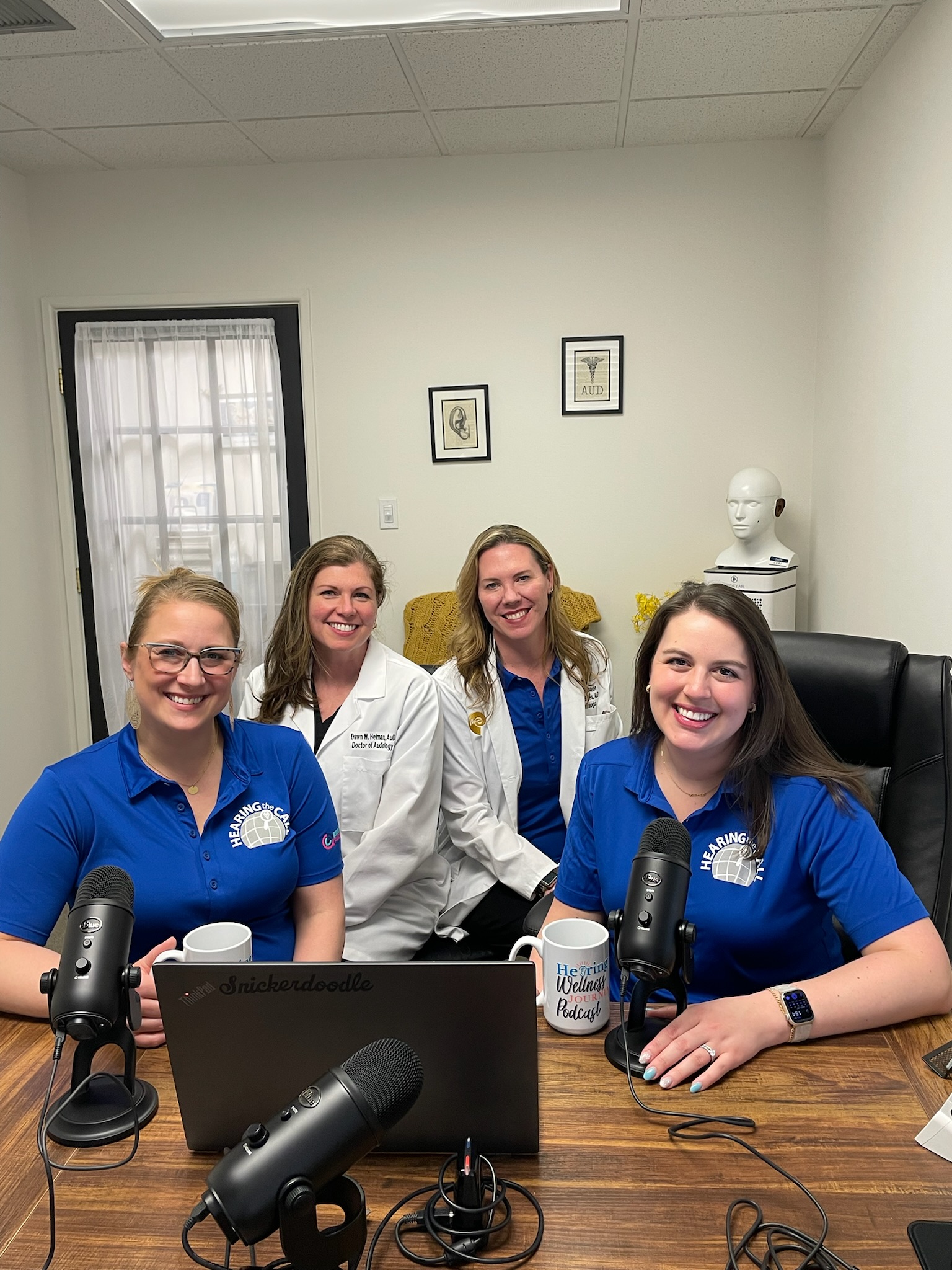
We are blessed with the opportunity to help people every day who have varying degrees of hearing loss and hearing disorders. We moderate this podcast to give you the ability to listen in on others' stories of triumph and perseverance.
Stay Connected
Never miss a podcast update, webinar or the latest news
We do not share any personal information with third parties.
CHECK OUT OUR
Resources
Advanced Audiology Consultants
Our Team of Audiologists are located in Oak Brook, Illinois and are here to help you hear.
EntreAudiology
Practice Locator
Need a recommendation for a qualified audiologist? We have a practice locator to help you find a reputable practice.
Hearing Aide Certification Online Course
Teaching nurses, CNA's, and caregivers how to help assist someone who wears hearing aids.
Hearing Wellness Journey Aural Rehab Course
Teaching you everything you need to be as successful as possible with your hearing aids with a series of videos.
Contact Us
Would you like to be a part of our podcast?
We welcome you to share your story too!