Hearing Wellness Journey Podcast
32- What's the Audiologist's Role When Fitting Hearing Aids?
Listen and Subscribe on Apple Podcasts
Listen and Subscribe on Spotify
#32: What's the Audiologist's Role When Fitting Hearing Aids?
SHOW NOTES
Hearing Aids: Choosing the Right Path With Guidance From a Professional
Whether you're considering OTC options or prescription technology, hearing aids work best when paired with accurate testing, proper fit, and expert support. In this episode, our audiologists explain how to avoid the most common mistakes and choose solutions that match your unique needs.
Why a Quality Hearing Test Matters
A thorough diagnostic hearing test is the foundation for every treatment plan. As Dr. Emily Johnson shares, many people are surprised to learn that wax, ear canal shape, or incorrect equipment can lead to inaccurate results that affect the performance of their hearing aids. Unlike quick retail screenings, a calibrated sound booth and physical examination ensure your results are trustworthy.
OTC Hearing Aids vs. Prescription Options
OTC devices can be a great choice for individuals with mild to moderate hearing loss—when paired with a proper hearing evaluation. Dr. Heiman explains that many people buy devices without confirming wax removal, ear canal shape, or return policies, leading to frustration and wasted money.
Prescription hearing aids offer personalization, advanced features, and Real Ear Measurement (REM) to verify accuracy in your ear canals. Because ear canals differ drastically between individuals—and even between ears—REM ensures your devices perform at their best.
Why Fit and Customization Are Critical
Physical fit determines comfort, clarity, and feedback control. From domes to custom molds, small differences dramatically affect sound quality. OTC options rarely account for unique ear anatomy, which can limit performance. Prescription fittings allow your audiologist to choose the best dome style, fine-tune acoustics, and adjust technology based on your real-world experiences.
Holistic Audiology: More Than Just Fitting Devices
At Advanced Audiology Consultants, care doesn’t end after choosing hearing aids. Patients receive test drives, follow-ups, communication strategies, listening exercises, and ongoing support. This holistic model ensures both your ears and your brain adapt successfully—especially in challenging environments like noise or group conversations.
When to Ask for Professional Support
If you’ve purchased hearing aids and they aren’t working, or if your hearing aids are sitting in a drawer, it’s not your fault. The team encourages listeners to ask questions before buying online, comparing models, or investing in upgrades. Even basic devices can perform beautifully with expert fitting.
To see the video edition of this episode with closed captioning, please go to 👉 Hearing Wellness Journey Podcast: https://hearingwellnessjourney.com/podcast/
TRANSCRIPT
===
[00:00:00]
Narrator: Welcome to the Hearing Wellness Journey podcast. An exploration of determination, hope, self-discovery, and triumph. We'll share the personal experiences of those that are living with hearing loss and provide a haven for their stories to show others that they are not alone in this journey. Please welcome your hosts.
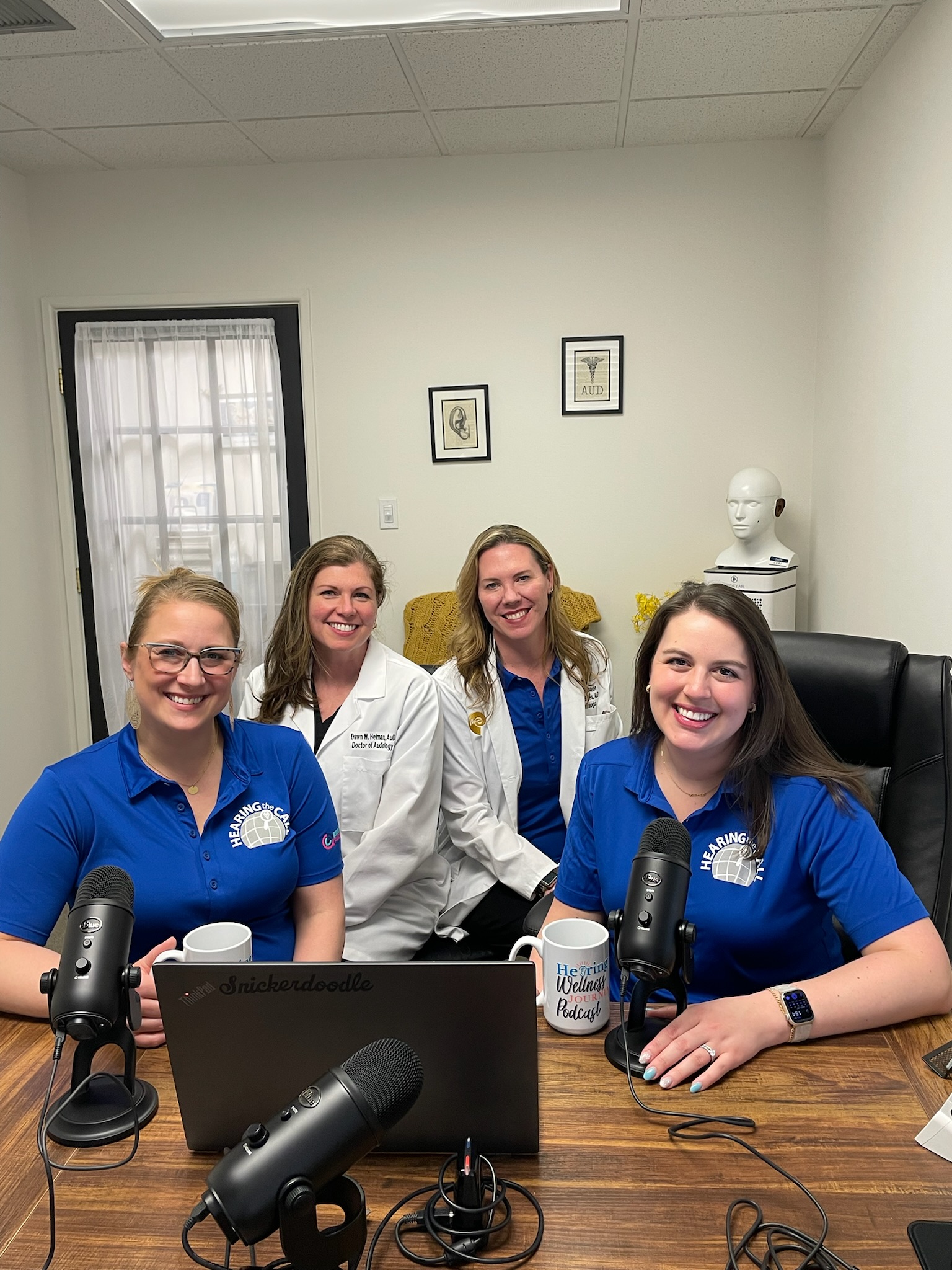
Dr. Emily Johnson: Hi there! I'm Dr. Emily Johnson.
Lindsey Doherty: Lindsey Doherty.
Dr. Dawn Heiman: And Dr. Dawn Heiman. And we're gonna talk about the role of the audiologist in this world of correcting your hearing.
---
Dr. Dawn Heiman: Whether it's over the counter hearing aids... prescription hearing aids... where do you begin?
Dr. Emily Johnson: That's the biggest question that most people have is: "Yeah, I've had my hearing tested, but they didn't look in my ears beforehand. I just went in a room. It took me about four minutes, and they said, 'Here you go.'"
---
Dr. Emily Johnson: When the [00:01:00] hearing test is the foundation for all future treatment plans, I mean, how many times have we looked at somebody's ears, seen wax, shows up as a hearing loss... we remove the wax, we do the test...
Dr. Dawn Heiman: And the hearing improved.
Dr. Emily Johnson: And we're like, "Whoa!"
Dr. Dawn Heiman: What if that was your next door neighbor? And they're like, "Yeah, this is what happened. They screened my hearing. I wasn't allowed to have a copy of my hearing test results. They never looked in my ears. I bought these hearing aids, and now they're just in the drawer."
Dr. Emily Johnson: Right. Or, "I hate them."
Dr. Dawn Heiman: Well, why are they in the drawer? You don't wanna repeat that neighbor's story. What do you do?
Lindsey Doherty: No.
Dr. Dawn Heiman: What would be better? 'Cause time is money guys. And money is something that you don't wanna just burn through. And you don't wanna buy a bunch of junk that doesn't work. You could put all that money into something that does work, if you knew where to go. So that's why you're listening. Yeah.
Lindsey Doherty: The investment in quality. And quality in both the provider as well as the product.
Dr. Emily Johnson: [00:02:00] Absolutely. You have to start with a quality hearing test. That's the foundation. Being able to know the softest sounds that you can hear across the board. All of the hearing aids are programmed based on that information. But that doesn't always tell us the full story.
So then, in our office, we take that next step of: "What do things look like when you're in noise?" Because, so many times, if you just look at a piece of paper, you're like, "Oh, I wouldn't expect them to struggle that much." And then we put a little bit of background noise and it's like, "Oh. Okay. So we're working with something else here that we need more supportive devices for those background noise situations," which if you don't test for it, you don't know about it.
Dr. Dawn Heiman: There's three to four different types of what's called presbycusis. The presbycusis is the type of hearing loss that comes on from aging. We can't [00:03:00] assume that you have ears that happen to get a little quieter, and once we make the sounds loud enough, the signal's gonna go through and great.
Sometimes, there's breakage at the cellular level. Sometimes, it is cognitive overload. But you are hearing clearly. There's different things, and we need to test you, so that you're treated with the right products.
You just touched on, I'm sorry, did we just barrel over the fact that some places don't look in your ears and remove the wax before they fit you with hearing aids? And you did... you were nice. You're very nice, Dr. Emily Johnson, to say, "Well, and you know... it happens to be they come in, and we remove the wax and, oh, lo and behold, the hearing got better."
You have to start with a good foundation! Making sure we check all parts of the ears and test them correctly. Because that's your diagnosis, just to start!
Dr. Emily Johnson: I only bring this up because it's been at least two or three patients within the past few months. I always lay out the plan of the appointment. "We're gonna spend two hours together. This is the [00:04:00] plan. No surprises. If you have any questions, let me know."
"So are you gonna take a look in my ears?"
"Yes, of course."
You have to look in your ears. That's the foundation for everything that we do. Like to pick out the side that we're gonna do to measure your eardrum. What type of headphones are going inside your ear canals?
I have some patients where I look in their ears and I'm like, "Oh, you have bigger ear canals than I would've expected." Or, "You have really small, curvy ear canals that collapse onto each other." And if you don't look, you have no idea if things are set up correctly, and then you might get some funky test results, and you don't know why.
Lindsey Doherty: You don't know why.
Dr. Dawn Heiman: You could have ear wax in your ears. We can't call that a diagnostic evaluation if they never looked in the ears. They put the insert headphones in. They're clogging the sound port with your wax. And now you have a false result.
---
Dr. Dawn Heiman: The test results that we do are [00:05:00] different 'cause we look in the ears, and then we test you in a calibrated, sound booth with calibrated equipment; because there are screenings that you can do on your phone, but we don't know if your headphones are calibrated correctly. We don't know if you're in a noisy room, or someone started talking, and those are invalid results.
---
Lindsey Doherty: And we don't know if you have wax.
Dr. Dawn Heiman: So many people come to us with a poor fit - the domes, the parts in their ear, was completely wrong - and it's because we're looking at the nuances of your ear canal. That part on the end is the most important part, because it changes everything acoustically.
If you need a closed dome versus an open dome... you needed a larger dome because they put in a power dome, but it was so small that all the sound was leaking out. That's not good. All these things you think, "Oh, she just looked in my ears..." She is thinking a thousand other things during that time. She's just not sharing it with you but already preparing the future for you.
Dr. Emily Johnson: So when you think OTC (over-the-counter), which is a quality [00:06:00] option for the right type of people...
Dr. Dawn Heiman: Yeah.
Dr. Emily Johnson: And if you're really in that mild to moderate [hearing loss range]. You routinely have your ears looked in. There's no wax. No concerns there. Then that's a great option for you, but we still encourage you to come in and get checked out to make sure that it's still set appropriately.
Dr. Dawn Heiman: You put our hearing test results in the app for the over the counter device.
Dr. Emily Johnson: Right.
Dr. Dawn Heiman: Don't just put anything in.
Lindsey Doherty: Right. Don't trust what you can do with your headphones.
Dr. Dawn Heiman: Yeah. Just do that first. Put it in, and then you can ask us questions.
---
Dr. Dawn Heiman: Make sure you get the return policy and find out super quick 'cause you got 14 days; and they might not give you back your money if you don't send it back in the first two. Find out really fast if this is what you want.
We've seen it all.
---
Dr. Emily Johnson: When things come over the counter... like even if you take AirPods.
Dr. Dawn Heiman: Oh, yeah...
Dr. Emily Johnson: Not even touching on the hearing aid aspect of it.
Dr. Dawn Heiman: Yeah, right.
Dr. Emily Johnson: Physical fit. You just wanna listen to your music. [00:07:00] The only AirPods that fit in my ears are gen one. They switch the shape of it. It doesn't fit in my ear canal for gen two. If you have the AirPod pros, and you have the little squishy piece that goes on at the end, you're given a specific range. They're usually perfectly round, and that's it. Well, what if your ear canal doesn't accommodate a nice, perfectly round shape? That's it!
Dr. Dawn Heiman: It's a little oblong, but you're right. Absolutely right. Yeah.
Dr. Emily Johnson: And then when you think over the counter hearing aids... the amount of my patients who have varying types of domes, mismatched between manufacturers to get the nice, perfect fit because we can verify it with Real Ear Measurements, it's crazy. My graduate students who work with us are like, "Oh, but this is an X, Y, and Z manufacturer," I go, "Yeah, but I like this one better on this specific person."
And maybe they're different between ears, and it's an old style versus a new style, but... when you go [00:08:00] OTC, you just don't have that customization. So if you know that you have tricky ear canals, if you know that nothing has ever fit right, you're probably gonna need that next level of customization that an in-person audiologist can provide for you. Physical fit of the hearing aid is critical.
Dr. Dawn Heiman: They give open domes, closed domes, power domes; but if you don't understand the acoustics behind your hearing test results, which one's gonna be most appropriate, we can help with that, but a lot of people have a high frequency hearing loss, and they're having a problem with clarity, not volume. And so you kind of wanna close everything down so that you get that upper, higher range without feedback. But then you have to worry about your voice, and the occlusion effect where you sound boomy and echoey.
So, just consulting with us, we can help you find the part that would be best. Sometimes we can't, but I applaud anybody who is problem aware that wants to try [00:09:00] something. Go for it. But just don't spend a ton of money on Amazon, Alibaba, constantly buying more stuff and throwing that in a drawer and saying, "I tried, I tried, I tried."
Ask us first before you spend even $200. Just ask.
Dr. Emily Johnson: Some of the OTC hearing aid prices are in the thousands.
Dr. Dawn Heiman: Yeah.
Dr. Emily Johnson: So it's not even a $200, $300 set, which for some people is a good chunk of change still, but then you go to purchase an over the counter, and it's close to $3000.
Lindsey Doherty: Right.
Dr. Dawn Heiman: Right.
Dr. Emily Johnson: And there's no professional support for that.
Dr. Dawn Heiman: That's tough. Fitting a basic hearing aid, we in this office, could make it sound amazing. Amazing. If we use best practices. So part of us being a holistic audiology practice, we're seeing your ear canal perfectly, but we're also measuring it. We're fitting with Real Ear Measurement.
There are over the counter devices that are like a thousand dollars. $1,900 for the pair. There's one manufacturer that we can order from. We can get the [00:10:00] hearing aid. The basic technology. Fit everything great. And then if you do come into some money over time or you wanna upgrade, we can just, through the software, they allow us to enter in a code, and we get billed for that upgrade that you did.
You don't have to scrap everything. But if you don't ask the audiologist, and you're not in the office, we don't know how to help you.
We do more than just the Real Ear Measurement. The day that you start in our office, that two hour evaluation, includes trying out hearing aids.
Dr. Emily Johnson: Yeah.
Dr. Dawn Heiman: Trying to find out what works. 'Cause we can't assume in a quick visit what everything could be that will go wrong or what will go right. So we let you borrow something, come back in a week, and see what happens.
Lindsey Doherty: Take 'em for that test drive and then we can make adjustments moving forward from that with your feedback. So that when you do decide to make that investment, your hearing aid fitting is [00:11:00] even gonna be an hour long as well. We're still making adjustments. We are constantly trying to get you to hear your best and do your best.
Dr. Dawn Heiman: But we find out when domes aren't the right size, or you need a custom part, or there are different chargers, and depending on your dexterity, can you open the lid? Do you wanna open a lid? Do you wanna grab it and throw it in your purse? We find out so much.
That demo appointment, we're also already setting you up for success giving you online videos to watch to learn about your condition, learn about realistic expectations, communication strategies, things for your family to watch. Understanding how hearing better makes you happier, and all the cascading awesome stuff.
And this is a process over six weeks time, but you're learning how to care for your hearing aids, just reminders of stuff that you do at your visits. Sometimes, your mind's on something else; or the visits, things happen. And we don't get through everything. Strategies on where to sit for church. Telling you about what a remote microphone is. How could you turn on start, live, listen.
There is so [00:12:00] much that is good for you to be successful. Either take the time with you, or give you homework, reminding you of what to do in between appointments. And then easy listening exercises. And some hard listening exercises. Dr. Johnson was saying, we test in noise, right? We're gonna test you in noise at the end too.
---
Dr. Dawn Heiman: We wanna see how we've retrained your brain. We wanna give you audibility. Check that with Real Ear Measurement. And then ensure that your brain is able to absorb the new sounds, use that information, so you can have an easier conversation with someone. Whether they're speaking with an accent. Easier if they're speaking rapidly. Easier if they're in background noise. Won't be perfect, but it's gonna be way better than it was, and we guarantee better than if you had just grabbed something or went to someplace super fast that didn't take the extra time.
That's holistic audiology.
---
Dr. Emily Johnson: Right. And I think that's a pro of going to a private practice is that we have the [00:13:00] ability to slow down the process. We have the ability to take the time. We have the appointment time slots. A lot of the knee-jerk reaction of like, "Okay, we're gonna spend two hours together to go through...", and they're like, "For what?" Well...
Dr. Dawn Heiman: "Two hours?! They took three minutes and took my credit card."
Dr. Emily Johnson: Right. But we're gonna do a really comprehensive test. We're gonna do speech in noise. We're going to set you up with demo hearing aids, more than put them on you in the office for five minutes and say, "Yep. Well, there they are, so..."
Dr. Dawn Heiman: "How's that sound?"
Dr. Emily Johnson: It offers so much more flexibility.
---
Dr. Emily Johnson: And for those people who really need or want more information, slowing the process down. Because again, we want you to be successful. And we have found that moving at this rate for the grand majority of people lends itself to the most successful outcomes.
And the investment that you're making in yourself and in your hearing care is best when we go through all of these steps to check. All of [00:14:00] those boxes for you as a human.
---
Dr. Emily Johnson: Another reason is I've heard so many people try to get follow-ups at different offices and they're like, "Yeah. They won't see me for three to four months.
Dr. Dawn Heiman: Yeah.
Lindsey Doherty: That's why we ask a lot of questions when we're on the phone with you.
Dr. Emily Johnson: So many questions.
Lindsey Doherty: So that you get the right appointment, so you have the time.
Dr. Dawn Heiman: True.
Lindsey Doherty: Each appointment has its own specific amount of time. And because we wanna slow down that process, make sure that you have an understanding, we're not trying to rush through things. We wanna make sure we've explored all of your questions. You know, tell us what else can we do for you?
Dr. Emily Johnson: Right.
---
Dr. Emily Johnson: Or if you have an emergency. A dome stuck in your ear. Or you're out of supplies, and you're, of course, going on vacation in the next 48 hours 'cause that's just how life works. We have the flexibility and the staff. Excellent providers. Clinicians. All of us work so well as a team that you can see anyone who's available, and that way, we can get you in a [00:15:00] lot sooner and address those questions, concerns, or domes faster. And provide high quality care without making you wait several months just to get in for something that we could see you for same day.
Lindsey Doherty: Mm-hmm.
Dr. Dawn Heiman: Right.
And that's the nice part about our office. You're eventually gonna see all of us at some point, because you might say, "Well, I only wanna see Dr. Johnson." That's great. But you might come in, in a rush, in a panic, a day before a wedding, or you're going on a trip, and guess what? You're gonna see Dr. Michaelides, and she's gonna help you. Or you're gonna see Lindsay Doherty, and she's gonna help you. You're gonna see Dr. Heiman, she's gonna help you. We work as a team, and all work at that same high level of skill. You're gonna see us sweat. We say that we roller skate. We dance. We're all over the place, bebopping, making sure that we're not cutting corners, and that we are treating the individual human in front of us 'cause it's complicated.
---
Dr. Emily Johnson: Yep.
Dr. Dawn Heiman: It's fun though!
Lindsey Doherty: Not in a bad way. [00:16:00] Right.
Dr. Dawn Heiman: We love the smiles.
Dr. Emily Johnson: It's good.
---
Dr. Emily Johnson: I mean, Dr. Heiman, you've worked in hospital settings. I've worked in hospital settings. Sometimes you are just locked in with what the hospital system dictates. The amount of time. The amount of abilities. What you can do. How quickly you can fit people in. There's an overarching hospital system that runs that show. We have a lot more flexibility, because we're not dictated by a hospital system.
Dr. Dawn Heiman: No. That's why I started this practice. I was in a hospital system. You had to go through centralized scheduling.
Dr. Emily Johnson: Yeah.
Dr. Dawn Heiman: You couldn't just speak to someone. You were mischeduled. You had to deal with the parking garage. Finding out what floor to go to. It was so stressful for the patients. I wouldn't wanna go through that either.
So I was like, I know there's a better way. We have to be able to do a high level, hospital level, intelligent doctor's level clinic, but better. And it's all patient centered. Yes.
Dr. Emily Johnson: So here we are.
Dr. Dawn Heiman: Here we are.
Lindsey Doherty: We're doing it.
---
Dr. Dawn Heiman: Yeah. [00:17:00] So happy.
Dr. Emily Johnson: Yeah.
Dr. Dawn Heiman: It was a dream. And we've been doing this for almost 15 years now, which is crazy. This year will be our 15th year. Mind boggling, right?
Dr. Emily Johnson: It really is. But team approach, time approach, all over the board, ultimately, end goal: we are here to help. We have the luxury of how our schedules function, multiple providers that we can fit. Pretty much anybody's needs, wants, hopes for...
Lindsey Doherty: Individualized plans.
Dr. Emily Johnson: Yes. So ask us questions. We're here to help you. We give you the holistic version of everything. We have the skills, the equipment and everything to make sure that you're getting top quality hearing care in all avenues. Across the board. All of it.
Dr. Dawn Heiman: Great. Alright, so if you have questions, we [00:18:00] wanna be your source. Whether you live near us or not, you're always allowed to ask us. We have friends all over the world.
Dr. Emily Johnson: We do!
Dr. Dawn Heiman: And we do believe that you could be hearing better. We do establish realistic expectations. Some people's ears have broken that bad. But there are other options besides hearing aids or just more that we could clue you into and help you with that.
Dr. Emily Johnson: Absolutely.
Dr. Dawn Heiman: So thank you for listening!
Dr. Emily Johnson: Thanks for listening!
Dr. Dawn Heiman: See you next time.
Dr. Emily Johnson: Bye!
Lindsey Doherty: Bye.
Narrator: Thank you for joining us on this episode of the Hearing Wellness Journey podcast. For more information about what we do and the services we provide, please visit our website at hearingwellnessjourney.com/podcast, where you can find more resources based on today's discussion, as well as request to be a member of our Hearing Wellness Journey community on Facebook. That's available for our listeners exclusively on [00:19:00] hearingwellnessjourney.com/podcast.
Resources Mentioned:
Our Mission:
Our Hosts
We are blessed with the opportunity to help people every day who have varying degrees of hearing loss and hearing disorders. We moderate this podcast to give you the ability to listen in on others' stories of triumph and perseverance.
Stay Connected
Never miss a podcast update, webinar or the latest news
We do not share any personal information with third parties.
CHECK OUT OUR
Resources
Advanced Audiology Consultants
Our Team of Audiologists are located in Oak Brook, Illinois and are here to help you hear.
EntreAudiology
Practice Locator
Need a recommendation for a qualified audiologist? We have a practice locator to help you find a reputable practice.
Hearing Aide Certification Online Course
Teaching nurses, CNA's, and caregivers how to help assist someone who wears hearing aids.
Hearing Wellness Journey Aural Rehab Course
Teaching you everything you need to be as successful as possible with your hearing aids with a series of videos.
Contact Us
Would you like to be a part of our podcast?
We welcome you to share your story too!