Hearing Wellness Journey Podcast
33- The Best Hearing Aids for Baby Boomers?
Listen and Subscribe on Apple Podcasts
Listen and Subscribe on Spotify
#33: The Best Hearing Aids for Baby Boomers?
SHOW NOTES
The Best Hearing Aids for Baby Boomers: What Really Defines “Best”?
When searching for the best hearing aids for baby boomers, most people quickly discover that “best” isn’t a single device; it’s the device that fits your lifestyle, hearing needs, dexterity, tech comfort, and communication goals. In this episode of the Hearing Wellness Journey Podcast, our audiology team breaks down how active adults can make confident decisions about hearing technology.
H2: Hearing Aids for Active Baby Boomers
Baby boomers today are more active than ever; from pickleball and gym workouts to mall walking, book clubs, and travel. Modern hearing aids can support these environments with advanced noise reduction, motion sensors, and customizable programs designed for changing listening situations.
Many boomers also value streaming features, using their hearing aids to play audiobooks, music, and phone calls directly into their ears. Connectivity is no longer a “younger generation” feature; it’s a quality-of-life essential.
H2: Best Hearing Aids for Seniors: It’s Not About One Brand
The podcast emphasizes that the best hearing aids for seniors do not come from a universal ranking list. Leading manufacturers, Oticon, Phonak, ReSound, Signia, Starkey, Widex, and Unitron, all offer strong options. What matters more is:
- The type and degree of your hearing loss
- Your daily communication environments
- Whether you need Bluetooth streaming
- Dexterity and ease of charger use
- App control preferences
- Compatibility with accessories, like table microphones
A device that works beautifully for one patient may be unsuitable for another.
H2: Hearing Aid Prices, Tech Levels & Real Ear Measurement
Hearing aid prices vary by technology level, and a higher investment usually comes with better noise management, adaptability, and listening comfort. For highly active individuals, premium technology may provide the flexibility needed for a wide range of environments.
What truly ensures success, however, is not the price — it’s the audiologist’s expertise. Evidence-based fitting using Real Ear Measurement (REM) ensures the device meets your exact prescription. Without REM, even top-tier hearing aids may underperform.
H2: Styles, Customization, and Comfort
From behind-the-ear receiver-in-canal (RIC) models to custom in-ear devices, each style has pros and cons. Your audiologist helps determine whether you need:
- Custom earmolds for secure fit during activity
- Venting to reduce occlusion
- Rechargeable or disposable batteries
- A style compatible with masks, glasses, or helmets
The right style is the one you will actually wear consistently — the recurring theme of this episode.
Final Takeaway
The best hearing aid for baby boomers isn’t a universal product recommendation — it’s the device selected and tuned specifically for your life, by a professional who prioritizes personalization, ethics, and ongoing care.
To see the video edition of this episode with closed captioning, please go to Hearing Wellness Journey Podcast: https://hearingwellnessjourney.com/podcast/
TRANSCRIPT
===
[00:00:00]
Narrator: Welcome to the Hearing Wellness Journey podcast, an exploration of determination, hope, self-discovery, and triumph. We'll share the personal experiences of those that are living with hearing loss and provide a haven for their stories to show others that they are not alone in this journey. Please welcome your hosts.
Lindsey Doherty: Hi, everybody. Welcome back to the Hearing Wellness Journey podcast.
I'm Lindsey Doherty.
Dr. Emily Johnson: I'm Dr. Emily Johnson.
Dr. Stephanie Michaelides: I'm Dr. Stephanie Michaelides.
Dr. Dawn Heiman: And I'm Dr. Dawn Heiman.
Lindsey Doherty: And today's topic, we are going to be exploring the best hearing aids for baby boomers.
Dr. Emily Johnson: Which I feel like is something that people often look up.
Especially towards the end of the year. It's like best whatever, 2025. Best whatever, 2026. And then your search result comes up with all of these [00:01:00] different things. And then we're finding that more and more of our patients are super tech savvy. They're on the internet. They're looking up what is the best. And there's so much information out there.
It can be really hard to know. What's the best for somebody else may not be what's the best for you. And there's a lot of things to consider. So we'll be diving into that today.
Lindsey Doherty: It's not just being tech savvy, but I also feel like baby boomers are very active. They typically aren't living that sedentary lifestyle, and that also contributes to what we're looking at.
Dr. Stephanie Michaelides: In environments like going out to restaurants, going out with their friends, doing all those things that hearing in noise can be very difficult for them and clarity of speech for all of their active things that they're doing.
Dr. Dawn Heiman: Absolutely. So many of them are playing pickleball. They're at the gym. They're lifting weights. They're on the track doing laps, indoors or outdoors. Or even my parents were just saying that they go to the mall now. [00:02:00] It's a new thing for them. Indoor walking before the mall opens with their friends, and they're all talking, and there's music playing. So they're definitely active.
Dr. Emily Johnson: And I've definitely seen a big resurgence of book clubs.
Dr. Dawn Heiman: Yeah.
Dr. Emily Johnson: Both audio book and physical book. A reason for people to get together to discuss a certain topic. And that is often one of the things that we're looking at for programming or adding specific programs, depending on where book club is held.
Dr. Dawn Heiman: And can we talk about the books? So many of these hearing aids now stream the audiobook right into your ears while you're going for your walk. It's stimulating the brain. You're learning new things. The tech is so good right now, for anybody, but especially someone that is tech savvy, and they're active. For sure.
Dr. Emily Johnson: Exactly. And phone connectivity is a hot topic, a hot interest for people of all ages. It used to be like, "Oh, [00:03:00] this is something that the younger generations will really enjoy." But a lot of the times it's now come down to like being able to FaceTime, video call, Zoom with family members that maybe you can't get together with. We're more connected than ever on the internet.
And so being able to hear directly to your hearing aids in stereo without having it to be on speakerphone where everyone can hear your conversation is a really nice feature.
Dr. Dawn Heiman: Yeah.
Dr. Stephanie Michaelides: My mother, who has hearing aids, her favorite thing to do in the morning, she wakes up, and she streams music. So she'll be dancing around and listening to music, and that's her favorite morning routine and just streaming 'em right into her hearing aids directly.
Dr. Dawn Heiman: How cool is that? What do they call that? A silent disco? Right. You got your own headphones on, and you're doing your own dance. Good for her!
Lindsey Doherty: The baby boomers, as well, they're not all in retirement. Some of them are still in the workforce, and this is super [00:04:00] helpful for that as well.
If you're conducting business via Zoom calls, or if you are having meetings around a table, or just working with clients and customers and employees. Having that really good ability to communicate effectively and accurately.
Dr. Emily Johnson: Yeah. Also, it comes down to the ease of use.
Bluetooth, while it has some technical flaws as all electronic things do, it's an easy to use feature. And there's ways that we can have it automatically stream. We can give you the choice of if you wanna stream it or not. And it just becomes a really easy thing to use. So some hearing aids you can just put them on, you forget that they're there, and they will just work for you.
And then other ones you get a little bit more flexibility in the app.
Lindsey Doherty: Where you can make controlled changes yourself.
Dr. Dawn Heiman: Yeah.
Dr. Stephanie Michaelides: We can customize it completely for each patient, and what they [00:05:00] wanna do, and how they wanna use it, and what kind of different environments they're going into.
And we can do it specifically for each person that comes in.
Dr. Dawn Heiman: OK. Back up real quick. So let's say, like Dr. Johnson was saying, some people are looking back at 2025, what were the best hearing aids this past year? Some people right now are looking forward to what are the best of 2026. What's coming, you know? And all of them are great hearing aids. I can just drum it down for you right now, real fast. They're all like luxury cars. They're all good. At least from the top five manufacturers and the prescription hearing aids, I can speak to that. And if you work with our office or other offices that use Real Ear Measurement, we get the prescription right, there's that.
But there's all these other things we're asking too, because there's connectivity depending on your devices or what you need. You could be in a boardroom, and you are great, but you can't hear the guy on the very end or this woman over here and things. And there are little table mics that no one even knows you put it in the middle of the room. [00:06:00]
Lindsey Doherty: Right. It's not just the device itself. Sometimes we're looking at the accessories that would benefit your life as well, because it isn't just about putting a thing on your ears, or in your ears, it's the whole package, and that's what your provider should be looking at.
Dr. Emily Johnson: Absolutely. So when you're looking at "best of," all of the different manufacturers provide excellent quality hearing aids, and it comes down to how they're programmed, using evidence-based measures, like Real Ear Measurements, doing validation, making sure you're finding that benefit. And it's very easy to get lost in the different marketing terms and different ways that similar features are named differently within every single manufacturer.
And you're like, "Well, this one does this, but that one does that." I'm like, well, they're actually essentially the same idea."
Dr. Stephanie Michaelides: The same thing. Mm-hmm.
Dr. Emily Johnson: And so going to a professional who's gonna be able to break down the differences is really helpful to make [00:07:00] sure that you are getting the best one for you specifically. And that's where the lifestyle comes in.
Dr. Stephanie Michaelides: We're doing all the training ourselves, so we know exactly what's gonna be the best manufacturer for you. Like that's our job. So you come in and just by us talking to you and everything else, we can figure out exactly what manufacturer is going to be the best that will suit your lifestyle the best.
Dr. Dawn Heiman: Yeah.
Lindsey Doherty: Your lifestyle and your hearing loss, because not all are created equally. So, even though you might be reading some marketing material on one device, that's not necessarily the best one for you and your loss, so your provider will be able to help determine that as well.
Dr. Dawn Heiman: I just realized my microphone's on the other side of the room. Sorry!
Dr. Emily Johnson: And all of the manufacturers offer a rechargeable solution. They all do. But all of their chargers are a little bit different as well. And sometimes it comes down to the dexterity or visual ability of which one [00:08:00] is gonna be easiest for you to utilize that rechargeability, because that's also a factor.
Lindsey Doherty: Yeah, absolutely. How long does that battery last ? That's a huge factor as well, based on your individual lifestyle.
Dr. Dawn Heiman: So going back just a moment, by design, our practice, not like all places that you go to, offer all different manufacturers. So if there is a charger that's better for you, or there's a device that would work better with your eyes or your fingers or your device, like we work with all the manufacturers.
---
Dr. Dawn Heiman: And as audiologists, we sign codes of ethics every year between the state and the national organizations that say we will do our best to be as ethical as possible. Ethics comes first. And if a place is only selling one manufacturer's hearing aids, it is not our place. We are not driven by the sales. We are driven by the [00:09:00] human being that is in front of us.
---
Dr. Dawn Heiman: And like all of you have said, type and degree of hearing loss, devices, lifestyle, needs, desires, all of that. And then we have the training to be able to go, "OK. Oh my gosh. There's so many features. I don't wanna overwhelm you. Here's where we're gonna start. But if I'm wrong, we could change that."
Dr. Emily Johnson: The flexibility within the practice that you choose to go to and the providers that you choose to see also is gonna have an impact on how successful you are. Where maybe a manufacturer that you thought was right for you, it turns out it was too small to physically fit in your hands.
Even if you like the sound quality, physically it doesn't work. So then coming up with an alternate solution to make sure that everything is being fit and tailored directly to you and what that looks like for you as a person. Because they're all gonna handle background noise. They're all just gonna do it in little bits of different ways.
Maybe you [00:10:00] like certain sound quality over others, and that's just a preference.
Dr. Dawn Heiman: Yeah.
Lindsey Doherty: I do also wanna mention, that ability to handle in the background noise, program and personalization, sometimes that boils down to the level of tech as well. Because there are limitations within levels of tech, within each device.
Sometimes, there could be a different recommendation. If you're in a varied environment, and it's constantly changing, and you're demanding a lot, you're going to want the higher level of tech, because it's going to have more capability. Sometimes if you're not, and it's a little bit more stable, the types of listening situations you're in, then maybe top tech level is not yours, but it also doesn't necessarily have the ability to grow with you as much.
So just keeping that in mind that there are different manufacturers and then different levels of tech as well.
Dr. Emily Johnson: Yes.
Dr. Dawn Heiman: Something also to keep in mind is the part that goes in your ear. If [00:11:00] you are active, if you're doing monkey bars, if you're... don't laugh, because some people, they're doing pullups, they're doing all kinds of stuff.
Dr. Emily Johnson: I know!
Dr. Stephanie Michaelides: Pilates.
Dr. Dawn Heiman: You don't want something just popping out constantly that you're trying to put in because the place that you went to said, "Well, this should be good enough. We're just gonna push it." You might need something custom. You might need special venting. So your voice doesn't sound funny. But you need it to be deep enough, occluding enough so that when you're streaming, you're hearing things properly. So that you have the amplification you're supposed to have, but it also stays.
Some people though, we create custom parts and they're like, "Oh, no, no, no, no. I like the soft little dome that you put on." Because some people, let's say they need an orthotic for their running shoe, and others are like, "I like flip flops. I run barefoot." So we go with what's best for you. But we don't stop at just one level. We can keep going to make the customization better.
Dr. Stephanie Michaelides: That's another thing that's important is that we are constantly seeing our patients, and we can always make any adjustment to anything that's [00:12:00] happened. It's not just a one time where you come in, and we fit you.
We have a great relationship with you, and we will go and each time you come in, just based on what you said, we can make these changes to make sure that everything is perfect.
Dr. Emily Johnson: It's a partnership.
Dr. Stephanie Michaelides: Mm-hmm.
Dr. Emily Johnson: Your opinion as the patient is valued. We come from the vantage point of: this is our expertise. We have the knowledge. We have the training. But ultimately you are the person who's experiencing it. So if you communicate with us, we're gonna be able to work with you on: how can we maximize your benefit from the devices by using your personal experience and our professional knowledge?
Dr. Stephanie Michaelides: And that's why I think it's great that we allow patients to actually demo hearing aids and go out into their environment and really see, as opposed to just putting on a pair of hearing aids in the office. This is a quiet, controlled environment. This is not your house with your specific grandkids or your best [00:13:00] friends in a restaurant.
So the best way to figure out what kind of technology we provide, give you that whole entire week to go out into your difficult environment, your places you're having trouble, and actually see the benefit of the hearing aids themselves.
Dr. Dawn Heiman: True.
---
Dr. Dawn Heiman: And the day of the fitting, especially the demo, that's not even your full prescription yet. We haven't done a blur measurement yet. But we're actually guiding you through the rehab process with those multiple follow up appointments and giving you homework, digital coursework that you're doing, because some places, their business model is to sell that product, ship it to you, or you just pick it up that day. Boom. It's done. First fit, and bye-bye. They're moving on to selling more stuff.
Whereas us, the rehab starts the day that we put something on you, because you have to practice in those environments. You need to listen to the audio books. You need to practice even in your kitchen with music going so you can practice what it's like to be in a noisy restaurant.
You can't just put these on and think: boom. I spent a [00:14:00] lot of money. You could go to places and spend $10,000 and they don't do anything special for you.
Dr. Emily Johnson: And that kind of boils down to: the best hearing aid for you is the one that you're going to wear.
---
Lindsey Doherty: That's so true! Because really, all the manufacturers, they're all really into research and development. They're really trying to make improvements as tech is honed and read into people's lifestyles. But that is so true. The best one is the one that you're going to wear. Because there's no good in it if you just put it in a drawer and say, "This doesn't work for me."
Dr. Dawn Heiman: Yeah.
Dr. Emily Johnson: Right. And so the most common type of hearing aid is the one that you probably think about the most, where it's got the little piece that goes right behind your ear, that nice little wire that hugs down your ear, and that soft dome or custom piece that goes into your ear canal.
It's called a receiver in canal, a rick, whatever you wanna call it. It's the most [00:15:00] common type. But I have had some patients who come in, they're like, "I will not wear that style."
Dr. Dawn Heiman: Sometimes they can't!
Dr. Emily Johnson: They can't wear that style.
Dr. Dawn Heiman: You're a surgeon. You have masks. You can't be all gloved up and something happens.
The mass moves, and now it dropped on that floor, and you can't go get it. It's a nightmare for some people, depending on where you live and work. There are some custom ones for sure.
Dr. Emily Johnson: Right.
Dr. Dawn Heiman: We try.
Dr. Emily Johnson: We try! And we've been very successful with fitting the smaller, in the ear type hearing aids for different reasons.
If you're not going to wear the style that goes behind your ear, but you will wear the style in your ear, and we go through the pros and cons of both styles. We just want you to benefit from your devices, and the one that's going to stay in your ear rather than in your drawer.
Dr. Dawn Heiman: Right. And if we use Real Ear [00:16:00] Measurement, and if we do really great, not just good, great impressions that go deep enough into the bony portion of your ear canal, we can reduce the occlusion effect. If we order it with the right venting, if we work really hard on our end, you can be more successful.
But it's not a: we bought 10,000 or a 100,000 of these exact same ones. We just pulled it off the shelf and stuck it in your ear, and you should be the 80%. No. We treat everybody as if they're the individual who they are, and you get to choose what do you think the best hearing aid would be for you? And then we work with you with that. Sometimes we're ordering a stronger receiver or a different style.
We're thinking about if you do have dexterity issues, but we're your guide, we don't tell you what to do.
Dr. Emily Johnson: Right. It becomes a partnership, and as a healthcare provider, you want the person that you're seeing to have an opinion about what you should [00:17:00] do rather than, "Oh, it's totally up to you." And we'll be able to provide an opinion on what we recommend, what is gonna be best, and then provide reasoning for it. And if you are totally against that style, that color, whatever it is, we're flexible to work with that because we want you to feel heard as well, and that your needs are getting addressed.
I would rather have you wear the style that you're going to actually wear than something that you purchased, it sits in a drawer for three to four years, and then you come back and say, "Well, I was never happy with this in the first place."
Dr. Dawn Heiman: Yeah. And I know they're working hard on trying to create this Bluetooth connection with the custom.
Dr. Emily Johnson: Yes.
Dr. Dawn Heiman: It doesn't work with everyone's type and degree of hearing loss. If you have enough of a hearing loss, it can be a good fit. But then the size of your ears creates a problem or a benefit. It's not so much the outside. It's the ear canal. If you have a larger ear canal, [00:18:00] bonus! You could get more into the device, so you could be wireless. But doesn't work like that always. But we're gonna try.
Dr. Stephanie Michaelides: That's why it's important to come to a practice like this. Every single person that walks in that door is gonna be treated differently based on what their needs are and levels of technology and all of those things. And we can work with anything and any type of technology, and that's exactly what we do. Different sizes, different customs, whatever is needed.
Dr. Dawn Heiman: Absolutely.
Dr. Emily Johnson: Yeah.
---
Dr. Emily Johnson: So what it comes down to is: what is the best hearing aid for baby boomers, or for anyone in 2025, 2026? The one fit by a professional that's willing to meet your needs and the financial investment that you can make into your hearing health and going with what's gonna be most personalized to you. That is the best option out there.
---
Dr. Dawn Heiman: And if I may, I'm just gonna go there. [00:19:00] Not in any particular order. But we'll say Oticon, Starkey, ReSound, Phonak, Signia. Again, not in particular order, it's just how it came into my brain. There's Widex. Unitron.
---
Dr. Dawn Heiman: Costco does not make hearing aids. If you read consumer reports and says Costco has the best hearing aids... they are different manufacturers that are selling within there, so you have to look at that. Miracle Ear does not make hearing aids. Those used to be Signia hearing aids. Now, I hear that they now sell Phonak. Beltone does not make hearing aids. Those would be ReSound hearing aids. Audio Nova, they renamed. Okay, so that's Phonak. Hearing Life. Is that a name?
Dr. Emily Johnson: Mm-hmm.
Dr. Dawn Heiman: So that's Oticon. And just like Kirkland Variant, they're renamed. Just know that a good starting point is finding a place that will work with you directly and not just give you whatever is on their shelf and they're trying to push today.
---
[00:20:00]
Dr. Emily Johnson: Absolutely. And if you have questions about what you're wearing, what you should be wearing, and just because it's private labeled doesn't always mean that we can't hook it up to our software.
Some of them are lock chips, and we really can't hook them up to our software to make adjustments. But some can, and they use just the like umbrella manufacturers' software. So even if you've purchased it from somewhere else and you're like, "I just wanna get a second opinion," or "Can these be retuned?" Or this and that. We're happy to help you, because we want you to feel and hear the best that you can.
No matter what.
Dr. Dawn Heiman: And we can give you an objective opinion by simply taking your latest hearing test results, putting it into the Verifit2 Real Ear Measurement system. If we can't do anything with the hearing aids but just clean them and then run the Real Ear Measurement with the way your settings [00:21:00] are, we all see whether or not audibility is there.
We will see if you're matching your targets or not. We might not be able to make an adjustment, but we can answer the question of, "Is this as good as it gets?" Maybe you need a referral for a cochlear implant, but the only way to know is to have that scientific data.
Dr. Stephanie Michaelides: Mm-hmm.
Dr. Emily Johnson: Absolutely.
Alright. Well, we thank you for taking time out of your day to listen to our episode, and if you find yourself entering into that search bar, "best hearing aids for baby boomers" or "best hearing aids for active person " or "best hearing aids for my mom and dad," we are here to answer all of your questions and help guide you and them on your hearing journey.
And if you have any questions, go ahead and reach out, but I hope you all have a wonderful rest of your day.
Lindsey Doherty: Thanks for listening!
Dr. Emily Johnson: Thanks for listening.
All: Bye bye!
Dr. Emily Johnson: See you next time!
Narrator: Thank you [00:22:00] for joining us on this episode of the Hearing Wellness Journey podcast. For more information about what we do and the services we provide, please visit our website at HearingWellnessJourney.com/podcast, where you can find more resources based on today's discussion, as well as request to be a member of our Hearing Wellness Journey community on Facebook. That's available for our listeners exclusively on HearingWellnessJourney.com/podcast.
Resources Mentioned:
Our Mission:
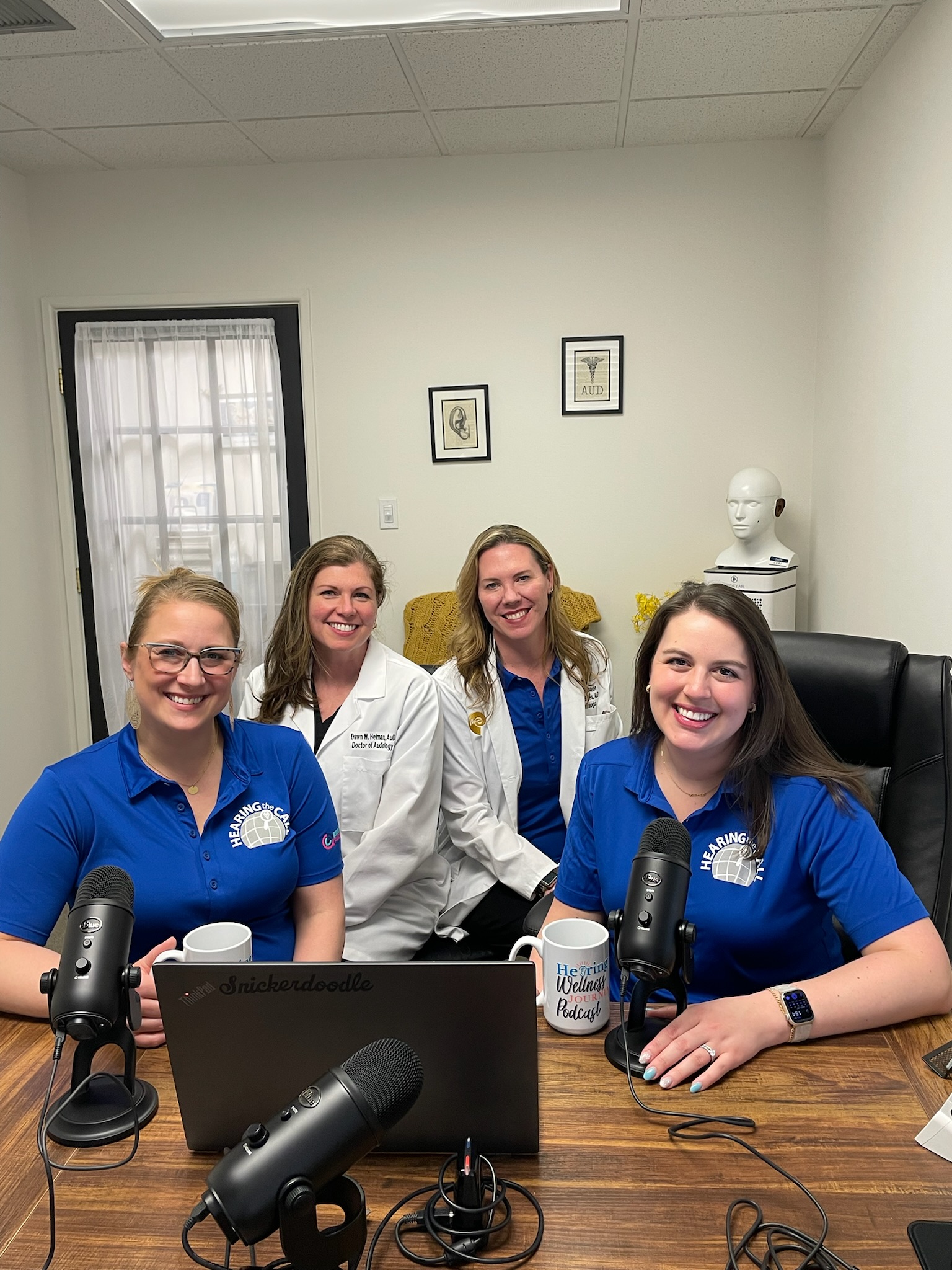
Our Hosts
We are blessed with the opportunity to help people every day who have varying degrees of hearing loss and hearing disorders. We moderate this podcast to give you the ability to listen in on others' stories of triumph and perseverance.
Stay Connected
Never miss a podcast update, webinar or the latest news
We do not share any personal information with third parties.
CHECK OUT OUR
Resources
Advanced Audiology Consultants
Our Team of Audiologists are located in Oak Brook, Illinois and are here to help you hear.
EntreAudiology
Practice Locator
Need a recommendation for a qualified audiologist? We have a practice locator to help you find a reputable practice.
Hearing Aide Certification Online Course
Teaching nurses, CNA's, and caregivers how to help assist someone who wears hearing aids.
Hearing Wellness Journey Aural Rehab Course
Teaching you everything you need to be as successful as possible with your hearing aids with a series of videos.
Contact Us
Would you like to be a part of our podcast?
We welcome you to share your story too!