Hearing Wellness Journey Podcast
37- Does Brain Fog Happen from Hearing Loss or Hormones?
Listen and Subscribe on Apple Podcasts
Listen and Subscribe on Spotify
#37: Does Brain Fog Happen from Hearing Loss or Hormones?
SHOW NOTES
Brain Fog and Hearing Loss: What Women Need to Know
Many women report brain fog, listening fatigue, and difficulty following conversations—especially during perimenopause, menopause, or pregnancy. In this episode, the Hearing Wellness Journey team explores the growing connection between brain fog and hearing loss, hormonal changes, and auditory processing challenges that often go undiagnosed.
How Hormones and Hearing Are Connected
Hormones play a critical role in how the brain processes sound. Fluctuations during pregnancy, perimenopause, and menopause can impact the inner ear, auditory pathways, sleep quality, and working memory. This is why many women experience tinnitus, fullness in the ears, or the feeling of “not hearing clearly” even when hearing tests come back normal.
Auditory Processing vs. Hearing Loss
A key theme of this episode is auditory processing. Standard hearing tests measure the ability to detect sound, not how the brain interprets it. Many women with normal audiograms still struggle in background noise, meetings, or social settings due to cognitive overload, reduced working memory, or auditory processing difficulties.
Why Baseline Hearing Tests Matter
The hosts emphasize preventative hearing care. Establishing a baseline hearing test allows clinicians to track subtle changes over time—even small shifts of 5–10 decibels can significantly affect self-perception, fatigue, and communication. Early identification reduces the risk of brain reorganization and long-term cognitive strain.
Social Connection, Brain Health, and Hearing
Untreated hearing challenges—whether sensory or cognitive—can lead to withdrawal, anxiety, and isolation. The episode highlights the importance of staying socially engaged through FaceTime, Zoom, music, and group activities. These tools provide both auditory and visual input, reducing cognitive load and supporting long-term brain health.
Expert Voices Featured
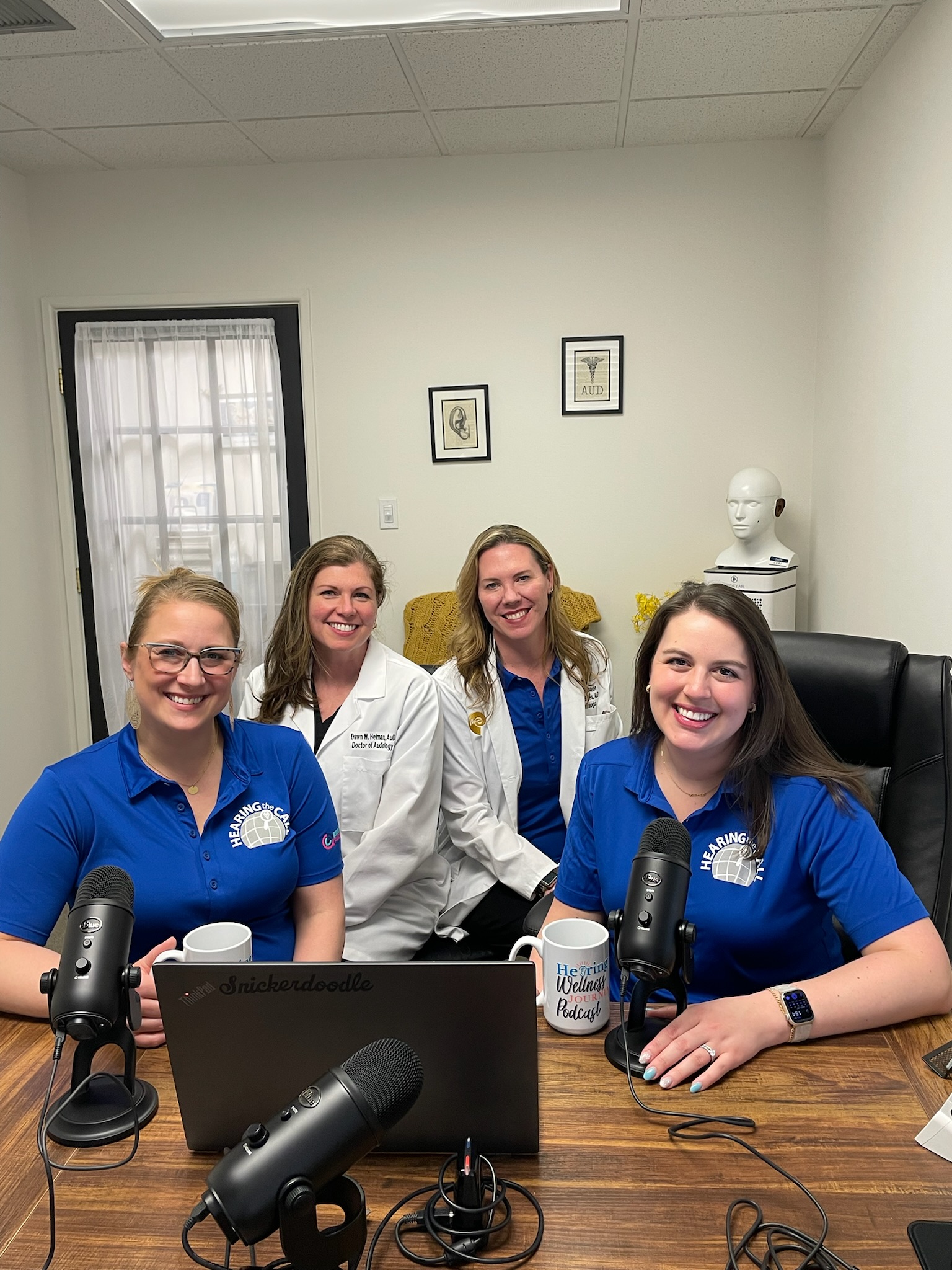
- Dr. Dawn Heiman, Audiologist
- Dr. Emily Johnson, Audiologist specializing in auditory processing
- Dr. Stephanie Michaelides, Audiologist
- Lindsey Doherty, Host
Together, they advocate for believing women’s experiences, proactive hearing screenings, and addressing hearing health as a whole-brain, whole-life issue.
To see the video edition of this episode with closed captioning, please go to Hearing Wellness Journey Podcast: https://hearingwellnessjourney.com/podcast/
TRANSCRIPT
===
Does Brain Fog Happen from Hearing Loss or Hormones?
===
Dr. Dawn Heiman: [00:00:00] So many people think hearing loss is a man's disorder. And it's not. Women definitely have their own unique struggles.
Narrator: Welcome to the Hearing Wellness Journey podcast, an exploration of determination, hope, self-discovery, and triumph. We'll share the personal experiences of those that are living with hearing loss and provide a haven for their stories to show others that they are not alone in this journey. Please welcome your hosts.
Lindsey Doherty: Hello! And welcome back to today's episode of The Hearing Wellness Journey podcast. I'm Lindsey Doherty.
Dr. Dawn Heiman: I'm Dr. Dawn Heiman.
Dr. Stephanie Michaelides: I'm Dr. Stephanie Michaelides.
Dr. Emily Johnson: And I'm Dr. Emily Johnson.
Lindsey Doherty: And today we're gonna be talking about, for women most specifically, but [00:01:00] perimenopause and menopause, brain fatigue and hearing loss.
Dr. Emily Johnson: Oh, the joys of hormonal changes and being a woman in general. Let's add it to the list!
Lindsey Doherty: Yes. So, let's dive right in.
Dr. Dawn Heiman: I feel like over the years I've seen so many people who come to us for a hearing test. And we think that they're gonna have a hearing loss, and they don't. Or, they do have a bit of a hearing loss, but they don't understand why.
Here's some things that are top of mind that I wanna talk about. Okay. First is: have you had a hearing screening since the third grade? Do we even know what your hearing is like? How can you reduce your chances of cognitive decline? Or is there a change in cognition?
Another is: how is your brain reorganizing? Especially if you got hearing aids and you're still not hearing well... is it you? Is it the prescription? Did it reorganize with the bad prescription? Hormone [00:02:00] replacement therapy? I wanna talk about perimenopause, menopause, post menopause, how it's affecting their brain and its processing.
And we say, "I can't hear." Is it the ears? Is it the brain? Is it a fluctuation in our ability to focus? Did something happen in the inner ear, in the cochlea, at the basilar membrane, because of a lack of some kind of hormone? How about exercise and hearing loss and women?
I would like to talk about music. I would like to talk about how it will improve your life on many levels. And then lastly, the one thing we all seem to care about. OK, maybe I'm just talking for myself, but I think, the psychosocial aspects of being able to hear and communicate with your family or your friends. Your girlfriends. You go out to lunch.
If you are struggling with your, let's call it, "hearing," and we don't know if it's cognition? Is it brain fog? You actually [00:03:00] have perfect hearing. But how does it affect your actual life socially, and how does that affect your mental status if it goes for too long? I open the floor.
Dr. Stephanie Michaelides: I found that I've tested almost every single one of my friends hearing, because as we go through, like you said, perimenopause, all of my friends are feeling like they just can't hear like they used to. So I seriously have tested like 10 of my girlfriends' hearing. And it's all been basically in the normal range. But I just find with the hormone changes that they're having a really difficult time hearing. Those hormones really affect how we're perceiving sound with brain fog and all of that.
Dr. Dawn Heiman: Because what if it isn't a hearing loss? We need to start with that. Just find out. How's the hearing? And then we go from there. Dr. Johnson is doing auditory processing evals all the time.
Dr. Emily Johnson: Absolutely, and I mean, so many times we have people call in and say, "I feel like I'm [00:04:00] not hearing as well as I used to. I'm having all these difficulties I didn't used to have."
And you do the traditional hearing test, everything comes back normal. And for a lot of places, outside of our office, that's the final step. And they say, "Well, your hearing looks great. You can detect the beeps at a very soft sound. See you in three years.
Dr. Dawn Heiman: "Bye!" Yeah.
Dr. Emily Johnson: And I've been doing a lot of auditory processing evaluations, and I'm sure I could run the numbers somewhere, but majority of them have been female in general, where it's starting to impact work performance. Their ability to hear and understand in background noise. Job expectations. And some of them come up with: Yes, there are auditory processing difficulties and deficits that we can provide accommodations to, offer therapies for, and sometimes it does come back normal.
But I will say that working memory has popped up [00:05:00] as a pattern between a lot of these. And it comes down to: Well, how many other things are we thinking about? We're so excited for girls night, book club, things coming up. But then we also have a laundry list of other things that we need to do and manage, and then it's like, "Do I have more room in my working memory basket to really enjoy my time out and my night away?"
That working memory is already taken up by something else, and it just snowballs into this: "I feel like I can't hear you," because your brain is like, "Well, my basket is full. Anything new is simply gonna get just pushed off to the side." And it's frustrating! For everyone involved.
Dr. Dawn Heiman: It's so frustrating. And that can involve someone that has normal hearing or hearing loss. So, gosh, an untreated hearing loss [00:06:00] can lead to your brain reorganizing, and now your eyes are taking more of that energy. The temporal lobe, the brain portion that's processing sound is not using that energy.
So everything reorganizes. And then that puts that extra stress on your eyes and your memory. Some people have a hearing loss that they know of. We've corrected it. But you should be working on short term working memory tasks, playing different memory games and things like that to keep yourself sharp. But let's talk about the bigger feature.
Let's say someone has treated hearing loss or just doesn't have a hearing loss. Can we talk about the fluctuations in women with their hormones starting in their late thirties? Or even before that? Gosh. Pregnancy. Fluctuations in hormones then. And this is something that is separate than... men don't experience this.
They have the same [00:07:00] hormone levels typically their entire life. But this is something that I think should be spoken about.
Because so many women are worried about foggy brain. They're not at the top of their game like they used to be. They're juggling so many things, and they're putting the blame on themselves. And this is actually something that's physical.
So many people think hearing loss is a man's disorder and it's not. Women definitely have their own unique struggles.
So let's start with pregnancy.
Dr. Emily Johnson: So, everybody knows with pregnancy your hormone levels change. And they fluctuate. And they fluctuate rapidly. And to significantly higher than normal or typical levels.
And there are different [00:08:00] hormonal changes that can cause different things to go on with your ears. Some develop tinnitus. I know with my last pregnancy, I had a two to three week time span of: I felt like I couldn't hear out of my left ear. Everything just felt really hollow. I had some pulsatile tinnitus because your blood volume increases by over 50%.
Your blood pressure can go up, and you just have all of these different sensations. I went into work in a panic. I was like, "Somebody needs to test my hearing because I can't hear out of my left ear." Everything was normal. But I still had this awful perception that my left ear was worse than my right ear. And then two to three weeks later, it just went away.
Dr. Stephanie Michaelides: I find that eustachian tube dysfunction actually can happen with hormonal changes. Young women come in with like, "I can't [00:09:00] hear." I think I have wax." All of this. And it just turns out that it is eustachian tube dysfunction. And I find that it happens more in women than it does in men. So that's also a very common thing to have happen, and that's probably what was going on with you.
Dr. Dawn Heiman: So many women... most choose, or they're being encouraged by their doctors, to not take any kind of antihistamines, anything that could add more chemicals to the body. So, women are suffering with extra congestion and not being able to pop their ears.
Dr. Stephanie Michaelides: Yeah. From the day I was pregnant to the day I gave birth, I was so congested and runny nose and everything.
And then that also adds to the hearing, and that's just hormones, you know? So.
Dr. Dawn Heiman: Right. And all of that, if you're congested, you're not sleeping well either. "I can't hear." Well, because you haven't slept, your brain is on overdrive.
Dr. Stephanie Michaelides: And there's that fatigue again.
Lindsey Doherty: And that is a really good point. Because during pregnancy, obviously you don't sleep very well. You're very uncomfortable. So you're not sleeping. You're feeling very foggy. [00:10:00] A lot of times people call it "mom brain." And my youngest is 11, and I'm still blaming it on mom brain. But there's so many other things that are happening with like perimenopause as well, and that fluctuation of hormones, the increase in anxiety, the sleeping problems with night sweats. You're literally not recharging your brain.
Dr. Dawn Heiman: And the disruption can cause a disruption in your inner ear too. We need these hormones in our inner ear. But if there is a disruption and something changes, let's say the hearing doesn't completely change, but you can start hearing tinnitus or ringing, and then that lack of sleep, it can cause you to fixate on that because it's the one time you're like, "I'm finally by myself. I'm finally taking a break. And I have this going on in my ears." And then it exacerbates, and it causes so much stress.
And again, [00:11:00] sometimes we test hearing, and our test results aren't sensitive enough to pick up the change that you're hearing. I had that right after my daughter was born. It was the right ear. I swore I came out, I'm like, "I have fluid. I know for a fact. I have a hearing loss. This is terrible."
I had had a lot of congestion. It was in June of 2002, and all of the testing was normal. But I knew I was different. It's just we didn't have tests that were sensitive enough to pick it up. A lot of it's believing the woman that's in front of us that says, "I'm not normal. I know something's changed." And it's like, what are we gonna do for them? But also, sometimes it's not a hearing loss. Sometimes it is. But at least start with the screening.
Dr. Stephanie Michaelides: I also feel like that hearing loss might be there. They could still be within that normal range. They just know that they're not hearing as well as they did 10 years ago.
And they're still within the normal range, but that's why having the baseline is so important. Because then we can tell where [00:12:00] they started from. And even 5 decibels, 10 decibels, can make a huge change in your own self perception.
Dr. Dawn Heiman: If you do have an issue, so many studies say the sooner you do something, the better your life will be. The less your brain has to reorganize to compensate. If something changes, the average person waits seven years to do something.
Well, that's seven years of your brain not getting consistent auditory input, and then it can cascade into these other issues that are mind boggling to you. You're like, "I don't understand why I can't seem to focus. I don't even... I can't... someone's having a conversation. I can't keep with them like I used to. And I just don't wanna go to book club anymore."
Dr. Stephanie Michaelides: Mm-hmm.
Lindsey Doherty: Right.
Dr. Emily Johnson: Absolutely. I think we touched on this in our initial women and hearing podcast, but especially with pregnancy and then dipping into the peri / premenopausal, so many things get written off as, "Oh, well that just kind of happens." [00:13:00] And you're like, "Really? It? That? Okay?"
And a lot of it just gets told, "Well, that can be normal for somebody who's pregnant. That can be normal for somebody who has these symptoms going on." And so I always encourage people that if you don't feel like you're being heard by your medical team to seek a second opinion, get the blood work panel, come have a baseline hearing test so that we can establish, "Well, this is where you're at now," so if anything really does change in the future, we know where you were at a certain point in time.
And so that comes into that nice preventative and proactive healthcare versus our healthcare system is largely a reactive system of where something has to go wrong for somebody to seek care.
Dr. Dawn Heiman: Excellent.
Dr. Emily Johnson: I feel [00:14:00] like... I went to a dermatology appointment. It was several years ago. Because people told me, "Oh, you should just get a skin baseline." I'm like, "Sure." So I went, and they're like, "Why are you here?" I said, "I was told to get a baseline." Like, "You don't have any concerns?" "Not really, but I think that I was just supposed to come in and get everything checked out, make sure it's all okay, so that if something does change, we at least know that at this day and time everything was okay." And I was met with a lot of pushback that I had scheduled an appointment that I didn't have major concerns for. And that just kind of rubbed me the wrong way!
Dr. Dawn Heiman: Exactly. We're in a state of preventative healthcare where everything's changing. It's not just patient-centric, but we're helping people to stay out of the doctor's offices. So you did the right thing, in my opinion, by saying, here, "I heard I needed a screening."
[00:15:00] And then what you're supposed to get out of that appointment are tips and tricks on how to prevent needing to come in. So they're gonna tell you about what the good skincare routines should be. The sunscreens, right? How do you prevent certain things? If this happens, what should you do?
You know, just like us. If you have normal hearing, and you wanna do good things for your brain, you could listen to music. You could be a part of a choir. And you will reduce your chances of mistaking your medications. You'll increase your chances of being able to understand a background noise and also decrease your chances of falling.
And that seems crazy, right? But if your brain is stimulated by the music. And it brings you joy. And you get to be in a social aspect. You are more sharp. But you'd be surprised how much music lights up your entire brain. And so if you come in for a baseline and they say, "Hey, is there anything I can do right now? I know my hearing's normal. We're gonna go, "Yeah, you have five minutes?" [00:16:00] I'm gonna tell you everything I want you to do to make sure your short-term working memory is good. And so your hearing is good. And what can you do when you go to that concert? Ask me. What kind of concerts do you go to? Are you going to the symphony? And you're worried.
"Should I go to the symphony?" Yes! Definitely go. Turn on music when you're in your dining room or even small kitchen. Listen to audio books. There's so much that you could do that is preventative. Let's say we test your hearing, and you have a super mild hearing loss, you are three times more likely to fall.
And if we can tell you that, then you'll start going, "Ooh. There's a chance I could fall. No one's ever told me that before." And you start checking where you're stepping because if you fall, that could cascade into all these other things and hospitalization and rehab, and all of that.
Because most people don't know your inner ear is not just your hearing organ, it's your balance organ. So the [00:17:00] more you know, the more you go to that dermatologist. Or you have a cardiac scan, or you have whatever, and you get to ask that professional, "Hey, what would you do?" You can live a longer, more quality life. Dentists have been doing this for years. Preventative care.
Lindsey Doherty: Yeah, I think that that's super important, that preventative piece, because we're also gonna tell you what to look for and when you should do something more specific. If this changes, this is what you're looking for, as you need to go one step further. With all this and getting that screening, it is really important because again, with women who are going through these changes, either, well, let's just say hormonal changes, it covers the whole spectrum.
But you have this brain fog, right? You're forgetting words. You are having trouble grasping it out of the air, and you're like, "What is that word?" Well, maybe that's cognitive overload. Maybe that's untreated hearing loss [00:18:00] that has created that cognitive overload as well.
So you're getting overloaded twice from two different angles, and then you're supposed to like move on with your life and say, "I'm great. It's great. I got it together."
Dr. Dawn Heiman: And that sounds so stressful. That kind of stress leads to paranoia, social isolation, depression. And the more that we have less social interactions, this is a fact, and I don't wanna go there, but I'm gonna go there.
People that have less social interactions have a higher mortality rate. There are risk factors for dying. And a very strong risk factor is poor social relationships. If you're a woman and you're listening, I know that social is a lot, even just listening. Let's say you're an introvert, and you never like going out to dinner, but you really like binge-watching Netflix and those stories and those shows, that's social, that's hearing other people's stories. But if you can't [00:19:00] hear the TV as well, and it becomes stressful because you waited too long to do something, you don't even get to watch Netflix. That's hard.
During COVID, we got stories that people were not allowed to go out, and they were isolated, by themselves. And ear wax built up. They already had a hearing loss. They couldn't talk to their family members on the phone. They couldn't watch TV. They were super sad. And one of our patients tried to take her life. And she was a senior. She said she was all by herself.
Lindsey Doherty: Yeah.
Dr. Dawn Heiman: You need an auditory input. Unless you are very good at American Sign Language or signing exact English or something like that, and others are signing with you, then you can still communicate.
We want communication. It's not all about just hearing, but it's about being there and communicating with others, so you're not out of the loop, and you're learning new things.
Dr. Emily Johnson: Yeah, and I think the [00:20:00] invention, like Zoom and FaceTime, has really closed the gap on socialization and interaction of where you used to have to go out in order to see people, if you will. But if you've listened to other podcasts by us, we've definitely mentioned visual cues and that being able to help.
Being able to FaceTime with people. I think there are studies now out there where it's been documented that grandparent relationships with grandchildren through the use of FaceTime to overcome distance has increased the life expectancy of a grandparent, because they're able to establish that relationship.
Even if getting outta the house is hard. Even if you're a flight away. You're able [00:21:00] to still get the benefits of being a grandparent to a grandchild and actively having that relationship, which we do have studies that show that helps to keep your brain younger and more engaged and more cognitively present, and we can overcome a lot of those gaps with FaceTime and Zoom.
And so I think that's a way to take away some of those barriers, because you can get captioning on pretty much all video calls at this point, and you can foster that relationship without having to fly four hours and only seeing them a few times a year. So if you are a grandparent, great-grandparent listening, set up a routine FaceTime or Zoom with your grandchild. Because there are proven benefits to help keeping you social and helping you live a longer life.
Dr. Dawn Heiman: I second that. I think so [00:22:00] many people are saying, well, seniors, they can't use technology. Baloney. First of all, if a three-year-old can go to an iPad and figure out how to do a thing, I think a 70-year-old and 80-year-old can easily, because FaceTime is so good for two reasons.
It is the auditory and the visual. Just like being present. Just on the phone call, they're missing all that. They don't get to see the smiles. They don't get to see that shy little boy that might be trying to hide. Because the visual adds in so much. But when it goes, *imitates Facetime ringing*, you have two choices. You can click green or red. Even if you can't read it, you know green is go, red is not go. The little kids figure that out.
But I can attest. I am 50 years old. I'm postmenopausal. I'm on hormone replacement therapy. I FaceTime my kids. They're at college or they're someplace else, or even they're just, I don't [00:23:00] know, grandparents' house or something.
First of all, those kids answer the phone when they hear *imitates Facetime ringing*. They don't answer a regular phone call. They might not respond to your texts, but they will respond to FaceTime. And then when I get to see them even for like five minutes. All the stress and anxiety of: are they okay? Is everything okay? I get to understand what's happening in their life super quick, because I got to see them and hear them, and then I knew a little bit of what's going on in their life, and it brings me so much joy.
A kid will FaceTime me, and he is on the couch watching some football game in Kentucky, and I'm like, "What's going on? He is like, "Well, I was bored. I just thought I'd say, hi." How much joy did that just bring me? So, yeah, encouraging our parents or yourself to, even if you don't get out of your home, to communicate on video.
Dr. Stephanie Michaelides: I found that [00:24:00] I did live far away from my parents. So when I had my children, we would do a lot of like the, you know, FaceTime and all of that because then they actually recognized their grandparents when they saw them. So we might not only be able to see 'em every six months or whatever, but as soon as my daughter saw the grandfather and grandmother, they knew who they were. It was PopPop and Grammy. They knew it right away. And it was just, that's another thing too, is to keep those relationships going.
Dr. Emily Johnson: Yeah.
Dr. Dawn Heiman: Yeah. And if you don't have FaceTime, there is Google Meet. It's free. If you have an Android phone. It's something to definitely embrace.
Technology is very, very cool right now. And like you said, closed captions. Or if you had AirPods or headphones, the person that is on the call can turn it up as loud as they need. And or it's speakerphone, which a lot of people, you know, they understand two ears plus the eyes makes listening so much easier.
It's not just one ear into a phone. [00:25:00] And we've seen... we've had to explain so much over the years, to those who have a different hearing in each ear. And the person is so used to holding up the phone to the bad ear. Because they've always picked up the phone with the one hand. And we try to tell 'em, "No, no, no, you hear better on this ear."
And they're like, "Really?" We're like, "Yes, use the phone on this side." And then they don't, and their families are sad because they can't talk to them. We're trying to change a habit. If you're gonna change something, give all the elements that you can.
So that you can focus more in that conversation. So that you're connecting more. And then the next time you do see them in person, everybody knows everybody. And they already kind of knew what was going on in their life rather than sitting in isolation and wondering.
Lindsey Doherty: Yeah, and it all goes back to reducing that cognitive overload as well, because women through [00:26:00] the hormonal changes are just being bombarded with that and...
Dr. Dawn Heiman: And life.
Lindsey Doherty: And life. And so let's remove that one component where we can say, "Hey, let's do a video call or a FaceTime." Like, girls get together. Book club, even. You can do that on FaceTime or through Zoom, and that just removes that cognitive overload. And so hopefully there will be less anxiety, even though you didn't sleep well the night before. You're up, had to change your pajamas, had to go to the bathroom, whatever it might be. You can still be social. Keep that brain going on.
Dr. Stephanie Michaelides: But I think that's a huge thing though. My father passed away, so my mother was always used to having someone in the house with her. And now I find, she has hearing aids, but for her to do social things is so important and healthy. And she's got all of her other friends who also have lost their spouse. And they get together three times a week. And if they can't get together that way, then they, like you guys were talking, they'll do a FaceTime [00:27:00] or something.
And it's also important that she has her hearing aids, so when she does go out, she can understand and not have that fatigue and everything else you're talking about, because she's getting the help from the hearing aids so she can talk to all of her little friends, you know? And that is her weekly excitement, all of her little book clubs and dinner meetings with all of her friends, because otherwise she is home and all alone.
Dr. Dawn Heiman: I agree with that. And even if you're with a whole group of people in a household of six or something, women always tend to carry worry, I feel like, 'cause we have so many things going on in our brain. One conversation in an evening can make us feel so much more comfortable. And then you go to sleep better. Or you feel like, "Okay, I have a handle on what's happening," or, "I'm so glad I talked to that person." Or just turning on your favorite music, your favorite album, your favorite whatever, does something for you.
So suddenly you feel like you have more of a handle and things are more focused. You're like, "Life is good." All you need every day is a little bit of a click of something that changes your day for the better. They say, if you're [00:28:00] having a bad day, listen to your favorite song twice. And your entire mood, everything's different. And so then your reaction to everything that you hit the rest of the day is different and better, and you're gonna have better outcomes. 'Cause you smiled when you went to the pharmacy even though they didn't have your medication filled yet, you know, but you're like, "Eh, thanks for working today. I'll wait." As opposed to, "Are you kidding me?" There's just a lot going on in life, but the better that we can make it, and be received in a happier way, go for it.
Dr. Emily Johnson: Absolutely. So in conclusion, we are here to support you as a person, as a patient. There are ways to stay social if you have concerns about your hearing.
Unlike my previous dermatology appointment, none of us will be upset about you coming in to get a baseline. It is encouraged. We want you to feel empowered about your healthcare [00:29:00] and know where you're at right now, whether or not you have current concerns, so that if something does change in the future, we at least know where you are today.
So, we encourage you to reach out if you have any concerns, if anything changes, if you have a sudden change in your hearing, you've started a new medication, you don't know if they're related, things like that. Give us a call. We're happy to help out. Stay social, stay engaged. Go to your book clubs, FaceTime your grandchildren, and let us know if you need us. We're here to help.
Lindsey Doherty: Take care, everybody.
Dr. Dawn Heiman: Bye.
Lindsey Doherty: We'll see you next time.
Dr. Emily Johnson: We'll see you next time.
Ugh, jinx! Bye!
Thank you for joining us on this episode of the Hearing Wellness Journey podcast. For more information about what we do and the services we provide, please visit our [00:30:00] website at HearingWellnessJourney.com/podcast where you can find more resources based on today's discussion, as well as request to be a member of our Hearing Wellness Journey community on Facebook. That's available for our listeners exclusively on HearingWellnessJourney.com/podcast.
Resources Mentioned:
Our Mission:
Our Hosts
We are blessed with the opportunity to help people every day who have varying degrees of hearing loss and hearing disorders. We moderate this podcast to give you the ability to listen in on others' stories of triumph and perseverance.
Stay Connected
Never miss a podcast update, webinar or the latest news
We do not share any personal information with third parties.
CHECK OUT OUR
Resources
Advanced Audiology Consultants
Our Team of Audiologists are located in Oak Brook, Illinois and are here to help you hear.
EntreAudiology
Practice Locator
Need a recommendation for a qualified audiologist? We have a practice locator to help you find a reputable practice.
Hearing Aide Certification Online Course
Teaching nurses, CNA's, and caregivers how to help assist someone who wears hearing aids.
Hearing Wellness Journey Aural Rehab Course
Teaching you everything you need to be as successful as possible with your hearing aids with a series of videos.
Contact Us
Would you like to be a part of our podcast?
We welcome you to share your story too!