Hearing Wellness Journey Podcast
39 - Why Do Hearing Aids Have Bluetooth, and Do You Need It?
Listen and Subscribe on Apple Podcasts
Listen and Subscribe on Spotify
#39: Why Do Hearing Aids Have Bluetooth, and Do You Need It?
SHOW NOTES
Hearing Aids and Bluetooth: Do You Actually Need It?
Modern hearing aids often include Bluetooth technology—but many patients assume it’s required for their devices to function properly. That’s one of the biggest misconceptions we address in this episode.
Bluetooth in hearing aids is a convenience feature, not a necessity. Your devices will continue amplifying sound, adjusting automatically, and supporting your hearing needs—even if they are not connected to your phone.
Let’s break down what Bluetooth actually does.
What Does Bluetooth Do in Hearing Aids?
Bluetooth allows hearing aids to connect wirelessly to smartphones, tablets, and computers. This enables:
- Streaming phone calls directly into both ears
- Listening to music, podcasts, or audiobooks
- Participating in Zoom or FaceTime calls with clearer audio
- Adjusting volume or programs through an app
For many patients, especially active consumers seeking better communication access, this feature significantly improves quality of life. It closes the gap between those with normal hearing and those using prescription devices.
Are OTC Hearing Aids and Over the Counter Hearing Aids Different?
Many OTC hearing aids (over the counter hearing aids) now advertise Bluetooth streaming. However, Bluetooth capability does not automatically make one device better than another.
Prescription hearing aids are programmed to your specific hearing loss and may offer more advanced streaming integration, including stereo phone calls and hands-free microphones. When comparing hearing aid prices, it’s important to understand what features truly matter for your lifestyle.
Best Hearing Aids for Seniors: Is Bluetooth Important?
For some seniors, Bluetooth is incredibly helpful—especially for phone conversations. Direct streaming into both ears improves clarity and reduces listening fatigue.
For others, especially those who prefer a landline or don’t use smartphones, Bluetooth may not be a priority. The best hearing aids for seniors are the ones aligned with their communication habits and comfort level.
Why Are Hearing Aid Prices Affected by Features?
Patients often ask why hearing aids are expensive. Advanced chip technology, wireless connectivity, rechargeable batteries, and noise reduction systems all contribute to pricing.
But remember: Bluetooth is built into most modern devices. You are not paying “extra” to activate it. You simply choose whether or not to use it.
What If Bluetooth Stops Working?
If your hearing aids won’t connect to the app:
1. Update your phone software
2. Update the hearing aid app
3. Restart your phone
4. Contact the manufacturer’s Bluetooth helpline
And most importantly—don’t panic. Your hearing aids still work even if they’re temporarily disconnected.
Bluetooth enhances accessibility. It does not determine whether your hearing aids are successful.
To see the video edition of this episode with closed captioning, please go to Hearing Wellness Journey Podcast: https://hearingwellnessjourney.com/podcast/
TRANSCRIPT
===
Why Do Hearing Aids Have Bluetooth, and Do You Need It?
===
Dr. Emily Johnson: [00:00:00] Bluetooth unlocks that next step of accessibility to provide patients with hearing loss increased access, which I think closes the gap on media between a normal hearing person and somebody who has hearing loss.
Narrator: Welcome to the Hearing Wellness Journey podcast, an exploration of determination, hope, self-discovery, and triumph. We'll share the personal experiences of those that are living with hearing loss and provide a haven for their stories to show others that they are not alone in this journey. Please welcome your hosts.
Dr. Emily Johnson: Hi, I'm Dr. Emily Johnson.
Dr. Stephanie Michaelides: I'm Dr. Stephanie Michaelides.
Lindsey Doherty: And I'm Lindsey Doherty.
Dr. Emily Johnson: And today, we are gonna tackle the topic of Bluetooth and hearing aids. Which [00:01:00] is a topic that has come so far, really, in the past decade of being able to access Bluetooth streaming through your devices. But there's still a lot of mystery and misconception about: "What does Bluetooth do for your hearing aids?" And "Is it a requirement in order for your hearing aids to work properly?"
And I feel like that's something that we see often. People bring in their concerns that "My app's not working, so I haven't been wearing my hearing aids 'cause they won't connect." And it's really important to know that Bluetooth is just an additional feature. It is not required for your hearing aids to function appropriately. Your hearing aids will still work even if they're not connected to the app.
Lindsey Doherty: Correct. And there are some hearing aids that don't currently have Bluetooth capabilities and that doesn't make them any [00:02:00] better or any worse based on that feature.
Dr. Stephanie Michaelides: Bluetooth is something that is able to control the volume and be able to control the programs, but the hearing aids are automatic, and you don't need Bluetooth to do those.
It's just an extra feature that gives you a little more control.
Dr. Emily Johnson: Absolutely.
And more importantly, Bluetooth is not a feature we can remove from devices. And people I've heard say like, "Oh, I don't wanna pay for them to have Bluetooth in it." Well, it's not an additional feature that you're paying for. It's just an inherent part of the chip. And we don't have to activate it, whether that's your personal preference or your work doesn't allow you to. It doesn't have to be paired to your phone in order for you to take full advantage of what the hearing aids can do for you.
Lindsey Doherty: Right. A lot of times we use that Bluetooth connection for those with dexterity issues.
Also, if you have a friend or family member that might want to take the lead when you're out. If they're the ones always [00:03:00] taking a loved one out to a restaurant or something, and they wanna be able to manipulate the programs in order to help give you a better chance at hearing.
Dr. Stephanie Michaelides: I think the Bluetooth features are actually fun. Because then you can actually connect to your phone and stream music. It's almost like an Apple AirPod, right? It turns your hearing aids into that. You go to the gym and you're on the treadmill and now you can listen to your favorite music or podcast.
It's just that extra fun thing, but it's not necessary.
Dr. Emily Johnson: Absolutely. So many people where I'm like, "Oh, like do you listen to music, podcasts, audiobooks, from the phone?" Like, "No, I haven't, because it really hasn't been easy to."
But I feel like we're in the day and age of podcasts, ironically, and they're a really big platform. There are podcasts on just about anything you wanna listen to these days, and so many people with hearing loss want to access that [00:04:00] information, but prior to being able to stream it directly, there's just no convenient way to do it without doing it through like a speakerphone.
Lindsey Doherty: Mm-hmm.
Dr. Emily Johnson: Taking your hearing aids off, putting headphones in. Or if you were very adventurous, you got the over the ear headphones that you would try to manipulate to put over your hearing aid microphones and get them to situate. And none of those are really convenient.
Bluetooth unlocks that next step of accessibility to provide patients with hearing loss increased access, which I think closes the gap on media between a normal hearing person and somebody who has hearing loss.
Lindsey Doherty: Yeah. And, to go back, it's streaming and it streams phone calls too. I just talked to somebody whose devices were not connected, or they had to go back to their backup devices, which were not Bluetooth enabled. And when they got their new set of devices [00:05:00] back from repair, they said, "Oh, thank goodness, I really missed it. The phone conversations were so much more difficult."
Because this is a direct connection into your ears with your hearing prescription, making those adjustments.
Dr. Stephanie Michaelides: Yeah. And it goes into both ears, as opposed to when you're just on the phone with one, which is especially important for people with hearing loss. And it's geared to exactly what your hearing loss is. And you can walk around hands free and just be talking and the hearing aids will pick up your voice. You don't necessarily have to have your phone on you, which is nice too.
Dr. Emily Johnson: Yes. What a great advancement that was.
I mean, we think back to like 2016 when we first had a dabble in the Made for iPhone specific Bluetooth. Not even traditional Bluetooth. It was just for iPhones. And you had to hold your phone up like this, like you were talking on speakerphone, but it would go directly to your ears. And this was a huge advancement.
And then a few [00:06:00] years ago, we can actually use the microphone on board of your hearing aids. And that picks up your voice, so that you don't have to hold up your phone anymore. And that's really cool. Because you can be hands free. You can answer it. You can put it in your pocket.
I've had people be out and about and they're like, "I just don't wanna have my phone out, but I wanna be able to answer the phone." You can answer it with a push the button on the hearing aid as long as you're really hoping you don't get any spam calls, and you're trusting about who's calling you. You can answer it without looking at your phone.
You can oftentimes hang up that way as well, where you're like, "I don't know. My phone's at the bottom of my purse. I would just like to answer the phone call and not miss it."
Lindsey Doherty: Yeah. Another really cool thing with Bluetooth is that it not only connects to the cell phone, but a Bluetooth connection can also connect to your tablet or your [00:07:00] laptop, depending on what it is. But even if your devices won't connect directly to that themselves, some manufacturers have little widgets, little dongles to plug in and make that Bluetooth connection.
So we were just pairing somebody to their Kindle, so that they could listen to audio books, which was super exciting. It's not for every manufacturer at this point, but definitely like one of the next things coming across hopefully all of them.
Dr. Emily Johnson: And I think it stems back to increased access. Increased access to things that maybe other people take for granted, because I don't have to actively think about putting in my AirPods and being able to talk on the phone, being able to stream music. Do all of those things. 'cause that's not something that I've had to actively think about.
But for a lot of our longstanding patients, this shift in Bluetooth really [00:08:00] unlocked a whole new communication world, especially with the increase of Zoom and FaceTime. Being able to really put together the visual cues of being able to see somebody on the video connected to, like Dr. Michaelides said, stereo streaming through the hearing aids, corrected for your hearing loss, really helps to increase our communication with those that we want to talk to.
And I think that that's just a really great feature.
But again, if you are somebody who's like, "I don't wanna update my phone," or, "I don't have a cell phone," and I know that we have a few of those patients in our office, they're like, "I don't have a cell phone. I have a landline, and that's it."
You are not missing out on any core critical features from your hearing aids by not having them paired to a phone. It's increased access and ability, [00:09:00] but it is not foundationally necessary for you to be successful with brand new technology.
Dr. Stephanie Michaelides: And even if it is linked... like my mother, for instance, does have it linked to her phone, but she forgets her phone everywhere she goes.
So at least she's not going to be missing out. Even though they are connected, she's not missing out on anything when we go out to those restaurants or go out to those noisy situations, because it still will do things completely automatic. And then when she gets home, she can call her friends or play her game, and she's still linked with the hearing aids to her Bluetooth. So it really is just a matter of convenience.
Dr. Emily Johnson: So what do we do if the hearing aids don't pair to the app? Or you wake up and there's surprise, surprise, but an update, and your hearing aids are no longer paired to the app, and it just gives you that spinning wheel of, "Connecting... this may take a moment... Connecting... this may take a moment..."
Number one thing is don't panic. Your hearing aids still function as [00:10:00] hearing aids just like normal. Just because they won't connect to the app doesn't mean the microphones on your hearing aids won't pick up, no sound will be transmitted, and it's not worth wearing them.
Lindsey Doherty: Right.
Dr. Emily Johnson: You can absolutely call our office, and we can help troubleshoot you, but each manufacturer actually has a designated Bluetooth consumer support number.
Which is really helpful 'cause they are the pros at every single cell phone. I have gotten better at handling Androids and figuring out how that works. It is definitely not my strong suit as an iPhone Apple user for many years.
But if you call the consumer Bluetooth helpline... if you can't find it online, give us a call. We can provide it to you... they're gonna be able to check to see, "Oh, your Samsung Galaxy S whatever number is compatible, and you need your app and [00:11:00] your phone to be updated to X, Y, and Z," that we in office may not know. They're gonna be able to help guide you to make sure that everything in your system is nice and compatible, which I think is super helpful and underutilized.
Lindsey Doherty: Absolutely. But also, you mentioned it, the number one reason that this Bluetooth connection is going to be misfiring is because either the app is not updated, your phone software operating system is not updated, or there's a firmware update to your devices. Now, some devices can have a firmware update performed via Bluetooth in that app nowadays.
But if that app is not up to date, you're not gonna be able to update your firmware. So, priority number one would be to update your phone software. Make sure that that is, you know, to the next level fully loaded. Turn off your phone and turn it back... like a hard power down.
Dr. Stephanie Michaelides: Hard reset. [00:12:00]
Lindsey Doherty: Full reset. Turn it back on.
Then you're gonna also check and make sure that that app is up to date. There's nothing in the app store. And then the worst case scenario, sometimes we'll recommend removing that app, deleting it, and re downloading it, just to make sure that there isn't some little glitch in there. And then those devices should be able to pair.
Dr. Stephanie Michaelides: But like Dr. Johnson said, those 800 numbers are really helpful. I even say: call from someone else's phone and put it on speaker. So that way they can guide you through, so you're not just doing it on your phone and then getting confused, going back and forth.
So I always say call from another phone, that 800 number. All of us give our patients those numbers specific for that manufacturer when we do a delivery. So, just in case you're stuck, they are the experts to help you out, if we can't get back to you right away. 'Cause sometimes we don't know either.
Dr. Emily Johnson: Right. They have different hours than our office hours, and they have people who cover the [00:13:00] lines across the nation, so it might be in the evening time if you're on the East Coast or in Central, but they still have people who are two, three hours behind on Pacific, and those people still need access as well.
Sometimes those phone lines have a much wider range of accessibility than waiting for a return call from us. If you've seen us in office, we're often going appointment to appointment, and when there's a designated number that can help with specific Bluetooth things: absolutely, utilizing that resource is great. And if it doesn't work, then just follow up with us, and we'll be able to figure it out with you in office.
But there are many different ways that we can tackle Bluetooth issues that you have with your devices.
Lindsey Doherty: Yeah, so just as a reminder, it doesn't mean your devices have stopped working if your Bluetooth isn't connecting. If you choose not to use Bluetooth, your [00:14:00] devices are still amazing.
Dr. Stephanie Michaelides: Yeah. Bluetooth is a convenience, not a necessity. That's the primary takeaway from this podcast.
Lindsey Doherty: Yeah. But if you've got questions, reach out to your provider, or you can even search up the Bluetooth helpline for whoever your manufacturer is and talk to somebody there who would definitely have a binder of all the phones out there.
Dr. Stephanie Michaelides: Mm-hmm.
Dr. Emily Johnson: Absolutely.
Every phone is unique. Each manufacturer is unique. How they connect via Bluetooth is unique based on your phone, based on the manufacturer. There are so many different levels to it.
And if Bluetooth is not something you want or not something you wanna prioritize, do not feel like you have to, in order to maximize your new devices or devices that you've gotten within the past few years.
Or if you only want Bluetooth [00:15:00] for app compatibility, and you don't want to stream phone calls, podcast audio books, that's totally fine as well. There are different ways that we can connect or disconnect different parts of the Bluetooth.
Just let us know and we are happy to get them set up in the way that's gonna be most helpful for you.
Lindsey Doherty: I think that wraps it up for today. Thank you so much for listening. Make sure that you like and subscribe, so you don't miss out on future episodes, and we look forward to seeing you next time.
Dr. Stephanie Michaelides: Bye!
Dr. Emily Johnson: Thanks for listening. Bye!
Narrator: Thank you for joining us on this episode of the Hearing Wellness Journey podcast. For more information about what we do and the services we provide, please visit our website HearingWellnessJourney.com/podcast where you can find more resources based on today's discussion, as well as request [00:16:00] to be a member of our Hearing Wellness Journey community on Facebook. That's available for our listeners exclusively on HearingWellnessJourney.com/podcast.
Resources Mentioned:
Our Mission:
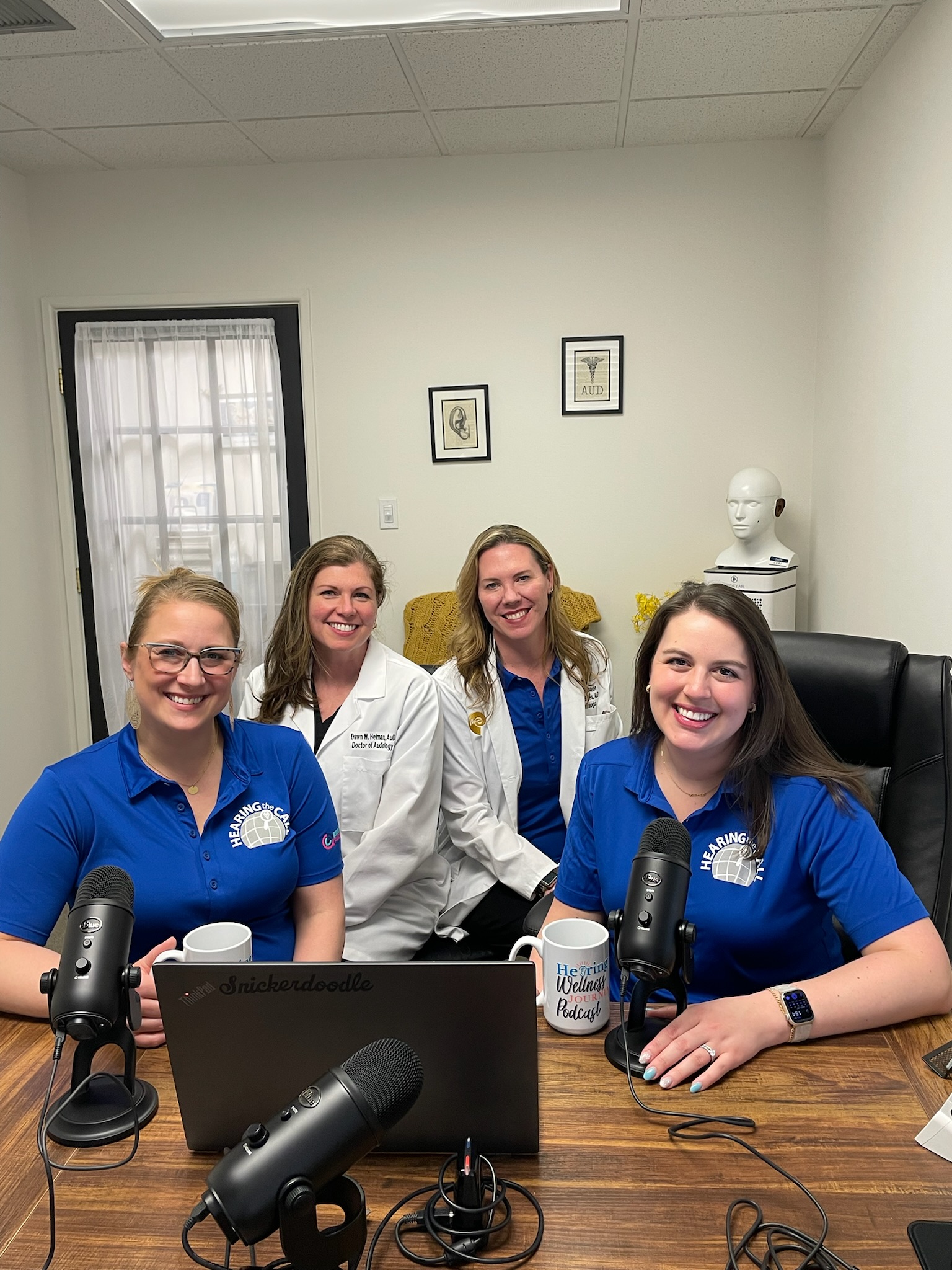
Our Hosts
We are blessed with the opportunity to help people every day who have varying degrees of hearing loss and hearing disorders. We moderate this podcast to give you the ability to listen in on others' stories of triumph and perseverance.
Stay Connected
Never miss a podcast update, webinar or the latest news
We do not share any personal information with third parties.
CHECK OUT OUR
Resources
Advanced Audiology Consultants
Our Team of Audiologists are located in Oak Brook, Illinois and are here to help you hear.
EntreAudiology
Practice Locator
Need a recommendation for a qualified audiologist? We have a practice locator to help you find a reputable practice.
Hearing Aide Certification Online Course
Teaching nurses, CNA's, and caregivers how to help assist someone who wears hearing aids.
Hearing Wellness Journey Aural Rehab Course
Teaching you everything you need to be as successful as possible with your hearing aids with a series of videos.
Contact Us
Would you like to be a part of our podcast?
We welcome you to share your story too!