Hearing Wellness Journey Podcast
40 - The Power of Programs: When Should I Change Programs on my Hearing Aids?
Listen and Subscribe on Apple Podcasts
Listen and Subscribe on Spotify
#40: The Power of Programs: When Should I Change Programs on my Hearing Aids?
SHOW NOTES
Hearing Aid Programs: When Should You Change Them?
Hearing aid programs are designed to help you hear optimally in different listening environments—but many patients don’t realize how powerful these settings can be.
Most modern hearing aids automatically default to a general program. This program adapts to your surroundings using advanced processing and research-backed algorithms. For many users, this works beautifully in everyday situations like conversations at home or running errands.
But what happens when listening environments become more complex?
Speech in Noise: Why Restaurants Are So Challenging
One of the most common complaints from hearing aid users is difficulty understanding speech in noisy environments—especially restaurants.
While your general program does apply some noise reduction, a dedicated speech-in-noise program goes further. It can adjust microphone directionality and reduce background sounds like clanging dishes, music, or crowd noise—allowing speech to stand out more clearly.
If you frequently attend social gatherings, dine out, or participate in group conversations, this program can significantly reduce listening fatigue.
Music Program: Preserving Sound Quality
Hearing aids are optimized primarily for speech and language. That means they often suppress sounds categorized as “noise.”
But music isn’t noise—it’s layered, dynamic, and rich.
A music program relaxes the microphones and reduces aggressive sound suppression so you can experience the full depth of concerts, church services, theater performances, or even action movies. Many patients are surprised by how dramatically this improves sound quality.
Lifestyle-Based Customization Matters
There isn’t a one-size-fits-all solution. Some patients benefit from:
- Comfort programs for road noise (ideal for truck drivers or commuters)
- Outdoor programs
- Lecture or church settings
- Motion-based programs that adapt while walking
The key is communication. Describing your specific listening environments helps your audiologist tailor your hearing aid programs to your life.
And here’s the good news: programs can be added, adjusted, or removed at any time.
If you’ve recently retired, started attending concerts more often, or changed your daily routine, it may be time to revisit your settings.
Partnering With Your Audiologist
Think of your audiologist as your hearing partner. If your current settings aren’t performing the way you’d like, adjustments are often simple and quick.
Experiment with your programs. Try switching while in a restaurant or at a performance. Notice what feels clearer and more comfortable.
The goal is optimal hearing in every environment that matters to you.
To see the video edition of this episode with closed captioning, please go to Hearing Wellness Journey Podcast: https://hearingwellnessjourney.com/podcast/
TRANSCRIPT
===
The Power of Programs: When Should I Change Programs on my Hearing Aids?
===
Dr. Emily Johnson: [00:00:00] But then we also have to think that: Your sound preferences might be different than what was completed in the research study, which is totally A-okay. You might need more support in certain situations, and that's where programs come in.
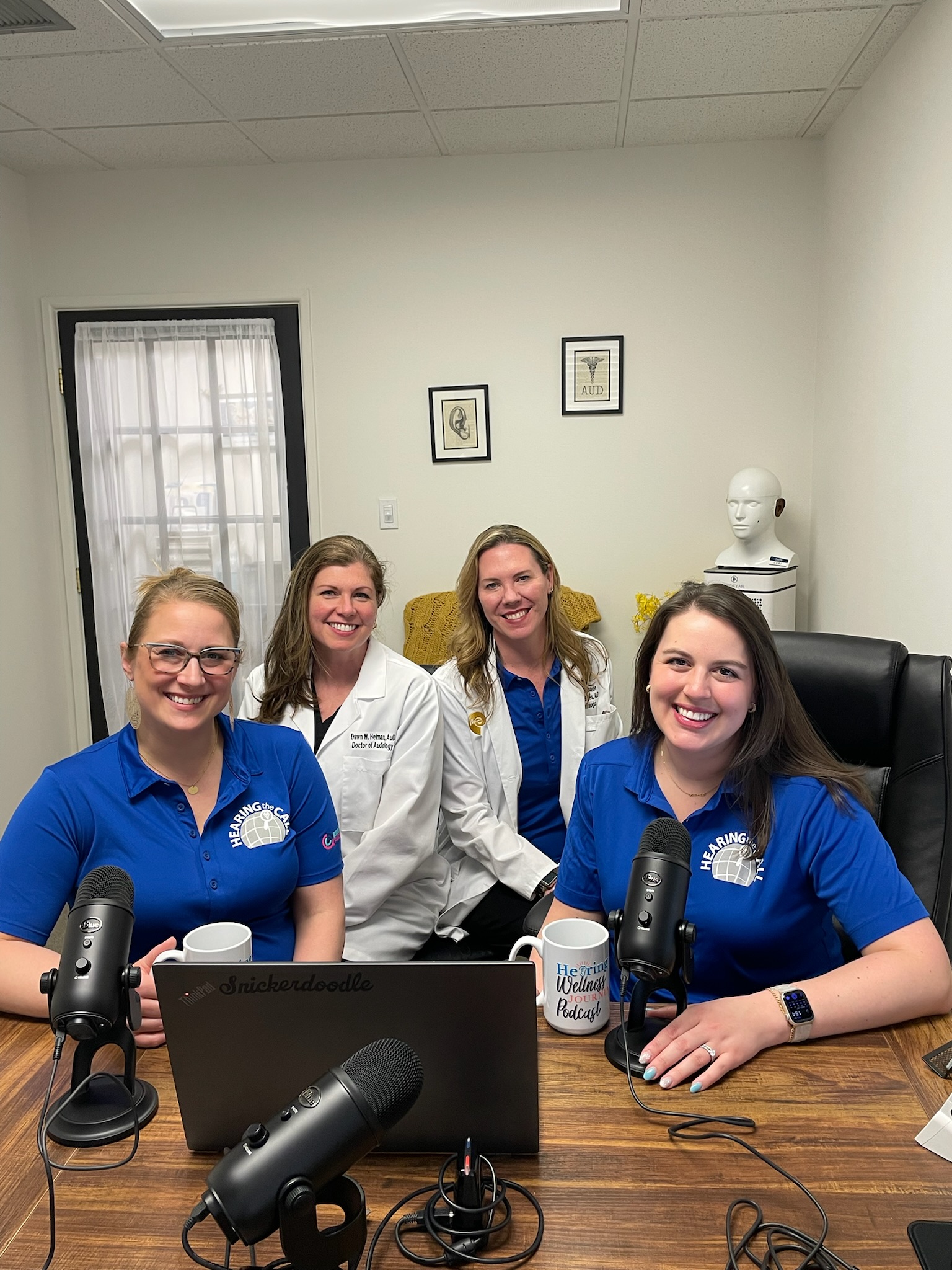
Narrator: Welcome to the Hearing Wellness Journey podcast, an exploration of determination, hope, self-discovery, and triumph. We'll share the personal experiences of those that are living with hearing loss and provide a haven for their stories to show others that they are not alone in this journey. Please welcome your hosts.
Dr. Stephanie Michaelides: Hello, I'm Dr. Stephanie Michaelides.
Dr. Emily Johnson: I'm Dr. Emily Johnson.
Lindsey Doherty: And I'm Lindsey Doherty.
Dr. Stephanie Michaelides: And, today, we're gonna be talking about the types of programs that we can put into your hearing aids. So, [00:01:00] for instance, the hearing aids have a general program. When you first put the hearing aids on in the morning... you first take 'em outta the charger... what is gonna happen is that's gonna go into that general program.
Now, you can walk around in that general program all day long, and it will actually change based on the environment you're in, whether it's loud or quiet or anything that's going on in those environments, it will change for you. But when we add programs, it's specifically going to change for what those specific things are, like speech in noise, music. So that's what we're gonna talk about today.
Dr. Emily Johnson: I would say grand majority of people live in their general program, at least 80% of the time. And that is gonna be your automatic one, where the chip has been taught all of these different sounds; and based on the statistical research, this is how people typically perform best and have sound preferences when the [00:02:00] microphone is picking up whatever background sounds and speech.
But then we also have to think that: Your sound preferences might be different than what was completed in the research study, which is totally A-okay. You might need more support in certain situations, and that's where programs come in. And that's why it's really beneficial to talk to your provider about any unique type of situations that you might be going into and describing what those acoustic environments look like.
Lindsey Doherty: Yeah. Even if it's just one time a month, but you have this gathering of friends, and you always go to this particular place, or you like to go to the movies once a month, whatever it is. Even if it's just one time a month, that's still super important, because it's important to you.
Dr. Emily Johnson: Absolutely. And [00:03:00] the most challenging, most brought-up, difficult listening environment is speech in noise and music. I'd say that those are the two most common situations where people come in saying, "I just need a little bit more support in these two listening environments." And with that automatic program, your general one, it will adjust and it will apply some speech in noise reduction; but if you need that little bit more of a boost, you can go into your designated speech in noise program, and that might have a different microphone configuration to help understand the speech around you compared to the background noise.
Dr. Stephanie Michaelides: And I think a lot of those, we call speech in noise or like restaurants, which a lot of patients, that's their biggest thing is restaurants. And it even helps stop with the [00:04:00] clanging of the silverware, all those extra things that you wouldn't necessarily need in your general program.
But it really focuses in on the speech and really cuts down on the background noise. And that is one of the number one programs I add besides the general. If people want programs, I always add a speech and noise.
Lindsey Doherty: Can I just add though, with the speech in noise, it's looking for speech, so it could be speech at your table, and it could be even speech behind you, but it's gonna get rid of the extra noise.
So just to clarify that, that is still speech, so you might still be able to eavesdrop a little bit on that table behind you. If there's a lover's quarrel or some juicy bit of gossip, you know, you might still be able to pick up on that. But again, it's really just bringing down the noise floor of everything else around you.
Those impact noises. The music that might be on the speakers. Hopefully you're not sitting too close to them, but that's something they consider. [00:05:00]
Dr. Emily Johnson: Absolutely. And I like to think of the general automatic one. I'm like, "That's gonna make majority of the decisions for you," if you're not somebody who is comfortable, interested in switching programs. Majority of the time, it'll be just fine. I always say, "Let the automatic one work it out. See if you like the way that it handles the sound.
If you need more support, then you can go into a designated program. And if you're still finding, "Even within that program, I still need a little bit more," let us know, because we can manipulate features within specific programs to really tailor it to you.
And some manufacturers have speech in noise and things like that are based on like motor... motion! That's the M word I was looking for. Motion-based programs of where you're walking or you're not. Some patients love that. Some patients [00:06:00] do not.
And if you're somebody who prefers it to not be motion-based, and you really just want it to go full listening beam, we can absolutely configure it to your preferences to make sure that those situations are a little bit easier for you than maybe what the chip is deciding on its own.
Dr. Stephanie Michaelides: And another important program that people like to add is music.
Dr. Emily Johnson: Mm-hmm.
Dr. Stephanie Michaelides: So music is not when you're streaming, it's when you're actually listening. You're in an environment where they're playing music, whether it's a concert, it's an orchestra, it's your records or anything that's playing in the environment is when we would use music.
And so for some people, that's really important 'cause it doesn't try to suppress all of that sound. It really lets the sound open up, so you can really experience it and not necessarily have the speech in there.
Lindsey Doherty: I always like to talk to patients about that, thinking about the piece of [00:07:00] music, Sleigh Ride. And if you're familiar with this piece of music by an orchestra, they're playing it and playing it, and then all of a sudden there's a big smack, right in the middle of it, because it's supposed to be like the whip smacking.
Normal programs are going to dampen that sound. That sudden sound. And so you're gonna miss that, but it's such a key piece when listening to that performance. So I like to say, that then is going to be audible, because general function is to make soft sounds louder, and loud sounds softer to a safe level, and comfortable, so that you can hear everything sort of evenly.
So, I like to make sure to offer that to patients and tell them, "Hey, you could even use this when watching your action movies, if that is your type of... thrill.
Dr. Emily Johnson: Film. Exactly.
We have to remember that hearing aids are optimized for speech and [00:08:00] language. That is their ultimate function. And as much as we wish hearing aids could just read our minds of what we're trying to listen to in that moment, they can't. Not yet!
And a music program is going to be you telling the hearing aid, "I'm not trying to focus just on speech and language right now. I, in fact, don't want you to suppress things that would be categorized as noise. That is what I'm trying to listen to with the music. I wanna keep that integrity intact."
And it's going to relax the microphones and open it up like flower petals. That's how I envision it. So that we can get everything in, and we're not trying to suppress the different noise parts of the music that are musical, that the hearing aid's gonna go, "That's [00:09:00] not speech. We're gonna quiet it down. That's not speech."
And then it distorts the music. So if you are not hearing music in the quality that you would like, try out a music program because sometimes the hearing aids have to be told, "Stop doing what we usually want you to do 95% of the time. We want to hear the highs and lows, the peaks and the valleys of all of the different aspects of that musical piece."
Especially, like most recently, I've had a patient mention it, that they went to see a ballet, or something in the theater that the musical component is a larger portion than the speech component. And him putting it into the music program completely changed the integrity of the performance; and he was able to fully immerse in the scene and take it in the way that it was meant to be. And I think that that's really important to know that there are [00:10:00] options out there like that.
Lindsey Doherty: Right. It's not just: take your hearing aids off... As I think a lot of people resort to.
It's: have the conversation with your provider and see what can be done about it. Not everybody has a music program, and it might not be what you prefer to fit in your allotted programs, because devices do have a certain number that you can add.
Dr. Stephanie Michaelides: Yeah, that's why it's important to talk with your provider. Let's say you're a truck driver, and the road noise is just so much, right?
So instead of just having to listen to that in the general program, we can actually put a comfort program on, or we can change the way the hearing aids are reacting. Because there are like 10 plus programs, and you wouldn't know without, we know what they are, obviously, but you wouldn't know until we really start talking about your specific life and really customize the hearing aids to make it so they fit you perfectly.
Lindsey Doherty: Yeah. Sometimes there are transport [00:11:00] programs. There's speech in noise, but then there's also speech in louder noise. No. [Shared Laughter]
Like, one has party, and one has social. Those are both options. They're both for different things, thinking that the background noises are going to be slightly different. And so what do you find yourself in most commonly?
There can be outdoor programs. There could be lecture programs, which might be great in church with big, boomy sounds. So, there's just lots of options where if the general, universal program isn't cutting it, talk to your provider and see if there's something else that could be added.
Dr. Emily Johnson: Absolutely, and it's something that, in the office, we're constantly running it under test box conditions to see, "Ooh, this one really works well for reducing speech noise, but this one really works well to reduce speech noise and low-level, [00:12:00] machinery noise. So describing your situation to us is gonna help guide us on what's the best program to get added for you.
And this is something that we can add or remove all the time. It does not have to happen initially. So if you are listening to this now and you're like, "You know what? Maybe a year and a half ago, I didn't think I needed a music program, but now I've retired, and we're frequently going to shows, concerts, things like that. I definitely would benefit from a music program now"
Come on in, and let's get it reprogrammed, so that you can hear optimally in every situation that you desire.
Dr. Stephanie Michaelides: And I always say, "Play around with 'em." If you're in that restaurant, play around with the programs and see which ones you like better.
Because like Dr. Johnson said, we can change it at any point in time. Very easily. Super easy. And we just want you to have the most optimal use of your hearing aids in all those different environments.
Lindsey Doherty: Right. Play around with it. Just because it says one thing doesn't mean you can't use it [00:13:00] in another listening situation.
Dr. Emily Johnson: Absolutely. We are here to be partners on your hearing journey and making sure that we have all of the features maximized for you, so that you can get the most benefit out of your devices.
Thank you so much for listening to our podcast today about programs and different options there, and we will hopefully see you soon.
And don't forget to like and subscribe and check back next week for a new episode!
Lindsey Doherty: Bye.
Dr. Stephanie Michaelides: Bye!
Dr. Emily Johnson: Take care!
Narrator: Thank you for joining us on this episode of the Hearing Wellness Journey podcast. For more information about what we do and the services we provide, please visit our website HearingWellnessJourney.com/podcast where you can find more resources based on today's discussion, as well as request to be a member of our Hearing Wellness Journey community on Facebook. That's available for our [00:14:00] listeners exclusively on HearingWellnessJourney.com/podcast.
Resources Mentioned:
Our Mission:
Our Hosts
We are blessed with the opportunity to help people every day who have varying degrees of hearing loss and hearing disorders. We moderate this podcast to give you the ability to listen in on others' stories of triumph and perseverance.
Stay Connected
Never miss a podcast update, webinar or the latest news
We do not share any personal information with third parties.
CHECK OUT OUR
Resources
Advanced Audiology Consultants
Our Team of Audiologists are located in Oak Brook, Illinois and are here to help you hear.
EntreAudiology
Practice Locator
Need a recommendation for a qualified audiologist? We have a practice locator to help you find a reputable practice.
Hearing Aide Certification Online Course
Teaching nurses, CNA's, and caregivers how to help assist someone who wears hearing aids.
Hearing Wellness Journey Aural Rehab Course
Teaching you everything you need to be as successful as possible with your hearing aids with a series of videos.
Contact Us
Would you like to be a part of our podcast?
We welcome you to share your story too!