Hearing Wellness Journey Podcast
19 - Ear Wax Removal
Listen and Subscribe on Apple Podcasts
Listen and Subscribe on Spotify
#19: Ear Wax Removal
SHOW NOTES:
Dr. Dawn Heiman: [00:00:00] But he had been wearing earplugs. I didn't know that he had a buildup of wax. Now he's like our number one irrigator fan. When he's in town, he's like, will you clean my ears?
Welcome to the Hearing Wellness Journey podcast, an exploration of determination, hope, self discovery, and triumph. We'll share the personal experiences of those that are living with hearing loss and provide a haven for their stories to show others that they are not alone in this journey.
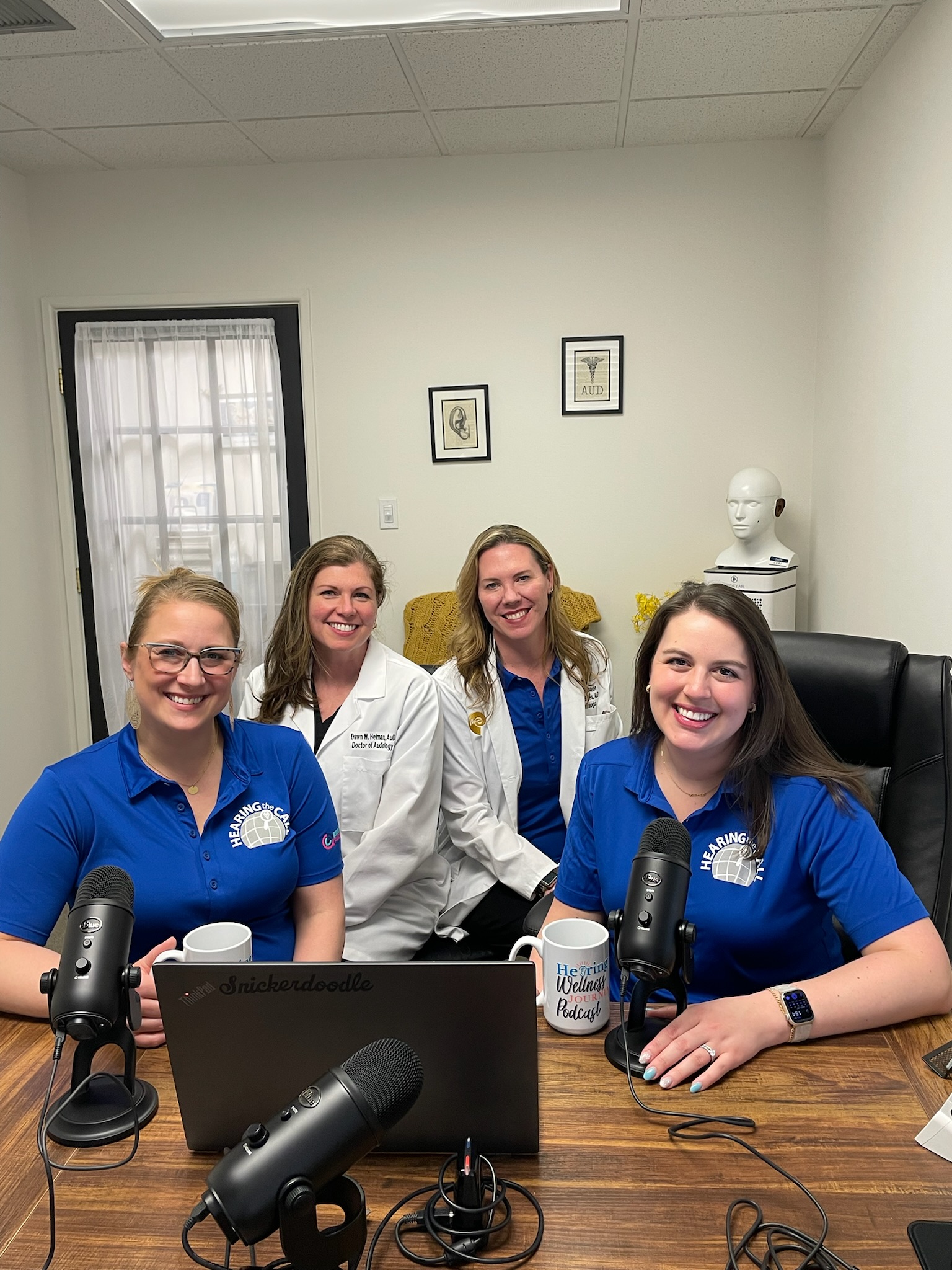
Dr. Dawn Heiman: Welcome back to our, latest episode of the Hearing Wellness Journey podcast. My name is Dr. Dawn Heiman, Dr.
Stephanie Michaelides, Dr. Emily Johnson and Lindsey Doherty. And today we are discussing earwax. it's the fascination of the thing that you don't really wanna know about, but [00:01:00] you kind of wanna do.
Lindsey Doherty: is it friend or foe?
Dr. Dawn Heiman: That's what a lot of people wanna know. And when we take it out, we're always like, oh, it's so satisfying.
And the patients though, 'cause they can, oh yeah, absolutely. We're not podiatrists. Don't ask me to touch your feet. Absolutely not. what do we usually see? Someone says that they need an appointment because their ears are clogged and they think they have wax.
Yeah.
Dr. Emily Johnson: Or they have a history of wax buildup. Their primary care has told 'em that they have wax, but their primary care won't take it out. And they watched on social media, on TikTok and ear wax removal, and they're like, that was really cool. I'm gonna call to see if that needs to be done to me. And then they show up and we take a look in their ears and lo and behold.
Full of wax.
Lindsey Doherty: Mm-hmm.
Dr. Dawn Heiman: Or lo and behold, there's no wax and we have to do more testing. Seriously. It's a sudden sensori neural hearing loss. Who saw the young lady the other day that we had already [00:02:00] seen before me? Did you see her the first time or was that you with the
Dr. Emily Johnson: water lavage? With the water lavage, yeah.
No, and we did a time, did you
Dr. Dawn Heiman: actually never posted that she was so excited to have her ears cleaned.
Dr. Stephanie Michaelides: Yes. Well, 'cause she was soluted, she couldn't hear anything when they heard her at the urgent care. Oh yeah. That's happened too.
Dr. Emily Johnson: Yeah. So she was seen about eight months ago for wax removal, and it really only builds up on one side.
And so that can come down to ear canal anatomy, how curvy it is, and just the oiliness and the little hair cells inside your ear canal that make the wax. Your ears are cousins. They're not twins, so they're not always gonna produce the same. And for her, she had it removed about eight months ago. She was then feeling like it's a little clogged up.
I think I need to have it removed again. And this time she had water lavage done with our [00:03:00] irrigator, and it took a while for it to get removed because it was. Deep in her ear and actually a lot more than what it looked like on Otoscopy, which is when we look in your ear with the light and the relief that she felt when it was out.
Mm-hmm. She was like, whew. I didn't realize like how much that had been bothering me.
Dr. Stephanie Michaelides: So it was, it could be painful. Yeah. Having all that wax in there, yes. It can be really painful,
Dr. Emily Johnson: super satisfying for her. Super satisfying for me it was. Really enjoyable to take that wax out.
Dr. Stephanie Michaelides: But back to what Lindsay said, with friend or foe, people need to know also that having earwax, it's protective.
You know, we do like having, everyone has ear wax in their ear. For some reason, you know, but I find when they, if you guys have ever heard of swimmer's ear, that's a bacterial infection. And what happens is those, especially, they're swimmers and that ear wax is constantly getting washed out. So what happens is bacteria then can grow in there and that they can get an outer ear infection because [00:04:00] they're not having that protective wax in there.
Yeah. So having a little bit of wax is a good thing. It's just when it gets to what Dr. Johnson just said is when it gets to that point where it's just. It's painful, it's occluding. That's really when we come to the point to remove it,
Dr. Dawn Heiman: I
Lindsey Doherty: think we're
Dr. Dawn Heiman: seeing it more and more in young folks. Mm-hmm.
Because of the earbuds. Oh yeah.
Lindsey Doherty: Yeah.
Dr. Dawn Heiman: It's, yes. It's, it's pushing it in. gonna call out my son. I won't tell which sun. But, yeah, if you're wearing a AirPod, pros beats, whatever it is that's pushing in. Mm-hmm. We were, we were on a trip, we were looking at.
Schools and we were in Nashville actually. And there were some people rolling in, in the middle of the night from being out late. And we were in the hotel and you could hear these people, partying down the hallway. And I asked 'em, Hey, do you want earplugs? I'm like, funny. Your mom's an audiologist, guess who's got earplugs?
Right? And I go in my backpack and I get myself a pair. I have my customs and I have a pair for him, and I go over to his bed and I pull on his ear canal and [00:05:00] I take the little foamy thing and I shove it in real deep. he's like, oh, you know, I'm like, suck it up, right? And then I go to the other ear and I do, it's good for you.
So anyway, I put my earplugs in, we fall asleep. Next morning I get up extra early to go downstairs and get some coffee and do some work in the little cafe And he calls me and he goes, mom, whatever you did, my ear is killing me. can you do something about it? He is like, I actually feel sick.
And I, I was like, oh, I have nothing with me. I don't have a otoscope, I don't have a cure, I don't have anything. Right. So, I used the flashlight on my phone and I look and I was like, oh my gosh. Like he is completely occluded. So then I start calling around to friends that are around Nashville and Tennessee and the closest that we could maybe get him in was a couple hours south in Chattanooga.
and then I was like, okay. Let's go to Walgreens. We walk down the street to Walgreens. We get the little kit, we get the Deb bro. Not that little flushy thing. Mm-hmm. And it takes forever for me to really fast. [00:06:00] Suck it up. Flush. No, keep going, keep going. And eventually this huge thing pops out of his ear.
But he had been wearing earplugs. I didn't know that he had a buildup of wax. Now he's like our number one irrigator fan. When he's in town, he's like, will you clean my ears? He was our first. He was our first when I sprayed the wall. 'cause I didn't know how to use it. Yeah. but it, we've improved since then.
Significant that I'm very good at it since then. That's what we can prove. Yes. 'cause I, yeah. You practice on your kids. Yeah. I don't know. it stuff builds up. It's a, it's, a sebaceous gland. Just like if you wore a white t-shirt and the arm pit could get yellow because you're sweating and little oils are there.
That's what's happening in your ear canals. So some people have the gene that they produce more than others. Sometimes depending on the year or if you have seasonal allergies, you're gonna have more of a buildup. Mm-hmm. And, and we just, some people are on a schedule and we're cleaning their ears all the time.
Some people never get waxed.
Lindsey Doherty: Yeah. I think that's important to, like, for people to hear that it, it's a, it can be a genetic [00:07:00] thing. Right. Is a genetic thing. And it doesn't mean that you're unhygienic. Mm-hmm. It doesn't mean that you're dirty. It doesn't mean that you should brush your teeth. You know, before you go to the dentist, or you should try and clean your ears before you come here.
Like, no, don't do that. That's what they're here for. Nothing bigger than your elbow to go in your ear, right? That's right.
No Q-tips. Should I tell
Dr. Dawn Heiman: my mom's story? Oh, no. Yeah. Okay. So I grew up my saying, never put anything smaller than your elbow in your ear. Oh, and she was a nurse.
She's very smart.
Lindsey Doherty: What did I say? I think I said nothing bigger.
Dr. Dawn Heiman: Oh, and did I repeat that? Smaller. Smaller anyway. Don't in your ear. Exactly. So, so my mom calls me like 10 years ago and she goes, oh, I just want you to know that I was using a Q-tip and I slipped. Yeah. And I punctured my eardrum.
Yeah. But I'm okay. I already saw the ENT and it has healed. I just wanted you to know, like she called me after everything was healed. The person who told [00:08:00] me never to use something. Oh, do not let little kids see you. Put things in their ears. Oh, I will never unsee the story. Or the kiddo that I saw at Temple Children's years ago in Philadelphia, the, it was a baby that the, preschool.
Brother thought it was cool to put the Q-tip in and then jam it in. Thank you. That poor little baby. Oh my gosh. No. I
Lindsey Doherty: had a another patient that the dad was holding his 2-year-old and he was cleaning it and the same thing and he Permanent damage. Yeah, permanent damage. Hey, just, oh
Dr. Dawn Heiman: my gosh. Push all those little bones out,
Dr. Emily Johnson: like.
So bad. The fact that we all have this sort of story. 'cause I was yeah, waiting to jump in with my not personal, thank goodness, dramatic ear cleaning Q-tip story of somebody was cleaning their ears, you know, as you do with the Q-tip. And then, they were standing next to the door and so somebody came into the bathroom and hit their elbow.
Oh. So I'm [00:09:00] like, if at all costs, if you're going to do it, don't go that deep in your ear. Number one. Number two, lock the door. No, just don't do it. Don't let somebody come in. Don't do it, because it's not worth the pain. The pain. The really negative side effects of having a qt, the reconstructive injury.
Lindsey Doherty: Even with that though. How many times do you pull out cotton?
Dr. Emily Johnson: Yes.
Dr. Dawn Heiman: Oh yeah. Yeah. From ears. And it gets stuck in your ear too. We're like, you use Q-tips, don't. You're like, how do you know. Let me pull this stuff out. Or they come in. You said, Lindsay said something about don't clean your ears before you come in
Do you know how many people I've seen where they have contusions? They have bruising of their ear canal and their eardrum because they really wanted to clean it Good before they came in and we're like. Yeah. Ouch. What are you doing? Don't do it. Leave it to us. Yeah, yeah. We gotcha. We can actually see in your ear.
so when does wax become a problem? Like what problems can it manifest into? Obviously if we get like a, a [00:10:00] plug where all of a sudden we can't hear, That's
it.
Lindsey Doherty: Mm-hmm. Yeah.
Dr. Dawn Heiman: I think that's the problem, right? 95% of all the phone calls answer is it's wax. Mm-hmm. And they never believe us.
And this does
Lindsey Doherty: affect hearing aid wearers Yeah. As well. Oh yeah. where wax, it can clog your receivers, it can clog up your domes or whatever the earpiece that you have in there, if it's custom. and it just needs to be cleaned. And you can do that at home sometimes, or you need a little bit deeper.
Clean with the extra special tools that we have or other, audiology offices do have,
Dr. Dawn Heiman: or we refer to people like your husband. You know, if we can't, if it doesn't look at, if it's something that something's growing in there, it's bacterial, it smells, we're gonna refer you. Oh, for sure. Sometimes you need it suction.
Sometimes it's like there's if, but don't self-treat. Right. How many times have you been told about the car keys?
Lindsey Doherty: How about the thing? It's like, I don't know if you buy it at the drug store. It looks [00:11:00] almost like a threaded drill head. Oh yes. I have one. We do have, have one. People have given
Dr. Dawn Heiman: them to us.
They're like, do you think it didn't work? Do you want this? When it says, as seen on tv.
Lindsey Doherty: No, don't do it. Red flag. Red flag. But it just, it like, you're twisting it in there. It doesn't matter. It's just rotating what you're doing. Rotate. It's just rotating and jamming it in there deeper. Oh my gosh. So can we talk about, the candling of
Dr. Dawn Heiman: ears?
Lindsey Doherty: Oh God. I've seen someone burn their actual eardrum. Oh. A fight with, because terrify cat wax.
Dr. Dawn Heiman: Terrifying. Thank you.
Lindsey Doherty: Yeah. I want no part of that.
Dr. Dawn Heiman: And if so, I think. Cliff Olson has done this. Other people have done it where they do video otoscopy. So you can see before the ear candling that there's no wax in the ear wax.
then they lay the person down and they put the candle thing on and then all this stuff is supposed to like come out and it comes on this little plate thing and they're like, look at what we got out. But there was nothing there in the first place. It just waxed from the candle. It was waxed from the candle.
Exactly. Yeah. It has [00:12:00] this like suction effect and people swear by it. They're like, oh my gosh, I feel so much better. It is a placebo effect. Mm-hmm. And you just paid money for that and there's a chance
Dr. Emily Johnson: you get burned or even your hair flames, your ear dry flames near your head is just never a good idea.
There are much safer alternatives to having your wax removed.
Dr. Dawn Heiman: Yes. Or if you just need to relax, like go find a, a spa that just gives you a massage or even just a hand massage would probably be better than an ear candling with the chance of being set on fire.
Lindsey Doherty: Any other
Dr. Dawn Heiman: thoughts about wax that we haven't touched on?
There's some people that they get it just in one ear. I swear. It's if it's gonna be one ear, it's the left ear. Really? No, I've
Lindsey Doherty: seen the right ear. That was like the right ear is always the problem here. Oh no, I feel like we need to have like a tally going. Well, and then, you know,
Dr. Emily Johnson: unilateral wax, which one's your problem here?
When I used
Dr. Dawn Heiman: to oversee the newborn hearing screening, programs at the hospitals, It tended to be like [00:13:00] the left ear that would, fail the newborn hearing screening ly. Yeah. Because of the vernix that was in there. Yeah. And the way that they always laid all the babies in the, the nursery on the same side, so the nurses could see all of them at once.
Mm-hmm. The one side would still have stuff in it, and then we couldn't screen their ear and we're like, oh, I never knew that. Yeah. Yep.
Lindsey Doherty: That's awesome.
Dr. Dawn Heiman: Yeah.
Lindsey Doherty: I mean, well,
Dr. Emily Johnson: it's awesome
Lindsey Doherty: to learn it.
Dr. Emily Johnson: And ear wax removal doesn't have to be painful. And we are very gentle. Correct. In whatever way we remove it.
A lot of people think that like, oh, we're digging in there with a curette or the water, that it's gonna be this really cold, cold, painful experience. Mm-hmm. And it's not. We have something called the ear spa, and we make sure that it's a really positive experience and we explain to you the entire time.
What is happening and what our next steps are gonna be for removal to make it not scary. 'cause I mean, [00:14:00] we just told you don't put anything in your ear and then we're going, you come into our office and we put a lot of things in your ear. Yeah. So, but it doesn't have to be scary.
Dr. Dawn Heiman: But we have a lot of candy.
We do, we do, like, we're not dentist, but sometimes we do touch a part of your ear canal that touches the vagus nerve and it causes your eyes to water, it causes you to cough, coughing. Yeah. And so we have the candy ready to go, to try to soothe that. But,
Lindsey Doherty: and sometimes it's a little uncomfortable, right?
Based on the type of wax. If it's hard, if it's, you know, if you've got a lot of hairs inside of your ear. Hairy ears that can just catch. So it's not like it's just a walk in the park all the time, but it should not be painful.
Dr. Dawn Heiman: It's like dentistry though. Some people are super sensitive for sure to have their teeth, touched and others.
Same with their ear canals. Some people are like, do it more. Oh my gosh, it feels so good. And others are like, ah. And they jump and I'm like, I didn't even touch you yet.
Lindsey Doherty: Yeah, they're already, they're just jumpy. we do have a patient who knows that they are [00:15:00] super sensitive To that and will take the chair position themselves against the wall even and kind of like hold their head knowing that they don't want to move because it is, a delicate procedure.
Yeah. That's why it should be performed by somebody who is licensed to do that, like a doctor of audiology. And, and so they just know to prepare themselves and say, I do this weird thing, but this is what I do so that you can do your job. And, it's a beautiful thing and sometimes
Dr. Dawn Heiman: it involves putting drops in your ears and prepping the ear first, or sometimes you put the drops in before you come, or sometimes, the drops only went this far in the canal, and we need you to lay down and let it do it.
It's magic of softening the wax so that we can remove it without the pain.
Lindsey Doherty: You know, there's is a process and then we have drops in our office too that we can use to help, like, on the spot. Yeah.
Dr. Emily Johnson: So many options.
Lindsey Doherty: Our goal is always fun. It's pain
Dr. Emily Johnson: free, you know, that's
Lindsey Doherty: our end goal. And usually, I mean, we probably [00:16:00] 70% of our patients that come in here have ear wax of some kind that we're taking out and it's, you know, we're, we're, we're do it all the time.
We're very good at it. and I said we try to make it the most, the pleasant experience for everyone. Yeah. Yep.
Dr. Dawn Heiman: And then they walk out and they're like, yay, I'm getting here.
Lindsey Doherty: Yes.
Dr. Dawn Heiman: So fun. So fun. Yeah. We like to take outta ear wax, which seems gross to some people.
Dr. Emily Johnson: Hey, you know what? If that's your thing, and if you wanna come in and be filmed to watch it happen, we support that too.
That's right. Yes, we do.
Dr. Dawn Heiman: Yes, we do. All right. Any other last minute things? if you have any questions, see an audiologist I'll just, if you're listening to this or watching this and you're not here in the Chicago area, we have many, many colleagues around the country and the world that we can refer you to, to do this the right way.
Happy hearing. Have a great day. Happy hearing. Bye.
[00:17:00] Thank you for joining us on this episode of the Hearing Wellness Journey podcast. For more information about what we do and the services we provide, please visit our website@hearingwellnessjourney.com slash podcast. Where you can find more resources based on today's discussion, as well as request to be a member of our Hearing Wellness Journey community on Facebook.
That's available for our listeners exclusively on hearing wellness journey.com/podcast.
Resources Mentioned:
Our Mission:
Our Hosts
We are blessed with the opportunity to help people every day who have varying degrees of hearing loss and hearing disorders. We moderate this podcast to give you the ability to listen in on others' stories of triumph and perseverance.
Stay Connected
Never miss a podcast update, webinar or the latest news
We do not share any personal information with third parties.
CHECK OUT OUR
Resources
Advanced Audiology Consultants
Our Team of Audiologists are located in Oak Brook, Illinois and are here to help you hear.
EntreAudiology
Practice Locator
Need a recommendation for a qualified audiologist? We have a practice locator to help you find a reputable practice.
Hearing Aide Certification Online Course
Teaching nurses, CNA's, and caregivers how to help assist someone who wears hearing aids.
Hearing Wellness Journey Aural Rehab Course
Teaching you everything you need to be as successful as possible with your hearing aids with a series of videos.
Contact Us
Would you like to be a part of our podcast?
We welcome you to share your story too!