Hearing Wellness Journey Podcast
20- How Do You Get Better Sleep with Tinnitus?
Listen and Subscribe on Apple Podcasts
Listen and Subscribe on Spotify
#20: How Do You Get Better Sleep with Tinnitus?
SHOW NOTES:
Dr. Dawn Heiman: [00:00:00] Life is so hard sometimes, and having these little teeny things together can help make the tinnitus not seem so bad, or you don't even realize that you're just nice and comfortable and you fall asleep because honestly, you deserve to feel good.
You deserve to be relaxed. And then when you wake up the next day and you're, and someone goes, how'd you sleep? You're like. I slept great. Oh my gosh. Like, it just makes a difference. You can just see it in the person's eyes and you can, hear it in their tone of their voice. Even if you don't see them, you can hear and they're like, I slept amazing.
They're like, that's so good. Or I'm like, I don't even remember it. Change your day. It totally changes your day. If you have a great sleep,
Welcome to the Hearing Wellness Journey podcast, an exploration of determination, hope, self [00:01:00] discovery, and triumph. We'll share the personal experiences of those that are living with hearing loss and provide a haven for their stories to show others that they are not alone in this journey.
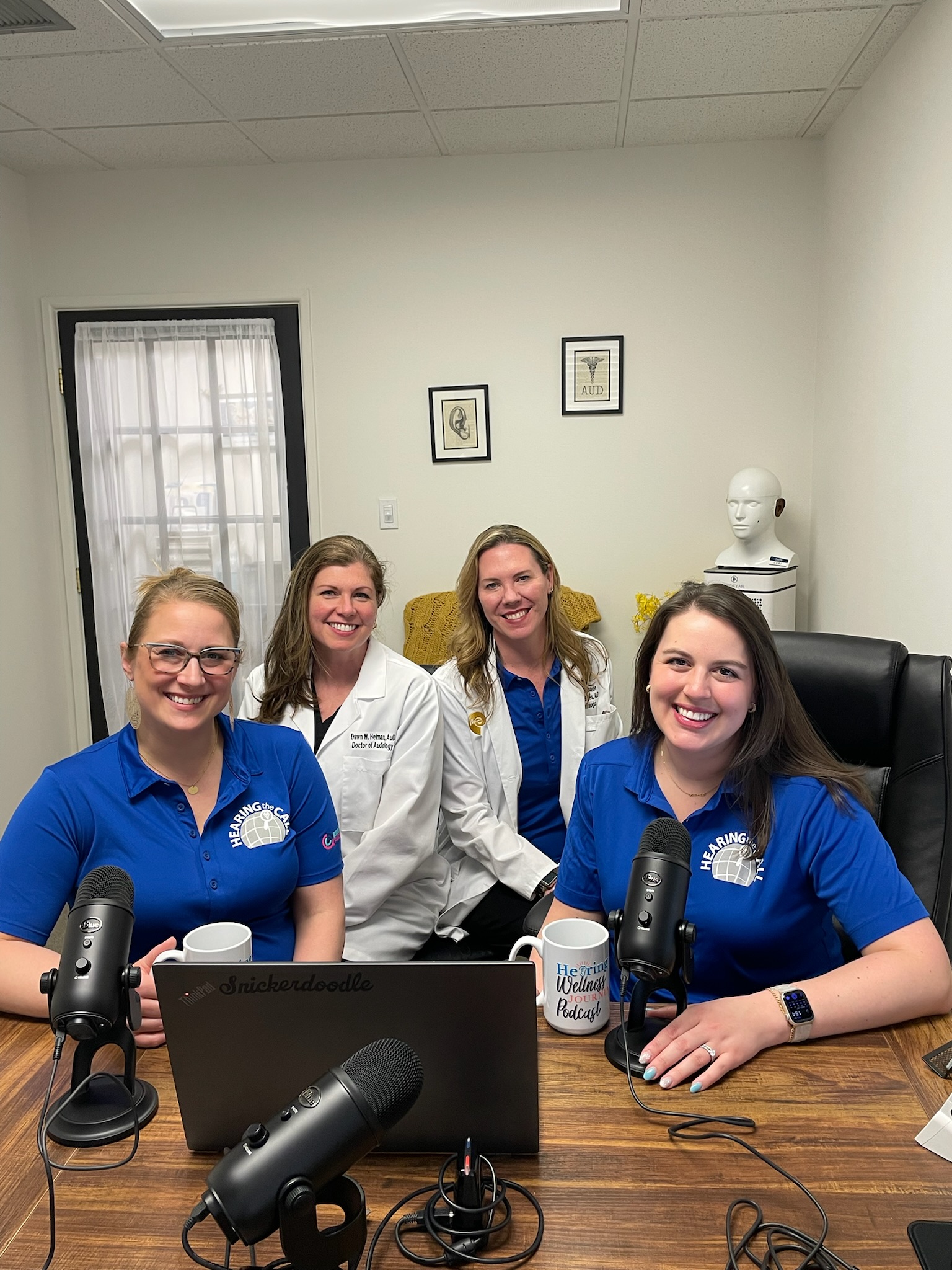
Dr. Dawn Heiman: Welcome back to another episode of the Hearing Wellness Journey podcast. My name is, Dr. Dawn Heiman. This is Dr.
Lindsey Doherty: Emily Johnson,
Dr. Stephanie Michaelides: Dr. Stephanie Michaelis and Lindsey
Lindsey Doherty: Dougherty.
Dr. Dawn Heiman: And today we wanted to talk about how would you get better sleep if you are suffering from bothersome tinnitus. I think we had an episode already where we talked about, Why is my tinnitus getting worse? And we touched on the fact that if you don't get good sleep, your tinnitus could definitely be a lot worse. So we thought we would just get into [00:02:00] that, specifically here of how to help you if you are, struggling with getting a good night's sleep. So, Dr.
Johnson, If a patient says, I can't sleep at night, what do you tell them?
Dr. Emily Johnson: Well, first thing that I look at is just general sleep hygiene, because most of us are. On our phones until the very second that we get into bed, and we know that that blue light right before we go to sleep is not good for us, just in general, but definitely not for our patients who are struggling with their tinnitus because it just keeps your brain on when you're scrolling through social media, when you're texting, anything like that, you want your brain to be as calm as possible before you go to bed.
And if you're feeding it information constantly and then it's right in a light source, it's hard to relax right before bed. When are we putting down our phone before we go to sleep? Are you watching TV until the very last second? what does [00:03:00] their bedtime routine look like and where can we make some adjustments there first before we go into any sort of additional aids or additional things to add to the bedtime routine.
Dr. Stephanie Michaelides: I also feel that being in. A quiet environment is every patient who has bothersome tinnitus is like the worst case because that's all that you're focusing on. So I feel like there's lots of different types of noises that you can add, to your environment. Whether it's just the TV on, whether it's just music.
Some people say white noise doesn't help me. But there might be just something else that you can use that's calming to you specifically when you're trying to get to sleep. And all you can hear is that Titus.
Lindsey Doherty: I totally agree with that. And it's not a one size fits all for those sounds, which I think we have slightly touched on in another episode.
those needs or wants or effects of certain noises, those can change over time. And so for me, I know I've changed [00:04:00] the color of my noise or the different elements that I put into a noise mix on the app that I use. So, yeah, if it's tv, if it's an oscillating fan, whatever. Sounds good to you.
Dr. Dawn Heiman: I feel like, I've heard a lot of people say that they can deal with the tinnitus during the day. Like you're saying, the house, the work, everything seems to have sounds, and then they start to have anxiety before bedtime because they feel like as soon as they enter that bedroom, the tinnitus is gonna be bad.
So. Wow. I guess the lights just went out on me. Um, so I feel like, uh, I tell them all the time that they need to set up the bedroom, maybe an hour or two before they go to bed, turn on a sound source and get themselves into a better, mindset. I'm gonna see if I can turn on these lights.
Dr. Stephanie Michaelides: They should also be turning off the
Dr. Dawn Heiman: lights dark if I trip in the dark and I break my shoulder again.
Lindsey Doherty: But yeah, like setting the scene [00:05:00] before you actually have to get in there and be relaxed, like turning off that phone, letting the mind start to calm down. Doing, maybe doing pseudo coup puzzles. That's when I do my, like mind games while I've got the background noise on.
Dr. Stephanie Michaelides: Even doing proper things during the day, like with your diet, with exercise, can also contribute to having a better rest or less bothersome tinnitus when you're going to sleep.
Lindsey Doherty: Yeah. You know, I would always tell my kids not to have chocolate right before bed. Maybe it was like a parenting thing, but I was like, it's going to give you nightmares, but chocolate has caffeine in it too. And so that could, and you know, acid in there too. Good point. You probably wanna avoid coffee at how many
Dr. Dawn Heiman: people are like, people get their coffee and it's later in the evening and things like that.
They are at a Starbucks or some kind of energy drink 'cause they're tired. But you really have to stop and think like, what time is it [00:06:00] really? Like, I can't have caffeine after one o'clock if I wanna go to sleep. it's a slow digestion in me. If you have a lot of chocolate, anything that has caffeine, that could possibly be a stimulant that's gonna keep you awake, you have to find your best recipe.
What combination of things will you do so that you're successfully falling asleep? You know, some people have like mantras, even like prayers that they go through and it's like they can't fall asleep until they've done every single part of that. And it's just a. De-stressing, I guess, and or putting yourself into a great mindset.
I did hear of a study years ago, about insomniacs. if they can't sleep in the middle of the night, you get out of bed and you stretch because if you're tense, you're not gonna sleep very well. You have to be like floppy and and relaxed, right? So if you can, stretch your muscles, you're more likely to.
Be able to relax,
Lindsey Doherty: be able to
Dr. Dawn Heiman: mm-hmm.
Lindsey Doherty: It's [00:07:00] almost like one of those body scans where, you know, they'll say, okay, you know, engage your toes, squeeze your toes, and then now let those release and now squeeze like your ankle, tense it up.
Like I used to do that with my kids too. There was, new Horizons, holistic meditation for kids, but I actually found that one really helpful. Personally as well because it just slows your mind, but gives you something to concentrate on that's maybe not in your head.
Dr. Dawn Heiman: I agree with that.
Lindsey Doherty: You
Dr. Dawn Heiman: know what I figured out?
I've had three kids, right? I figured out that my kids could fall asleep if I made them giggle and laugh. So it became like my thing. I would go in the room and I'd make sure like, you know. Making them laugh, making them giggle. because if I told them sternly, no, you're supposed to go to bed and there's crying and there's stress and everything, now they're scared and then they're worried that they're not being loved and all that kind of stuff doesn't work.
You know, the whole, I'm gonna be the [00:08:00] strict parent, I'm gonna close the door and tell 'em, go to bed. With adults the same thing. What if we read joke books or something, or, you know, think of like funny, fun things and, and just start daydreaming about a good vacation. It gives you that relaxing mindset so you're not focused on negativity.
Dr. Stephanie Michaelides: I think the common theme is doing something not stressful. Like really kind of bringing that stress out of everything by all these different techniques that we've been talking about.
Dr. Dawn Heiman: It's true. Yeah. Absolutely. And also, Stephanie, did you say something about, doing stuff like sense of purpose, like having, something that, that you've done all day long and now you're exhausted or that you're excited about going to bed because you get to wake up tomorrow and you're gonna make a difference.
Finding your purpose, finding your joy activities, that it's ironic. Doing something hard during the day and finding something that's gonna exhaust you actually helps you to sleep [00:09:00] better. Rather than thinking, I need to just keep sleeping and sleeping and sleeping. I need more naps. I'm not sleeping. do just the opposite.
if you didn't sleep well last night, find something hard to do and then you don't have a choice. You don't even remember falling asleep.
Dr. Stephanie Michaelides: Springtime, the garden, all those things be outside, you know?
Lindsey Doherty: exercise really hard. Choose a calming activity,
Dr. Emily Johnson: right?
Lindsey Doherty: Yes.
Dr. Emily Johnson: Yeah,
Lindsey Doherty: yoga meditations.
Dr. Emily Johnson: meditation app, that I use it Insight timer. It's free. There is a plus version, but you definitely don't have to pay for it. And there's a wide variety of different types of meditation. I am not somebody who can just listen to sounds and breathe. I need somebody to like walk me through it and tell me exactly what I'm supposed to be doing.
And I find that those are really, really helpful when it comes to. Kind of relaxation and like they have specific ones for sleep. And just kind of give your mind [00:10:00] something else to focus on, to relax right before you go to bed or before you go into a stressful situation. And again, managing your stress throughout the day is always gonna set you up for success too.
We don't wanna just manage stress in the last hour, but just throughout your day as well. And like there's ones that are as short as two to five minutes. So it's not something that is extremely time intensive, but I've definitely found that I personally sleep a lot better when I actually do my meditation and try to relax before just getting right into bed.
Lindsey Doherty: You know, you mentioned that, but I remember on my Apple Watch they have this mindfulness Thing that you can schedule and you can do one minute, two minute, or five minutes, I think, and it just helps you breathe. That's all you're doing, and you just get these little like touches on your wrist and it tells you like when to breathe, and then you hold it and then you release.
Dr. Dawn Heiman: I have something like that on [00:11:00] my Garmin watch. It doesn't vibrate, it doesn't do a touchy thing, but it stresses me out. I've tried it like, you need to relax, okay? And then it tells me, here's what you're gonna do. Now you're gonna breathe. Now you're gonna hold it for three seconds.
You're gonna do it. And I'm like, so stress, so stressful, because I can't breathe like it's telling me to breathe and it's telling me I'm doing a bad job.
Dr. Stephanie Michaelides: But that's why we have to have lots of options, right? Options for things that are stressful and not stressful for people. Because what fits me doesn't fit you.
Dr. Dawn Heiman: right. Yeah. If you're trying for perfect. Doesn't work, You're like, I will
Dr. Emily Johnson: fall asleep right now.
Dr. Dawn Heiman: Same with your, as a parent, you tell your kids, fall asleep right now. It's not gonna happen. You have to redirect. Cognitive behavioral therapy is all about distraction and focusing on something that is more fun.
So that you forget what you didn't want.
Dr. Stephanie Michaelides: But going back to sleep hygiene too, though, I feel like temperature in the room is important. Yes. Having a nice cozy bed. You know, maybe not [00:12:00] having the snoring spouse there or finding a different time to be able to sleep. So there's lots of different things that go in, even just to the environment and like getting ready for that going to bed.
Lindsey Doherty: Mm-hmm. Maybe it's a scent. Maybe like putting No. Lavender lotion. Or maybe lavender isn't what you like, but maybe there's something else like eucalyptus or ginger. I don't know.
Dr. Dawn Heiman: Really good idea. Just not like brownies or cookies that make you hungry. And I go downstairs and eat.
The calming. Yes. Think of a spa. You walk into a spa. What do you smell? Something pleasant.
What do you hear? Something pleasant. What's the temperature? If you like to be warm and bundled up? Just like Stephanie said, make sure your room is like that. If you sleep better, if it's cooler, do that. Do you have a fan on? What is your perfect. Some people love a ton of pillows. Some people hate a ton of pillows.
Like make your room the [00:13:00] haven so that you walk in, you're like, I've arrived. I get to get into my bed and go to sleep.
Lindsey Doherty: Yeah, some people it's tea. I do remember a patience. Daughter who swore by these teas, that had like valerian root in them. And you know, some people take melatonin and everything, but she's like, I just wanted something totally natural.
So I used to drink valerian root tea and oh my gosh, in 10 minutes I was a puddle.
Dr. Emily Johnson: Yeah, I think even just like a warm drink before bed, just something comforting. Regardless of what's in it, I think helps 'cause it's just kind of putting you in that relaxation mindset.
Most of us don't drink a warm drink to get like amped up and ready for the day, unless it's our coffee in the morning. But like if we're drinking something at night, it's like, I'm gonna have this while maybe I read a few chapters in a book that I'm reading and it's kind of like a wind down [00:14:00] routine,
My son gets warm milk before he goes to bed 'cause it helps to calm him down. So like same principles from what you used to do as a child, still follow into adulthood. But most of us are just really bad at sleep hygiene and we just plug in our phone and get into bed and expect to just like go to sleep.
unfortunately doesn't work that way for a lot of us.
Dr. Dawn Heiman: No, it's not a, it's not a switch. You can't just, like, you can't turn on and off your, your tinnitus. It's not, I know of a lot of patients that have told me that they have no problem falling asleep at night. No problem. It's when they wake up in the middle of the night because they had to pee.
Yep. They can't get back to sleep. Yeah. What do you suggest for that? Like they don't have this runway, they're, have time to do whatnot. maybe the spouse is snoring. I mean, honestly, having a spouse snore, as long as you don't categorize that as something negative is another sound source that makes the, so you don't hear the is loud.[00:15:00]
Lindsey Doherty: And well, you're, maybe their snoring can vary as well. So maybe it's like, Hey, if you roll over to that, like just a smidge over, I can tolerate that. sometimes I grab a rice pack that's been in the freezer just as like a different. Sensory thing to help distract me to go back.
Dr. Dawn Heiman: were gonna say you throw it at Matt.
Lindsey Doherty: Yeah, Matt, use it as a weapon
Dr. Dawn Heiman: client. I have a rice pack for the freezer,
Lindsey Doherty: sometimes that's just another, like, it distracts me by having this, temperature change. Right. Yeah. And so kind of like if you have a headache or a migraine or something, you might whip out that ice pack as well.
Then I usually restart my sounds, maybe change it up. And actually sometimes I take a CBD gummy to help me go back to sleep. 'cause I become a puddle after 10 minutes of that.
Dr. Stephanie Michaelides: Hmm. I also feel too, on top of the tinnitus, people can have [00:16:00] like racing thoughts, you know, it's all going around. Like you can't escape your own head.
Yeah. And so I've heard from other, people that like just write down those things just to get them out of your brain and like onto paper because that way you can kind of let it go and then just almost like worry about it in the morning. You know, like that's just one way I do that to do and not have to do it right now.
It's still there. It's like, almost like just get out of your brain a little bit and you know, not be so focused.
Dr. Dawn Heiman: Absolutely. Good idea, right? 'cause you're trying to solve all of the world's problems and you blame the tinnitus, so you're like, and there it is. And now I have to think about this, right?
Getting it on paper so you can just roll over and go to sleep. Speaking of, has anyone tried one of those sound pillows? They're like Bluetooth. I have not. And has the sounds in the pillow? I haven't either. Maybe we should order one. Intrigued by it.
Lindsey Doherty: what?
Dr. Emily Johnson: Yeah. Yeah. And like the sound headbands.
Yeah. Where I think it's like more travel friendly, I guess, because it's [00:17:00] like, yeah, you can set up everything lovely at home, but then you go to travel and the hotel is like, you gotta bring your own sound machine. You gotta bring all the things that like you become accustomed to. It's like if the little headbands with the sounds helps, then I think that's.
Good to know that I, they think that's easier to pack and like there's a bunch of portable sound machines, if that's something that you need. And I've actually found that a few hotels actually have sound machines in every room now. So I think that's a positive. I packed my own, 'cause I can't sleep in silence.
And I showed up to the room, I'm like, oh, there's a sound machine. It was the Four Seasons downtown. '
Lindsey Doherty: cause I have never seen that. That's nice.
Dr. Dawn Heiman: The four season.
Lindsey Doherty: nice.
Dr. Dawn Heiman: That's great. So let's all stay at the Four Seasons or you know. Exactly. Frankly, treat yourself like you are going to a spa or you're at the Four Seasons every night.
These places [00:18:00] charge a lot of money, but those little things that you buy are not expensive on Amazon. And you deserve to have a scent that you love and a little bit of sound that you love. It could be just a rainstorm or something, and then, the right sheets. I feel like sometimes, the sheets make all the difference whether they're cool or not.
I don't understand the generation right now that doesn't believe in a top sheet. Personally, I just don't. In Iceland, all the places had comforters, but no sheets. Even in Nepal? No, no. Top sheet. Yep. Just a nice comforter. Mm-hmm. But to each his own, personally, I like a top sheet, so it's not too hot, not too cold.
But that's, that's the thing you make. What will make you feel warm and comfortable? Are there like towel heaters. You ever go to a place and they put a, like a warm towel on you? Mm-hmm. And that's so calming. Or there's even weighted blankets. Mm-hmm. That you can put [00:19:00] on that, just makes you feel comfortable so you can relax.
Lindsey Doherty: like a hug.
Dr. Dawn Heiman: It is like a hug.
Lindsey Doherty: Yeah.
Dr. Dawn Heiman: Yeah.
Lindsey Doherty: Yeah.
Dr. Dawn Heiman: Life is so hard sometimes, and having these little teeny things together can help make the tinnitus not seem so bad, or you don't even realize that you're just nice and comfortable and you fall asleep because honestly, you deserve to feel good.
You deserve to be relaxed. And then when you wake up the next day and you're, and someone goes, how'd you sleep? You're like. I slept great. Oh my gosh. Like, it just makes a difference. You can just see it in the person's eyes and you can, hear it in their tone of their voice. Even if you don't see them, you can hear and they're like, I slept amazing.
They're like, that's so good. Or I'm like, I don't even remember it. Change your day. It totally changes your day. If you have a great sleep,
Dr. Stephanie Michaelides: it's just like the day is yours.
Dr. Dawn Heiman: You don't need as much coffee. You're meeting nice people. I just [00:20:00] feel great. Because lack of sleep, really affects your health.
Dr. Emily Johnson: Mm-hmm.
Dr. Dawn Heiman: Cascading effect, any gadgets anybody's tried? Emily, can we talk about the, sound machine that they had at the Four Seasons? What did it look like?
Dr. Emily Johnson: it was just like a big disc. It looked like something like an Amazon dot, but bigger, it might have been Amazon.
I did not look that close into it. but it just played nice consistent noise and there was different options and I think that is nice to drown out other people that are walking down the hallway in the hotel, but also just to provide a consistent noise input rather than hearing the fan come on and then off.
And then it's just the unknown noises of being somewhere that's not the place you usually sleep.
Lindsey Doherty: Maybe the ice machine down the hallway.
Dr. Emily Johnson: Or you get close to the elevator and you're hearing that ding all night long.
Dr. Dawn Heiman: personally for me, it's not the the sounds. [00:21:00] I agree with all of those, but if it's. An alarm clock with the digital lights or there's like an emergency exit light or something.
Oh yeah. I swear I close my eyes and it's ingrained in my eyeballs and I feel like it's coming through and I have to like put something over that I cannot. I can sleep in silence. I can sleep in noise, but I cannot sleep with light. I have to have everything blacked.
Dr. Stephanie Michaelides: Those are helpful too for sleeping.
Yeah. They have really soft, like, comfortable ones now. They're not like the ones that give you on an airplane or whatever they do.
Lindsey Doherty: I think I was gifted one by somebody in this, in this podcast that, that was lavender sented.
Dr. Dawn Heiman: Mm-hmm.
Lindsey Doherty: A really soft, like faux leather, material.
So it was just really. Comforting.
Dr. Dawn Heiman: Yeah. And then there are sleep specialists. Sometimes it is, chemical, sometimes [00:22:00] it is something else. it's poor breathing patterns, sleep apnea. if these things don't work, I would definitely. Seek out a sleep specialist because, it's not your fault.
Sometimes there's other, things that are going on, you know, or if you did just move and you're hearing a lot of new sounds, I would give it some time.
Dr. Stephanie Michaelides: Mm.
Dr. Dawn Heiman: I was, visiting my daughter this weekend in Philadelphia and where her apartment complex is, is right on the Schuylkill River, which is gorgeous.
There's a trail, but on the other side of the river, right there is this train line. I have never seen so many trains in my life. I'm like, this is every 4-year-old boy's dream. There's a train and there's a train, and there's a train, and there's a train, and then all night long there's a train. Chug it, chug it, chug it.
If that's not your thing, that can be a problem, but she doesn't even hear it. She habituated to it. It's actually comforting to her when she moves back this way, she's probably gonna have to get a nap that has a chugging train [00:23:00] because she's not gonna be able to sleep.
Dr. Stephanie Michaelides: But there's also been a lot of advancements with sleep apnea, with them actually doing the sleep studies because you used to have to leave your house and go to this facility, and then you're not gonna sleep anyway.
Now you can actually bring all this stuff home so you're sleeping in your own bed, in your own comfort. If you're intimidated by the whole sleep study, you don't have to go sleep somewhere else anymore.
Dr. Dawn Heiman: How do they diagnose someone with a sleep disorder and say they were awake all night when they're sleeping in some weird, strange hospital room,
Lindsey Doherty: As and as somebody that has done this, you, they're like, okay, it's really ideal if you sleep on your back. I am a stomach inside sleeper. I'm not gonna sleep at all like.
So all those electrodes and you're touching them, but maybe if it were at home, it would be, you know, different because at least everything else would be normal around me. Yeah. Or as normal as it. I agree.
Dr. Emily Johnson: And then as a back sleeper, who's had this done? I had no problem sleeping. [00:24:00] It was actually a really,
Lindsey Doherty: because you didn't have any other distractions in your house, like a dog or a spouse or a child.
Dr. Emily Johnson: it was in 2017. So it was a long time ago. And if you have trouble sleeping, it's okay if you're not sleeping. 'cause they're monitoring you all night long. So they're gonna see why you're not sleeping. And like what electrodes you're setting off.
So no performance anxiety for sleep studies?
Lindsey Doherty: No, I mean, it was it, I looked at it as like, okay, we're going in. I don't have to wake up with my kids or my dogs. I thought I was going in with a real positive mindset and it was fine. I did wake up, I did fall asleep.
Dr. Dawn Heiman: Mm-hmm.
Lindsey Doherty: Oh, I was wondering
Dr. Dawn Heiman: What did you naturally experience?
Lindsey Doherty: I
Dr. Stephanie Michaelides: A glass of wine and some popcorn.
Lindsey Doherty: No, I mean, I think I had wine only red like tea.
I don't think I brought that with, but I did bring like [00:25:00] a book or a Sudoku puzzle, so I did that for a little bit and then I just. Set it down. I had my little, you know, I had lavender lotion that I'd used and yeah, so you do your normal sleep hygiene.
So I guess that really is it like coming up with what works for you. Yeah.
Dr. Dawn Heiman: Sounds good. Anything else that you guys can think of that any patients have said have worked for them or didn't work for them? So if you have a, a small bladder, we'll say, maybe don't have the hot, beverage beforehand, or just a little bit obviously.
you do, you and you figure out what works best for you. It is something to plan for though. You might have to take a whole day or a week to plan out. Even just your bedding. Maybe you get very, upset if, if you feel like your room is messy, so you might need to take some time to [00:26:00] organize the room and make it that safe haven.
Or maybe you do need to buy more pillows. Your sleep is very important. And so, our patients, I think we all agree that, say that they got a great night's sleep, their tinnitus is rated at a softer level and the way that it's causing a barrier in their life is lower as well.
After they've started sleeping better, they're feeling more confident, confident about themselves, and they feel like they have more control. Set yourself up for success.
I love it. we can give some resources, here and, you know, apps are great and some people wear earplugs, some people do not. Some have sleep pillows. Sometimes there's a sound generator in the room. sometimes you have to, take the time, schedule it with whoever your significant other is.
If you share a bedroom with someone. and go through all of the sounds and choose what sounds you both agree with. [00:27:00]
Lindsey Doherty: That's a good suggestion.
Dr. Dawn Heiman: you know you're not disturbing anyone in the middle of the night if you turn on something because they actually like it too, you know? All right, well, we will see you on our next,
Podcast episode, if you have any suggestions or if you'd like to be, on our podcast, we are interviewing people, with their own stories about their hearing journey, their tinnitus journey. any, difficulties just, processing speech, sound. We haven't had a musician yet, which I feel like we need to have a professional musician because it's all related to the ears.
And the more that you share your story, the more that others can benefit from hearing your story. 'cause it won't change the diagnosis, but it does help them to know that there are others like them out there.
Absolutely. Have a great day. Bye. [00:28:00] Thank you for joining us on this episode of the Hearing Wellness Journey podcast. For more information about what we do and the services we provide, please visit our website@hearingwellnessjourney.com slash podcast. Where you can find more resources based on today's discussion, as well as request to be a member of our Hearing Wellness Journey community on Facebook.
That's available for our listeners exclusively on hearing wellness journey.com/podcast.
Resources Mentioned:
Our Mission:
Our Hosts
We are blessed with the opportunity to help people every day who have varying degrees of hearing loss and hearing disorders. We moderate this podcast to give you the ability to listen in on others' stories of triumph and perseverance.
Stay Connected
Never miss a podcast update, webinar or the latest news
We do not share any personal information with third parties.
CHECK OUT OUR
Resources
Advanced Audiology Consultants
Our Team of Audiologists are located in Oak Brook, Illinois and are here to help you hear.
EntreAudiology
Practice Locator
Need a recommendation for a qualified audiologist? We have a practice locator to help you find a reputable practice.
Hearing Aide Certification Online Course
Teaching nurses, CNA's, and caregivers how to help assist someone who wears hearing aids.
Hearing Wellness Journey Aural Rehab Course
Teaching you everything you need to be as successful as possible with your hearing aids with a series of videos.
Contact Us
Would you like to be a part of our podcast?
We welcome you to share your story too!