Hearing Wellness Journey Podcast
26- Lenire Tinnitus Treatment
Listen and Subscribe on Apple Podcasts
Listen and Subscribe on Spotify
#26: Lenire Tinnitus Treatment
SHOW NOTES:
Lenire Tinnitus Treatment
===
Lenire Tinnitus Treatment: A Game-Changer in Hearing Wellness
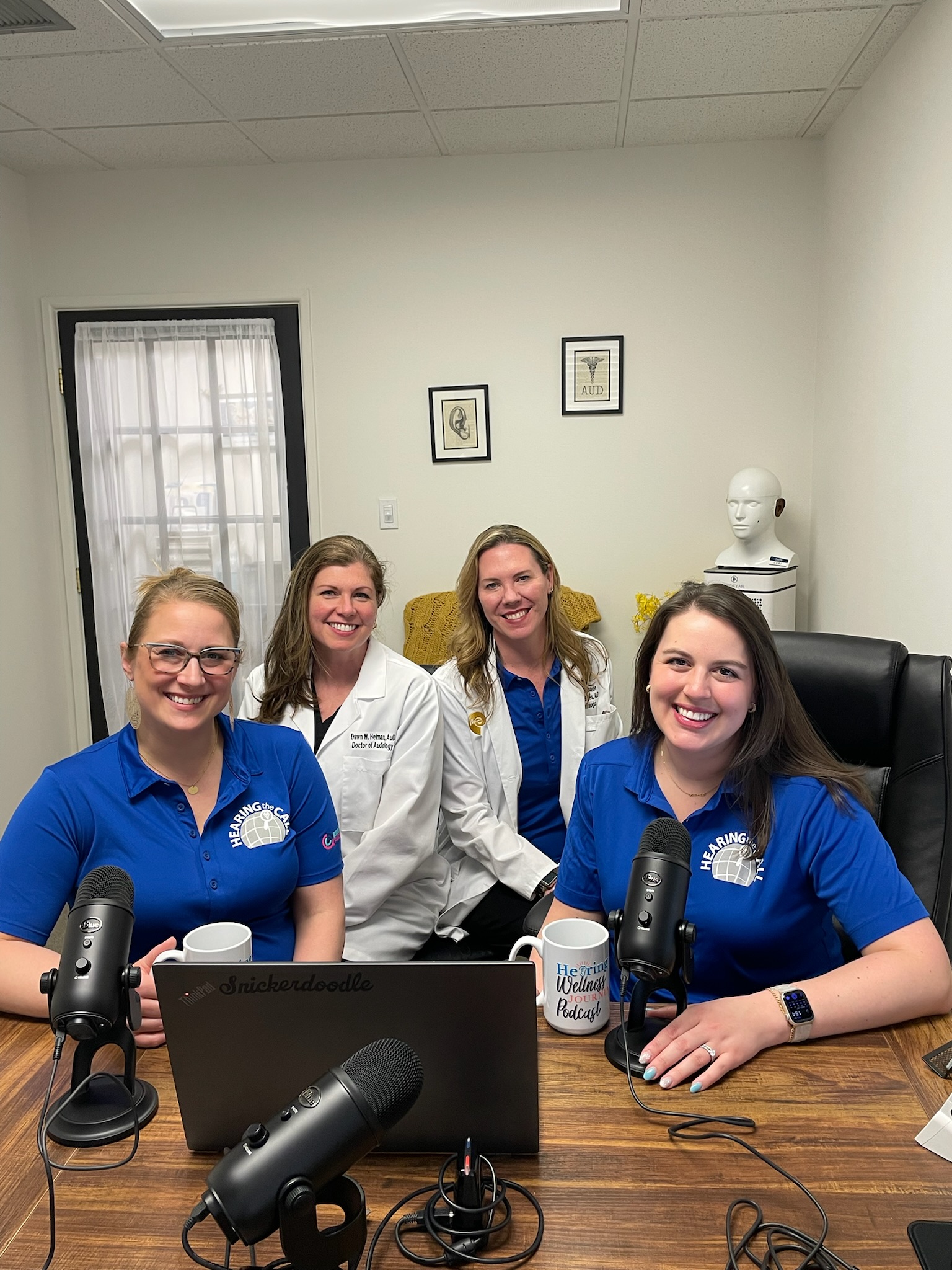
Living with tinnitus can feel overwhelming—but new treatments are bringing real hope. In this episode of the Hearing Wellness Journey Podcast, Dr. Dawn Heiman, Dr. Stephanie Michaelides, Dr. Emily Johnson, and patient care coordinator Lindsey Doherty share insights on the Lenire tinnitus treatment program.
What Is Lenire?
Lenire is an FDA-approved device that uses bimodal neuromodulation to treat tinnitus. Patients wear headphones delivering sound therapy while a tongue-tip device provides mild electrical stimulation. This unique pairing retrains the brain’s response to tinnitus, offering relief beyond sound-only therapies.
Who Qualifies for Treatment?
Not everyone is a candidate. Patients must meet FDA criteria, including:
- Moderate or greater tinnitus severity (measured by the Tinnitus Handicap Inventory)
- No recent start of hearing aids or other tinnitus treatments (must wait 90 days)
- No active implantable devices (e.g., pacemakers) without medical clearance
- No significant tongue nerve impairment
Contraindications such as epilepsy or recent dental procedures are carefully evaluated.
What Does Treatment Feel Like?
Many patients describe the tongue stimulation as similar to “soda bubbles” or “Pop Rocks.” Sessions last 30 minutes twice daily, and patients are encouraged to engage in calm, stress-free activities during treatment.
Results & Success Rates
Clinical trials show that 91% of patients following the program experienced relief sustained for at least 12 months, with 83% recommending Lenire to others. Many continue beyond 12 weeks, integrating sessions as part of a healthier lifestyle.
Beyond the Device: Counseling & Mindfulness
The providers emphasize that success depends on more than just the technology. Follow-ups at 2, 6, and 12 weeks ensure progress, and many patients also benefit from mindfulness programs such as Dr. Jennifer Ganza’s Mindfulness-Based Tinnitus Relief Program.
Meet the Experts
Dr. Dawn Heiman – Audiologist and host, pioneering Lenire treatments in Illinois.
Dr. Stephanie Michaelides – Audiologist with expertise in tinnitus management and counseling.
Dr. Emily Johnson – Audiologist specializing in advanced diagnostic testing and hearing care.
Lindsey Doherty – Patient care coordinator, guiding patients through treatment and support.
Take the Next Step
If tinnitus is affecting your quality of life, explore whether Lenire may be right for you. Begin with a complimentary tinnitus consultation and find your nearest provider through the official Lenire website.
👉 Visit: hearingwellnessjourney.com/podcast
Transcript:
Speaker: [00:00:00] Welcome to the Hearing Wellness Journey podcast, an exploration of determination, hope, self-discovery, and triumph. We'll share the personal experiences of those that are living with hearing loss and provide a haven for their stories to show others that they are not alone in this journey. Please welcome your hosts.
Dr. Dawn Heiman: Welcome to another episode of the Hearing Wellness Journey podcast. We are discussing the relatively newly recommended FDA-approved Lenire device. My name is Dr. Dawn Heiman.
Dr. Stephanie Michaelides: I'm Dr. Stephanie Michaelides.
Dr. Emily Johnson: Dr. Emily Johnson.
Lindsey Doherty: And I'm Lindsey Doherty.
Dr. Dawn Heiman: Allowed for the Lenire device to be provided here in the [00:01:00] US in May of 2023, and then you and I started in September. Well, we were...
Lindsey Doherty: We were trained in September.
Dr. Dawn Heiman: Was it September? Yeah, of 2023. So we were the first in Illinois to do that.
And then we added Dr. Johnson to our office, and we've been going pretty strong, so now it's going on almost two years that we have been helping people with tinnitus using the Lenire treatment program.
Dr. Stephanie Michaelides: Which is using its headphones that they wear with a tongue tip that goes into their mouth, and then we program 'em based on doing a diagnostic audiological evaluation. The treatment is two times a day for 30 minutes, so it's 60 minutes total, and it's been really helping patients out.
Dr. Emily Johnson: The important part to note is that it's a bimodal form of tinnitus treatment, so for a while, there's been some sound-only therapy through maskers, whether that be [00:02:00] like low-level white noise, pink noise, brown noise, ocean waves, the rain, whatever speaks to you in that moment. But the Irish, very proud of that, looked at what else can we implement to get a stronger response to get tinnitus relief from? And so they looked at, well, let's add a somatosensory component to this.
If we add a touch sensation or we stimulate some other parts of the body, is there a way that we can actually improve? Can this relieve more than just sound-only therapy? And turns out you can, and that part of the body is the tongue tip. And I know at first a lot of audiologists were like, " That goes in the mouth? That's gonna be a hard thing to sell here and talk about. This is what's gonna make a difference?"[00:03:00]
But looking at the research and now looking at personal experience, it's a game-changer for so many people. The quality of life that people have gotten back because of the Lenire treatment program is incredible.
Dr. Stephanie Michaelides: It's huge. Yeah. Absolutely!
Dr. Dawn Heiman: But even Lenire will tell you this, and we learn this from day one. It's not the product, it's the process, so you can't just purchase one on eBay, off the black market. It's not just that product, and it does have to be programmed to your hearing abilities and all of that.
The process is part of doing this. There are FDA criteria that you have to meet. Not everyone should get Lenire.
Dr. Emily Johnson: Right?
Dr. Dawn Heiman: Like, one of the reasons why someone probably shouldn't get Lenire? Name one.
Lindsey Doherty: They're pregnant.
Dr. Stephanie Michaelides: FDA regulations.
Like the ones...
Dr. Dawn Heiman: Yeah, like I would say, if someone has a [00:04:00] mild level of annoyance from their tinnitus, they do not qualify. There are people that they're perfectionists, and they're like, I just wanna annihilate it. I know it's not bad, but I don't want it to exist.
Realistic expectations are one thing, but you don't want your tinnitus to spike. You're doing the opposite of what this program is meant to do.
Dr. Stephanie Michaelides: So it's just trying to not make it the forefront of your life.
Dr. Emily Johnson: Right, exactly. So we're looking for those in the moderate severity or worse category, and we really use the THI, the Tinnitus Handicap Inventory, as, it's not a strict criteria, but it's a guideline that has been widely accepted of this is a numerical value that we're looking for, and that's the range of, yes, you do qualify for Lenire, or no, you don't, because it isn't for everybody, but for those that it is for, it makes a world [00:05:00] of a difference for so many people.
So we're also gonna look at several medical contraindications that were outlined when they looked at the FDA approval process and reducing the risk for harm. One of the first things is going to be making sure that you don't have an electronic implantable device, such as a pacemaker, defibrillator... anything that's active and electronically inside your body, unless you've been medically cleared by the physician who put it there.
Dr. Dawn Heiman: You also cannot have just started a tinnitus treatment within the past three months. If we're going to change that neurophysiologic pathway or if we're going to change the way that your brain is responding to the tinnitus, you need to give yourself time to work with that one treatment before you start another one.
Dr. Stephanie Michaelides: And that includes hearing aids.
Dr. Dawn Heiman: Yes.
Dr. Emily Johnson: So if you're a brand new hearing aid [00:06:00] user... gotta wait at least 90 days before we start to implement the Lenire treatment.
Dr. Dawn Heiman: A lot of people come to us and they're like, "I just got hearing aids. It's not working." But it turns out that those hearing aids they're great, but they weren't set using real ear measurement.
The focus wasn't on audibility. There's so many things that we do in the office that actually is different than 80% of all practices in our area. So when we are using best practices, and we're using speech mapping with real ear measurement to set the hearing aids, and if we have identified where the tinnitus is, then we know what we're focusing on, so that we can make those hearing aids better. And then if we find that adjusting those hearing aids still didn't help, you're still gonna have to wait the three months, and then we can go with Lenire. But sometimes you need someone to make sure those hearing aids are properly set.
Dr. Emily Johnson: Absolutely agree. Another contraindication would be [00:07:00] epilepsy or any other disorders that are loss of consciousness, like sudden loss of consciousness.
If you have a strong history of fainting or passing out, definitely something that we're gonna need you to talk to your physician about to see if it's a "yay" or a "nay" with your own personal medical history.
Dr. Stephanie Michaelides: And another thing would be any impaired sensitivity of the tongue because we are using the tongue tip stimulation.
That's another thing. If that is the case, we'll have to have a medical clearance from your dentist or something like that.
So, that would be another contraindication.
Dr. Emily Johnson: Right.
Dr. Dawn Heiman: Yeah. Did we have a patient last year or something that she was going to go through the treatment, but then she had a dental procedure, and then she lost that trigeminal nerve connection?
Dr. Emily Johnson: Yep.
Dr. Dawn Heiman: There are four cranial nerves that innervate or touch your tongue. Like if you eat something, do you ever notice some flavors you don't taste till the back of the tongue, [00:08:00] but other flavors you taste in the front? The trigeminal nerve is the cranial nerve that tends to connect to a lot of parts of your face, but it's also the tip of your tongue, and that is the nerve that we're connecting to.
So we wanna make sure that all those parts are working before you start a treatment. But University of Minnesota had a researcher who found he was testing all different body parts and different cranial nerves, and found that the end of your tongue, while listening to sounds, seemed to be the magic recipe, which is super cool.
So like piercings, right? Is that a contraindication?
Dr. Stephanie Michaelides: Well, you have to take it out.
Dr. Emily Johnson: Grey zone.
Dr. Stephanie Michaelides: Have had a few patients that have had oral piercings, and they just had to remove it, because you don't want that metal in your mouth with the electrical stimulation, so they just have to take it out.
Dr. Emily Johnson: Yes. So that's like a beige flag. It's not a red flag. But it's also not green. It's just kinda something to consider, like if you're willing to remove it for an hour a day, whether that's two 30-minute sessions or one [00:09:00] 60-minute session, and then put it back in power to you, let's do it. But if it can't come out, you're not interested in taking it out, then that's something to think about because we can't be introducing additional electricity to a metal component in your tongue.
Dr. Stephanie Michaelides: It's not a thing people do anymore, though. Oral piercings. I've seen a couple, but...
Lindsey Doherty: I think they do.
Dr. Emily Johnson: I think they are still. Fairly popular,
Dr. Dawn Heiman: I think right now. Like having multiple piercings on your ears is hot.
Dr. Emily Johnson: Yes.
Dr. Dawn Heiman: But it can always, I don't know, like, or the cheek, you know, just as long as it's not touching. I would take it out. I wouldn't leave it in. I don't have a tongue piercing.
Dr. Stephanie Michaelides: Nor do I want one.
Dr. Dawn Heiman: Nah.
Lindsey Doherty: A lip piercing. What about a lip piercing?
Dr. Stephanie Michaelides: Same thing.
Dr. Emily Johnson: Same idea.
Dr. Dawn Heiman: How many electrodes are on the end?
Dr. Emily Johnson: 32
Dr. Dawn Heiman: 32.
And then when we're calibrating, we're just stimulating like...
Dr. Stephanie Michaelides: four.
Dr. Dawn Heiman: Four. Yeah. What does it feel like? What do we tell the person?
Dr. Stephanie Michaelides: Soda bubbles.
Lindsey Doherty: Pop rocks.
Dr. Stephanie Michaelides: Well, from New England, you guys say pop, right?
Dr. Dawn Heiman: Pop Rocks.
Dr. Emily Johnson: I say Pop [00:10:00] Rocks.
Dr. Stephanie Michaelides: Pop Rocks. I don't think it's as intense as Pop Rocks though, because Pop Rocks...
Dr. Emily Johnson: I think like over caffeinated soda bubbles.
I'm like, it's like this... on your tongue.
Lindsey Doherty: Like a fine bubble.
Dr. Emily Johnson: Yeah.
Dr. Stephanie Michaelides: But that's how I describe it 'cause they, they're all over the place.
Dr. Dawn Heiman: I think it depends on the tongue, because when we're calibrating, some people were turning it all the way up, and they're not feeling it.
So talk people through, what does this look like? When they come in, let's say we're like, you totally qualify, we've done the full workup. Now, you're allowed to start your first 30-minute treatment. What happens? What are the parts?
Dr. Stephanie Michaelides: Well, first you have to program the Lenire based on the current hearing test. So we've programmed the Lenire based off that, and then we go into the calibration of the tongue tip. So that is where I have them put it in their mouth.
So we wanna make sure we're just doing the bare minimum because once we actually turn on the full tongue tip, then all of the electrodes are active. And when we're doing calibration, it's only the outer four. So I always let people know it's going to be much more intense. So we go through quite a few times just to make sure we're getting the same level, and then [00:11:00] we pair the headphones. And from there it's really straightforward. They just push play. There's a volume control for the headphones and a stimulation control for the tongue tip.
Lindsey Doherty: I wanna just interject a minute because I take phone calls and messages, and so people are asking, "Well, don't I wanna just crank it up?"
Dr. Stephanie Michaelides: Oh yeah.
Lindsey Doherty: Do they wanna just crank it up?
Dr. Stephanie Michaelides: They do not. It's like just the bare minimum, and even the sound of the headphones is just enough for you to be comfortable.
Dr. Dawn Heiman: It's supposed to be calm each session. You're allowed to do things during your treatments, but they're recommending that you're not looking at your phone. Definitely not checking emails 'cause you have no idea what could trigger you. You don't wanna be in a stressful manner. You wanna be stress-free. So I had a patient that she chose coloring. And then it was like six weeks in, she called, she goes, "You know what, can I start over again?" And I was like, "Why?"
She goes, " I don't think it's working. And I know why." And I'm like, "Why?" She goes, "Because I wasn't just coloring, I was COLORING. And she was doing intense coloring. She was [00:12:00] gonna make it perfect, and that's the same mindset of louder is better, stronger is better.
It's not, it's the complete opposite. It's just enough. And you are hearing sounds, and you're feeling something while you're negating this emotional, strong response you once had... we're undoing all that. It's supposed to be relaxing.
Dr. Stephanie Michaelides: And that's the number one thing that I tell my patients in the beginning, is to make sure you're doing something stress-free. You don't wanna be stressed. Stress makes everything worse.
Lindsey Doherty: Additionally, is it recommended to do this, like at bedtime? Or...
Dr. Stephanie Michaelides: I would say you have to figure out who you are because the Lenire can give you spikes of tinnitus.
Some people also find it super relaxing, so they wanna do it right before bed. But I say don't do it before bed until you know who you are, because I don't want you in the middle of the night yelling at Dr. Michaelides because you did it right before bed, and now you can't sleep, and now you're mad at me.
So, I would say do it earlier in the day, in the very beginning. Find out who you are and how you react to it before you start doing it immediately before bed.
Lindsey Doherty: And you [00:13:00] don't want them to fall asleep during treatment.
Dr. Stephanie Michaelides: So I have had patients fall asleep with it. But then you're not doing the treatment.
Dr. Emily Johnson: I have patients who have done it, and they like to use it when they wake up in the middle of the night or right before bed, but I always advise that when we're starting, two hours before you go to bed, you need to stop. So if you're going to bed at 10, you should be done with your treatment by 8. Because then if you do experience that temporary spike, it's not happening right as you're trying to go to bed.
Dr. Stephanie Michaelides: It's just a temporary thing, and it's part of treatment, really. I wanna say 98% of my patients have a spike at some point in time, whether it lasts a few minutes, or sometimes it's been a couple days, but that's a normal part of the treatment process.
Dr. Dawn Heiman: And I like how you said they have to know or find out who they are. We're not gonna tell you when to schedule it. Because let's say you're not a morning person, and I'm saying you have to do it before work, but guess what? I just created a stressful event in your life.
We want you to look forward to it. So [00:14:00] if you're an afternoon person, or if you can do it during lunchtime, and then you could do it again just before dinner, like make it work for your schedule so it's not working against you.
It makes sense that you'd wanna do it just before you go to sleep, because it can cause you to just kind of fall asleep, and you're nice and comfy. But if you're having a hard time falling asleep, just make sure that you're scheduling time to make sure that the bedroom's ready for you to go to sleep. If you need the bedroom cooler, you need the sounds, all that, whatever, so that you're gonna do your treatment, you're gonna relax. Maybe don't rush to something that has a blue light, like watching a movie. If that's gonna keep you up, you want to maybe get a real book with real paper, or just do things that are good for you and mindful of going to sleep.
Because if you're not sleeping well, tomorrow's gonna be a bad day.
Lindsey Doherty: And so, prior to patients coming in or while patients come in, for fitting of the Lenire device, if they are a candidate, [00:15:00] what are the things that you, as providers, have to do? Any checklists that you have to go over or assessments, in order to say, "yes, we are safe to start today."
Dr. Stephanie Michaelides: All the contraindications that we talked about. We make sure that those are all in place, and then we should be ready to go.
Yeah, we do like...
Dr. Dawn Heiman: the exam of the mouth, the tongue... looking for sores, active sores, finding out about their history of their mouth health, because sometimes at last second we look and we're like, "I need you to talk to your dentist," or, we need to just make sure that there's a better understanding of your mouth.
Dr. Stephanie Michaelides: But then after that, I mean, it's really pretty straightforward. The treatments time out at 30 minutes. So if you wanna do a full hour, you just play on the Lenire device, and then you're good to go. And then we typically follow up just with telehealth. You don't need to come back into the office.
Some people prefer it, but you don't have to. Some people with their busy lifestyle just wanna touch base with us, and we do counseling, [00:16:00] and we can work with 'em that way. Any questions that they might have. And it just can be a telehealth. So the follow-up is pretty simple.
Dr. Emily Johnson: I think it's important to note that we don't just fit you with the Lenire system and wish you luck and send you on your way. We're gonna be following up with you, virtually, for a lot of our patients who come from far away to see us. But at 2, 6, and 12 weeks, we're gonna be checking in to see how you're doing.
Maybe we need to move the timing of your sessions. If you're not seeing any success yet, we'll talk about, well, what are you doing during your sessions? And guidance for where we go from there.
This is truly a partnership on this journey for your tinnitus, and we want you to be successful, because when you look at the clinical trial rates, we're seeing that 91% of patients who followed the Lenire treatment plan as advised are [00:17:00] having relief from their tinnitus sustained for at least 12 months, which is incredible numbers. And on top of that, 83% of those clinical trial patients recommend Lenire for others.
Dr. Dawn Heiman: Other clinics, like ours, they're not just doing the treatment; we're also asking them to use Dr. Jennifer Ganza's cognitive behavioral therapy program.
Lindsey Doherty: Mindfulness-Based Tinnitus Relief Program.
Dr. Dawn Heiman: Yeah. So she's a psychologist from San Francisco, California, who treats tinnitus, but she recorded it in a shorter, 8-week form because if you have a counselor, that's great. Part of this is your mental health and being in that positive state. Sometimes you go to a session and you can forget that we are supposed to be working on tinnitus. This is a 'go at your own pace', 8-week program. She's reminding you of how to redirect your energy. This could be used on any level, but in coupling with the Lenire treatments, being [00:18:00] reminded about, de-stressing yourself from something that is bothering you.
And again, this could be applied... it could be the middle of the night, you're at a conference, your mind is going crazy, and you need to wake up tomorrow, and you need to be fresh to present. So to remind yourself to relax your muscles, to remind yourself to change what your brain is focusing on to something else. You need to allow your brain something pleasant to focus on that is fun and just different than living in the suck in the middle of the night, let's say. You need to practice this, though. Just like you can't just learn to drive a car outta nowhere.
You need to practice before it becomes a relaxing, automatic thing. You have to practice remembering to focus your energy on other things because it doesn't happen overnight. And anything that you practice will take you at least three weeks to change your DNA in a sense, so that you just automatically are a different [00:19:00] person.
Just like going to the gym. You automatically are that person who works out, or you're automatically that person that's really good at driving. So that's part of our process.
Do you guys see it as, you know, like some people they, if they, wanna go to a wedding and they have a certain dress or suit that they wanna wear and they need to lose weight. So they go on a diet until they can wear that outfit. Then they go back to their normal eating, right? Whereas other people they start to do it, and they're like, "I love this. This is a lifestyle change, and this is who I am."
Do you have patients that do this for just the 12 weeks, and they're done? Or are there people that are using this as a lifestyle change, and they're gonna use it forever?
Dr. Stephanie Michaelides: It's both. I have patients once their tinnitus becomes non-bothersome, then they can stop treatment.
But I feel like some people find it so completely relaxing that maybe we're not gonna do it every day for the hour, but they're gonna do it for a half an hour, or we're gonna go down to every other day. But they're just finding so much peace and so much non-stress in their life that they wanna continue treatment.
And so [00:20:00] those are the things that we talk about at these different appointments. We figure out, once again, who you are, what your needs are, and where we need to go from here. And each person is very different. And so that's part of this whole process.
Dr. Dawn Heiman: Has anyone had... I have had patients that, at eight weeks, they're like, "So I'm good. Do I have to keep going?"
Dr. Stephanie Michaelides: Mm-hmm.
Dr. Dawn Heiman: You've, you've never had that?
Dr. Stephanie Michaelides: No, I have, I had to.
Dr. Dawn Heiman: Oh, okay. No, no.
Dr. Stephanie Michaelides: And then they are done.
Dr. Dawn Heiman: What do you say? Are they done?
Dr. Stephanie Michaelides: Because I find tinnitus...
Dr. Dawn Heiman: I push them to keep going.
Dr. Stephanie Michaelides: I find the tinnitus comes and goes...
Dr. Emily Johnson: I tell 'em, "Keep going."
Dr. Stephanie Michaelides: ...In waves, and I found that some people, it's non-bothersome, and then all of a sudden, something bam, something stressful happens.
And they're right back it. So I said, put it to the side for a rainy day or when that tinnitus comes back, and then you can just go right back to your treatment again.
Dr. Dawn Heiman: I agree. Yes.
Dr. Stephanie Michaelides: But I have had patients where it's, it was like, we're good. Really quick. They were really good.
Dr. Dawn Heiman: Yeah. How about you, Dr. Johnson?
Dr. Emily Johnson: I've had some people by 8 weeks, their THI is really, really low. But I always just say, keep going on, because we're gonna talk again at 12 weeks anyway, [00:21:00] and we just wanna make sure that those results are sustained. It's a 12-week treatment program. That's what they agreed to, that's what they signed up for. And I tell 'em to keep going. And then if at 12 weeks I'll be like, "Okay, if you're happy, I'm happy. You can discontinue use. You can go down to 30 minutes a day." 'Cause a lot of the feedback that I get is they're like, "this is my me time. My family knows that I need to go somewhere and relax and just kind of de-stress from the day," which as adults in society nowadays, nobody...
Dr. Stephanie Michaelides: Who gets an hour of stress-free time? I don't get an hour with kids and everything. No.
Dr. Dawn Heiman: If it's... my doctor says I have to go take a break...
Dr. Emily Johnson: We'll do it now, but nobody will do it if it's only on your own accord. So a lot of people continue past that 12 weeks, even if it's just for 30 minutes a day, 'cause they're like, this is the way that I can rationalize, "I need to slow down and take a breather."
Dr. Stephanie Michaelides: And I feel like a lot of patients have not done that before.
Dr. Emily Johnson: It's hard!
Dr. Stephanie Michaelides: Anxiety and all of that. Like it's [00:22:00] hard to slow down.
Dr. Dawn Heiman: I feel like a lot of these patients. Not all of them, but most of 'em are high achievers. They have to be told to take a break.
They're not having a problem of getting off the couch. They're having a problem sitting down and relaxing. Very, very driven people that care about details, that unfortunately suddenly they start hearing a sound, and they're having a struggle getting past it.
This is one of the treatments, but it has been a delight to be able to recommend it, because we have some patients that, back in the day, were like, "Okay, so you have a hearing loss, so we can correct your hearing. But what if the tinnitus is in an ear that's dead? And it's at a pitch that we normally can't capture."
Lenire has been a wonderful solution for people like that. We treat you as a unique individual, and we find out what's gonna work best for you.
Dr. Emily Johnson: So if you're interested in this treatment, even if [00:23:00] you've seen somebody before that says that they don't know a whole lot about it, or they don't know if they can recommend it, again, we always start with that complimentary tinnitus consultation to even find out, do you qualify? Is this something we could potentially recommend? And knowledge is power! Get that education. Find out if this might be right for you. If this podcast episode resonates and sounds like something you might be interested in, reach out to a Lenire provider that's near you.
You can find us on the Lenire website. Put in your address. You can find somebody local. And if you submit a request, they'll pair you up with your local office.
Lindsey Doherty: When you do fill out an inquiry with the Lenire website, they will pair you with and send your information along to the provider, the clinic that is closest to you.
Dr. Emily Johnson: Correct.
Lindsey Doherty: As Dr. Heiman mentioned, we were the first in Illinois. There still aren't providers everywhere in [00:24:00] every state. So they are going to match, and you might be paired with the provider who's outside of your home state, but they would be the closest to you.
Dr. Emily Johnson: Right.
Dr. Dawn Heiman: Thank you so much for listening today. If you have any questions, please type 'em in the comments below, or you can call our office and ask. You can email us as well. All of our information is there. I hope that you are doing well with your tinnitus, if you have it, and know that there is definitely not just one, but multiple treatment protocols that can be used to help you.
There is definitely a way to help you with your tinnitus. Don't let someone say, "Just join the club. It's only gonna get worse." Yeah, don't settle for that. Nope. Nope. Find a provider that knows how to help you.
Dr. Emily Johnson: Yep. There's hope. Don't suffer in silence. Have a great day. Sleep well. Bye.
Dr. Dawn Heiman: Bye.
Speaker 2: Thank you for joining us on this episode of the [00:25:00] Hearing Wellness Journey podcast. For more information about what we do and the services we provide, please visit our website at hearingwellnessjourney.com/podcast, where you can find more resources based on today's discussion, as well as request to be a member of our Hearing Wellness Journey community on Facebook.
That's available for our listeners exclusively on hearingwellnessjourney.com/podcast.
Resources Mentioned:
Our Mission:
Our Hosts
We are blessed with the opportunity to help people every day who have varying degrees of hearing loss and hearing disorders. We moderate this podcast to give you the ability to listen in on others' stories of triumph and perseverance.
Stay Connected
Never miss a podcast update, webinar or the latest news
We do not share any personal information with third parties.
CHECK OUT OUR
Resources
Advanced Audiology Consultants
Our Team of Audiologists are located in Oak Brook, Illinois and are here to help you hear.
EntreAudiology
Practice Locator
Need a recommendation for a qualified audiologist? We have a practice locator to help you find a reputable practice.
Hearing Aide Certification Online Course
Teaching nurses, CNA's, and caregivers how to help assist someone who wears hearing aids.
Hearing Wellness Journey Aural Rehab Course
Teaching you everything you need to be as successful as possible with your hearing aids with a series of videos.
Contact Us
Would you like to be a part of our podcast?
We welcome you to share your story too!