Hearing Wellness Journey Podcast
29- What is Real Ear Measurement?
Listen and Subscribe on Apple Podcasts
Listen and Subscribe on Spotify
#29: What is Real Ear Measurement?
SHOW NOTES:
What Is Real Ear Measurement — and Why It Matters for Better Hearing
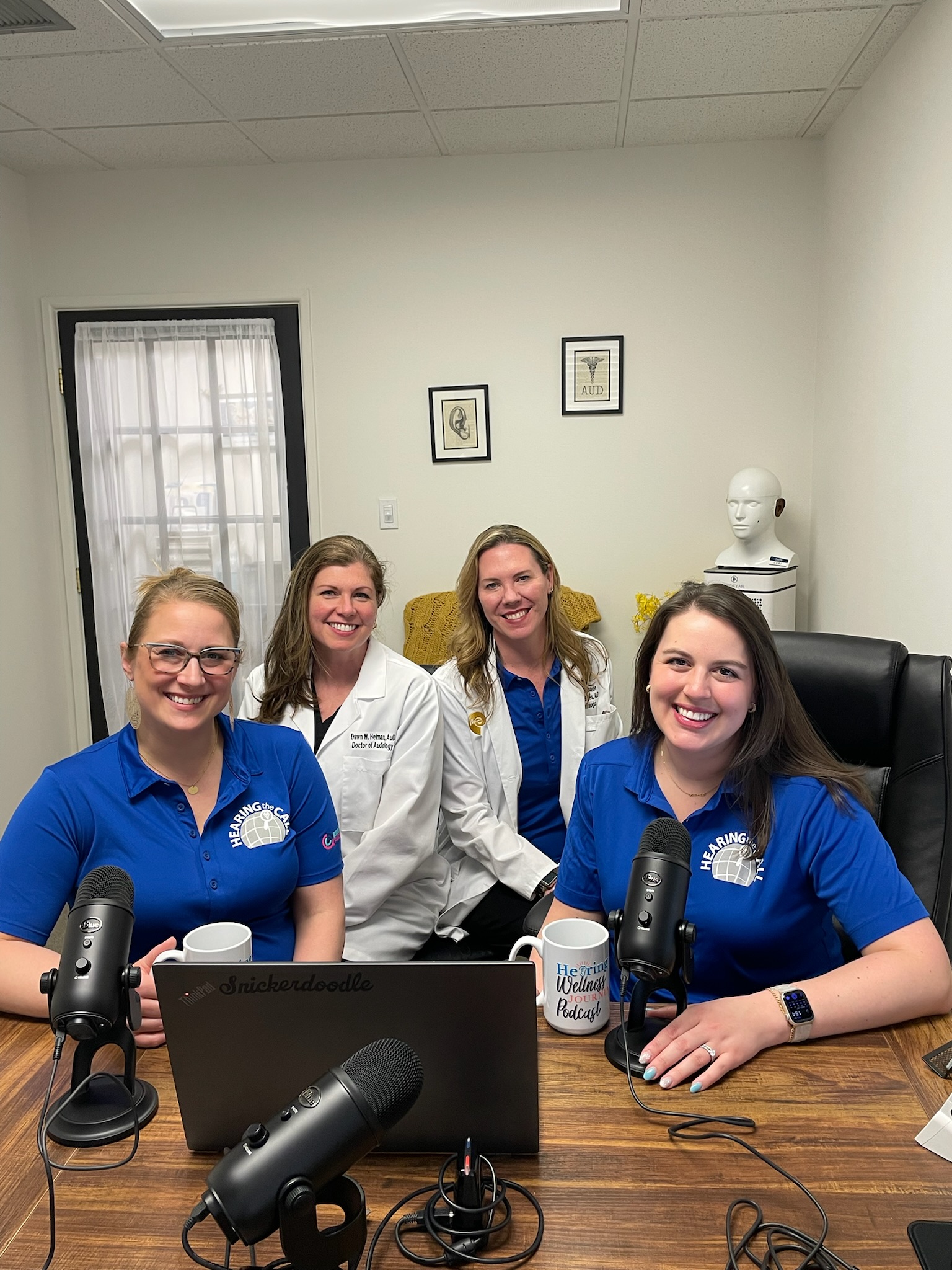
When it comes to fitting hearing aids, real ear measurement (REM) is the science-backed method that ensures what you hear matches what your audiologist intends. In this episode, Dr. Dawn Heiman and Dr. Emily Johnson explain how REM transforms hearing aid fitting from guesswork into personalized precision.
Why Real Ear Measurement Is the Gold Standard
Real ear measurement verifies hearing aid performance by measuring sound inside your ear canal. Instead of relying on computer software averages, REM captures how sound interacts with your unique ear shape. It’s the difference between wearing custom-tailored shoes and borrowing someone else’s — comfort and accuracy matter.
From Babies to Adults: Precision for Every Ear
Dr. Heiman and Dr. Johnson share their pediatric audiology roots, explaining why newborns and children require exact calibration since they can’t self-report. The same principle applies to adults — especially when anatomy, ear canal size, and sound preferences vary widely. Using REM ensures access to all speech sounds without over- or under-amplifying.
How the Process Works
During REM, tiny probe microphones measure how much sound reaches your eardrum while you listen to everyday speech passages (yes — even about carrots!). This verifies that your hearing aids deliver the correct volume across soft, medium, and loud sounds — protecting comfort and clarity while preventing distortion or headaches.
Personalized Hearing Care for Real People
Real ear measurement combines science and artistry. By objectively measuring output and then tailoring it to personal comfort, audiologists can fine-tune fittings to each listener’s preferences. It’s not just about data — it’s about people hearing life’s details clearly and comfortably.
To see the video edition of this episode with closed captioning, please go to Hearing Wellness Journey Podcast
Transcript:
===
[00:00:00]
Narrator: Welcome to the Hearing Wellness Journey podcast, an exploration of determination, hope, self-discovery, and triumph. We'll share the personal experiences of those that are living with hearing loss and provide a haven for their stories to show others that they are not alone in this journey. Please welcome your hosts.
Dr. Emily Johnson: Dr. Emily Johnson
Dr. Dawn Heiman: Dr. Dawn Heiman.
So today we're talking about real ear measurement.
Dr. Emily Johnson: Yes!
Dr. Dawn Heiman: Some people call it...
Dr. Emily Johnson: REMS!
Dr. Dawn Heiman: REMS - live speech mapping. It is a form of verification, validation, and in our office, we use it as a tool to guide us in fitting hearing aids.
Dr. Emily Johnson: Yes, a guide, a foundation.
Dr. Dawn Heiman: [00:01:00] A guide, a flashlight, a map, a curiosity of, "is your ear the same as what the computer programming software for the hearing aid company is assuming of the way your ear is receiving sounds?"
Dr. Emily Johnson: And most of the time, "surprise!" It's not.
Dr. Dawn Heiman: No. You and I, so the listeners probably don't know this. You and I both have a pediatric background.
Dr. Emily Johnson: Yes.
Dr. Dawn Heiman: And when I first started using real ear measurement, I was at a children's hospital in Philadelphia. It was Temple University Children's Medical Center. And if you are fitting a newborn, a baby, a toddler, a preschooler, any kind of kiddo, they're not gonna be great reporters to say "Oh! That's too loud!" or "Oh, I can't hear!" "Oh! That's too soft!" We have to get it right. It is very imperative that the doctor uses science [00:02:00] and sets these hearing aids for these kiddos right.
Dr. Emily Johnson: Absolutely! Your six months old, nine months old, twelve months old isn't gonna tell you, "Oh, the shh sound is not detectable. Can we increase the high frequencies there?" They're not gonna be able to report that. So you have to objectively measure to ensure that they do have good access, and even some adults, not great reporters of what they're hearing and what they're understanding, and sometimes it just sounds off. It just sounds wrong, but I can't tell you what should be different.
Dr. Dawn Heiman: Right! The venting wasn't right.
Dr. Emily Johnson: Right.
Dr. Dawn Heiman: The ventings are too big. The ventings are too small. My voice sounds funny. But let's go down to the basics.
Okay, let's envision that you have a newborn baby. When we would test the babies with [00:03:00] electrodes and measure their auditory brainstem response and find out with frequency- specific tone pips, what the degree of hearing loss was for each ear. While that baby is sleeping, or let's say it's a toddler or preschooler that has been sedated. While they're asleep, what we used to do at Temple Children's is measure their ear canals with the real-ear-to-coupler difference (RECD) system. We would wheel in our real ear system.
Dr. Emily Johnson: Mm-hmm.
Dr. Dawn Heiman: Get the measurements of their ears, and then take ear mold impressions to make their ear molds. So that we could fit the hearing aids in the test box before the baby came in. But, and I tell the parents this all the time, and Emily, I'm thinking you do the same thing , every time they need new shoes, they need new ear molds because the ears keep growing, they have itty-bitty little ears. You put a man-sized programming, hearing aid, or whatever on a little bitty ear, it's gonna over-amplify.
[00:04:00] We would need to measure that ear canal and reset the hearing aids every time we got new ear molds because the ear canal is changing. So we had to do it right because we know babies have little ears. Adults are just big kids and there are some women that are wearing pediatric-sized clothes.
They should not be wearing hearing aids that were set based on a man's ear canal size.
Dr. Emily Johnson: Right. The average ear. And I always joke with a lot of my patients that "Well, you're not average, number one." And for my female patients, "You're not a man." So, we need to take into account your specific anatomy that you were born with to know what's actually happening in your specific ears, rather than letting the software just guess based on what's used in the research lab.
Because for me, my hearing aid patients, and my patients in [00:05:00] general, I'm like, "Your hearing test is just a piece of paper, but when it comes to actually fitting a human being... well, you have sound preferences. We have a loss that we're gonna correct. Your ear canals, they're cousins, never twins. They're different from one side to another, and they can't be tweaked the same way."
This allows it to be truly personalized. Like if you got a custom suit or a custom set of shoes, that's gonna fit a lot more comfortably right out the gate than just something that you can get off the rack.
Dr. Dawn Heiman: Yeah. And okay, so that's a great analogy. A suit, let's say.
Dr. Emily Johnson: Yeah.
Dr. Dawn Heiman: A suit is different than a dress, which is different than let's say, a jumper, right?
Dr. Emily Johnson: Yeah.
Dr. Dawn Heiman: And there are templates, or what we would call fitting algorithms, for fitting hearing aids. So depending on if you're a child or an adult, or the type and degree of hearing loss you have, we [00:06:00] have different, mathematical-fitting algorithms that we would use to fit the hearing aids. And back in my day, when we had screwdrivers and trim pots. We had some more simplistic fitting algorithms like POGO and Berger, and 1/2 Gain rule, and all kinds of stuff.
But the manufacturers have fitting algorithms in the software that says, if you have this hearing loss, this is how much volume we should give you, but a lot of them have proprietary algorithms, which are their own unique ones. But we need to at least have a 'comparing apples to apples' situation going on here.
So, Dr. Johnson, Emily, do you wanna tell us a little bit about the differences in kids' fitting algorithms versus adults'?
Dr. Emily Johnson: Yeah! So on the kids' side of things, in order to develop speech and language, you have to be [00:07:00] able to hear those speech sounds. That's how your brain learns what things sound like. So, when you're in that prelingual stage of being a child, you need access and audibility across the spectrum. And so we use a fitting formula called DSL, and that is going to prioritize access across everything and plenty of volume to help develop that natural speech and language.
When we look to adults, you're postlingual. You've presumably had many years of whatever language you speak, and it's not as important to have all of that audibility. It's audibility, but with comfort. Because now we have to get your brain on board to go from living in a quiet world to getting back to what things should sound like.
But you're gonna have a lot more [00:08:00] feelings about it if it's all just audible and loud. But you have to remember that, if you were a kid with hearing loss, who's been fit on a DSL platform and prioritizes audibility versus comfort, and then you become an adult, the default for the adult programming is going to be something right now called NAL-NL2. And that is the foundation for all the proprietary fitting formulas within the manufacturers.
But if you grew up on DSL and then the software goes, "You've turned 18!"
Dr. Dawn Heiman: Yeah.
Dr. Emily Johnson: Time to switch you to NAL-NL2!
Dr. Dawn Heiman: It's time to grow up! Bye-bye.
Dr. Emily Johnson: It's gonna sound so soft.
Dr. Dawn Heiman: Too different.
Dr. Emily Johnson: Because that is access with comfort versus full audibility with what you grew up with, or our power junkies, those people who just really wanna hear everything.
And so those are all things that have to be taken into [00:09:00] account when you're looking at, "How am I gonna fit this person?" Because again, human being in front of you. Not just a piece of paper, or a number, or the graph that's being recommended by a computer software who has no idea who's sitting in front of them.
Dr. Dawn Heiman: Right! So, we write the prescription. Let's say it is a 21-year-old adult female, the fitting software will automatically default to their proprietor probably. But we can override that and say, we just want NAL-NL2. But what if they've worn hearing aids their entire life?
We then can change that prescription to... actually, now they have DSL adult.
Dr. Emily Johnson: They do. Yeah.
Dr. Dawn Heiman: So, it's seeing that they're now an adult, and they could have a later-onset hearing loss change, but they foundationally have always heard things a certain way. And I think part of that also, with the kiddos, with the ear molds, we're trying to get all of the high frequencies in, and we have to [00:10:00] cut off the low frequencies.
They have little ears. Unfortunately, side effect is: we are plugging up their ears. So, they have this occlusion effect that they are used to. They're used to hearing their voice a certain way. They like that extra boomy volume, things like that.
Dr. Emily Johnson: Mm-hmm.
Dr. Dawn Heiman: So anyway, it's complicated, and we as audiologists or anyone who's fitting hearing aids can't assume that the computer in front of you is so smart that it will know all of these things.
I mean, there's the challenge in this world right now. Is AI a good thing in healthcare? Sometimes, yes.
Dr. Emily Johnson: Yes.
Dr. Dawn Heiman: But not all the time, can you trust the computer to understand all the nuances of the human being sitting in front of you and their unique anatomy? Nope.
Dr. Emily Johnson: Nope.
Dr. Dawn Heiman: So, we spent a lot of money this year on new, upgraded systems.
The other one still worked, but why not? So that we can treat our patients even better, because [00:11:00] we don't trust that the computer will know how to fit the hearing aids correctly. And mainly, and I know you have examples, I've got examples, and we're gonna get into these, but mainly because we've had patients come in who were misfit, we'll say.
Dr. Emily Johnson: Mm-hmm.
Dr. Dawn Heiman: The prescription was not correct, and they suffered for years, and then the tears, and then the joy of being able to hear normally. And then the question comes out, "Why didn't the other person do that?" My answer is usually, " I can't speak to that. I don't know. I'm just glad you're here." But that's sad.
Dr. Emily Johnson: Right? And all too often, we get people who are like, "Oh, I've worn hearing aids for 10 years, but I've never truly been happy with how they sound, but I'm here for a second opinion. Let's see what we can do." So, the test is all the same. Hearing aids are functioning the way that they should.
You have to verify the output. [00:12:00] People's ear canals do funky things to sound. I have very, small and short ear canals. Some of my patients have very large and long ear canals. And it's just anatomically how we're built. If we had the same exact audiogram, the hearing test, if that was the exact same thing on paper... the software might take into account our gender and our age.
But it doesn't know, "Oh, this person has uniquely small ear canals," for all those people who are like, "I've never been able to wear earbuds in my life," talking about you, 'cause that's me, except for my generation one AirPods, which I cannot switch to the new styles. These are the only ones that fit.
And then we have other patients that are like, "Every ear tip that I've ever put in my ear has always been small and loose. It's never fit accurately." I look in there, I'm like, "Well, I understand why." But the computer system can't see what I'm seeing. It [00:13:00] doesn't know anatomically what we're looking at.
So we have to verify what happens, because if we program the same, but we put it in my ears, it's probably gonna be too much. If we take those hearing aids programmed the same way, and we put it in my patient's ear who has bigger ear canals, it's not gonna be enough. But the computer system doesn't know that there's a significant difference in the size of our ear canals. The only way you do know that is by measuring it objectively.
Dr. Dawn Heiman: Yeah. It's been frustrating for me over the years.
Social Clip #1 Start
---
Dr. Dawn Heiman: I grew up as a distance athlete. Running, swimming, biking. As a child, and then into my teens, and then college hit and, you know, bike raced a little bit and then whatever.
But, being a kid of the eighties, nineties, the school nurse or a doctor just basically weighing me and saying "I'm [00:14:00] fat." Because my BMI for my height versus my weight on their simple scale says I am overweight. But, I could kick your tail in a 10K and finish in 42 minutes, but "I'm fat." No, because they didn't understand that BMI is not the end all, be all.
You have to look at the person's bone structure, their muscle mass, the amount of fat that they have. There's more to a human being than just weight and height. Just like there's more to a human being when fitting their hearing aids based on their age and their hearing loss. There's so much more.
Social Clip #1 End
---
Dr. Dawn Heiman: A good doctor would have used calipers and measured my body fat percentage and all of that to understand I am a very healthy human being. I'm not fat. So there are [00:15:00] adults that are wearing hearing aids that are being shamed. They don't wanna wear their hearing aids. They tell their family members, "My head hurts."
But your doctor said these are good for you. You need to get used to them. But that doctor, or not doctor... not everyone who fits hearing aids are doctors... they are telling the person, "This is as good as it gets. It's just you. You need to get used to them." So, if the prescription is wrong, because not all the right measurements were taken, it's like wearing glasses that are your neighbors and not yours. You can get used to them, but you're gonna have a lot of headaches, and they're always gonna feel like they're not quite right, and you're gonna struggle to see with someone else's glasses.
Dr. Emily Johnson: Right.
Social Clip #2 Start
---
Dr. Dawn Heiman: If someone fits you with hearing aids, without using the system that we're talking about... if they are fit with a lot of assumptions... that person is now being shamed.
I just spoke to a gentleman yesterday whose family was beating him up and going, [00:16:00] "You have to wear these hearing aids." He's like, "I'm getting headaches." And they're like, "You need to get used to them. That's what they told you." He's like, "I don't think this is normal."
He found Dr. Cliff Olson on YouTube, and then he found our office because he learned the term 'real ear measurement.'
Social Clip #2 End
---
Dr. Emily Johnson: Yep.
Dr. Dawn Heiman: And this story happens over and over again.
Dr. Emily Johnson: Yep. And some people do need to just wear their hearing aids get used to it, but you can't say that with confidence unless you know that the hearing aids themselves are actually fit correctly. It's just time and time again. People come in and like sometimes the hearing aids are almost there, to the foundational targets, but close doesn't mean that it's perfect or correct or where you wanna be.
Dr. Dawn Heiman: "Close? Deal with it. You're fine."
Dr. Emily Johnson: Which is surprisingly what our tinnitus patients get told too. It's [00:17:00] just an industry thing where it's this, "Ah, the patient must be a poor reporter. Push through. Smile." What you're supposed to do. And then it turns around and you're like, "Oh... so we actually could have done something about that, and you didn't have to do that for three years, but we didn't know until now."
Dr. Dawn Heiman: Hmm. That makes me so angry.
Dr. Emily Johnson: But it just occurred to me.
Dr. Dawn Heiman: You're so right.
Dr. Emily Johnson: People who unhappy with the hearing aids... and then people who are unhappy with their tinnitus. It's so common.
Dr. Dawn Heiman: Is that gaslighting, or is it just ignorance? Is the provider not aware that they could refer to a place that knows more than they do? I think it's pride. I think there's places that maybe they don't have the instrumentation, or they don't know how to use it.
Dr. Emily Johnson: Right.
Dr. Dawn Heiman: So, they're not going to admit to the patient that they could send them to someone to fix the problem, whether it's tinnitus or [00:18:00] make these hearing aids fit properly.
It's sad. It's annoying. It's frustrating. So frustrating.
Dr. Emily Johnson: Right. So, let's talk about what real ear measurements actually entail. What does that look like when the patient comes into the office? What can one expect? When I always say, "I'm gonna use this machine right here. I'm gonna do a lot of things, and you're gonna sit and relax and listen to somebody talk about carrots," and they're like, "Okay."
Dr. Dawn Heiman: You should listen to this part. Don't glaze over. Pay attention if you're drifting.
Social Clip #3 Start
---
Dr. Dawn Heiman: Because if someone calls and asks a place... this has happened before, this has been reported to us... they ask, "Do you do Real Ear Measurement? And the answer is, "Yes," and then they get in there and question what happened. They don't know. Somehow they come to us, [00:19:00] and I start putting probe tubes in their ears and they're like, "Whoa, whoa, whoa. What is this?" I'm like, "I thought you said you had Real Ear Measurement done." They're like, "That's what they told me."
Social Clip #3 End
---
Dr. Dawn Heiman: So let's go into this. What happens? And you just said, " I have them sit back and relax. You're gonna hear a lot of stuff about carrots," or something, right? Phrases. I want you to understand that while all those phrases are going and you get to sit back and relax, we are working really hard to try to match that template that we see in front of us. We are manipulating one computer, so the other computer screen smooths out. So, we then say, "How does that sound?" And you're like, "Normal. How did you do that?" Well, we were working our tail off while you had to look straight ahead at that speaker. Yeah, go ahead.
Dr. Emily Johnson: Yeah.
Dr. Dawn Heiman: Let's break it down. What happens?
Social Clip #4 Start
---
Dr. Emily Johnson: So, we have the Verifit2 system in our office. There are other Real Ear Measurement manufacturers' devices out there. That is [00:20:00] not to say that the Verifit2 is the only one that can be used for it. Should be used for it. As long as you have something, that's all that matters. And it has a really cool feature that you can actually measure the probe tube depth now to make sure that we are truly getting within the correct distance to your eardrum.
So it's this little soft, flexible tube that's attached to some wires that will hang over your ears, and we take the hearing aids out, and I'm gonna measure the depth to make sure that the probe tube goes all the way in. You're gonna hear like a 'du-du-du-du-du-du' sound. Then the probe tube will go in. It's super soft and flexible. It might tickle. It might feel weird. Your body might be like, "Ooh, there's something like going deep in my ear canal. Like things aren't supposed to do that." It's just odd.
We measure the correct depth. It gives us a big green check mark, and then we measure the other side. And then what we're gonna do is we're gonna take a real-ear-to-coupler difference. So the [00:21:00] coupler is the standardized piece that's used in the research lab that they use to run all of the hearing aids in something called the test box.
When I have you in front of me, I don't need to run them in the test box. I'm going to run them on your real life ears, but I need to see how different your ear canal shape and size is compared to that coupler. Let's see how far off of average you are. And this way it's gonna show us if your ear canal provides any peaks or valleys in what frequency regions.
After that, we take the little foam plug out of your ear. I'm gonna put your hearing aids on, and then you're gonna hear sentences. Sometimes it's seven languages all at once. Sometimes it's a passage about carrots being a reddish yellow vegetable. And what you're gonna see on the screen is like little different crosses or targets will come up, and then there'll be a line of [00:22:00] the average speech spectrum at that intensity.
And then we're gonna make it nice and pretty and where everybody belongs in their correct neighborhoods of soft, medium, and loud. And then we'll verify to make sure it's not too loud, and then we'll adjust from there.
Social Clip #4 End
---
Dr. Dawn Heiman: Yeah. We wanna make sure we do good and not harm. So that last sweep that you were just talking about, make sure it's not too loud. There are these little stars at the top, and we are amplifying sounds. Hearing aids of today have the ability to have automatic gain control, where a loud sound is asked to please come in softer, and soft sounds can be made to come in louder. And this happens in microseconds, like so fast. The processors in the hearing aids, by the way, are faster than what it took us to get to the moon.
In these teeny little, itty bitty parts that actually fit behind your ear. So, we wanna make sure that we're doing good. We're amplifying sounds where we need to, to correct your hearing, but we don't wanna over amplify. We don't want a smoke alarm to [00:23:00] go off, and the hearing aid just keeps amplifying.
We want to have some comfort. So we create what's called a dynamic range, where we're putting all of the world sounds into a region. And to be honest, this procedure is educational for you too, because you might see that we are not able to give you all sounds, and we can talk to you about that.
And you can see that NAL, National Acoustic Laboratories in Australia, have these little stars, and we're trying to meet the sound curve of that spoken language. We're trying to meet it at all parts, but there might be a region that the targets drop down below what you can even hear, and we can speak to that. Thousands of people said, "I don't wanna hear that louder," because we've hit a severe range of hearing. Your hearing has broken so much that it would be painful for us to amplify it, or the broken hair cells [00:24:00] are making it sound crass and terrible and all of that.
Dr. Emily Johnson: Yeah. Distorted.
Dr. Dawn Heiman: Distorted. And so, that's another thing, where if we're using Real Ear Measurement, we're protecting you from over amplifying regions that would not be comfortable for you.
We can see all of this. This is not a, "How's that sound?" This is very specific, and I mean it sounds like a lot, and it kind of is, for us to be trained and to do this with a patient is a lot, but you know how much time we save? Not having you come back repeatedly to try to fix what I call the configuration 'cause you can have divots and peaks and all that. And now it's set as a template in the software. This is your configuration. And, oh my gosh, it makes everything so much better.
Dr. Emily Johnson: Everything's just in the right ratio to one another.
Social Clip #5 Start
---
Dr. Emily Johnson: So many times you're like, "Oh, I want more bass." And you're like, "Okay." [00:25:00] So I've got you hooked up for Real Ear Measurements, and I'm increasing the low frequencies in the computer system. And I'm measuring it, and that curve doesn't go up. And I'm like, "Okay." So then I'm increasing those low frequencies, and the curve doesn't go up. I'm like, "Okay! If we want more bass, we have to close up your ear canal more. Too much of it is leaking out."
So, no matter how much more I tell the computer chip in your hearing aid to give you, you're not gonna get it, because it's just leaking out.
Social Clip #5 End
---
Dr. Emily Johnson: But if we didn't measure it, I could look at the system and be like, "Whoa, you've got a lot of low frequency power going on." But in reality...
Dr. Dawn Heiman: You just have a large vent.
Dr. Emily Johnson: Nothing's changed!
Dr. Dawn Heiman: Yeah.
Dr. Emily Johnson: And that means we have to change your acoustic parameters of your ear canal to get you the more bass, which might make your voice sound weird. But this is a foundation. This is not the end all be all. You are a person with feelings and preferences. And so it's the science, and then you mix [00:26:00] it with the art of, "Is this tolerable? What would you like? Do you wanna come down two steps from target, and we work our way up? What's gonna make you most comfortable?" Knowing that the ratio from bass to treble and mids and everything in between is right where it should be.
Dr. Dawn Heiman: If I can, I'm gonna go down a little rabbit hole real quick, and I know we only have a couple minutes left, and our next episode will be all about this, but the part that goes in your ear is the most important part to your fitting. I feel like if we could conduct some kind of seminar for providers at different places, so they can see what she just described. Where we're seeing the differences of: if you have a poorly fitted mold, if you have too much venting, the patient says, "Here's what I'm experiencing." And then she's not just assuming and changing the the dome, she's actually measuring it.
But with that task though, the patient's [00:27:00] understanding what's happening and why we need to change the dome. She's seeing what's happening. And in our office, a lot of times we take custom impressions. We make different size hearts that attach to the hearing aid, or the hearing aid itself, or we're changing domes.
But every time we change that end part, doesn't seem like a big deal, but it makes or breaks the fitting. We have to rerun Real Ear Measurement again when we change that one little part because acoustically it makes a huge difference.
Dr. Emily Johnson: Right.
Social Clip #5 Start
---
Dr. Dawn Heiman: You can be so much more successful if you have the right size domes or custom part in with Real Ear Measurement. It's a beautiful thing to see, but you have to have a clinician that understands this process, and our experience in using this goes over decades between myself, Dr. Johnson and Dr. Michaelides. We have been doing this for so long that we know [00:28:00] when something's broke. We know when something's not right. There's something to be said about starting with PEDS. Pediatrics. We really, really, really need to make sure that everything's perfect. But then you move on to the adults, and we don't know how to do anything but try to make it perfect.
Social Clip #5 End
---
Dr. Dawn Heiman: And, Dr. Johnson, you said in the beginning we have different fitting algorithms for the adults. Because, they have a say. They're like, "I don't wanna hear like that."
Dr. Emily Johnson: Mm-hmm. They have an opinion.
Dr. Dawn Heiman: They actually can have an opinion, right? So it's a little kinder for them.
Social Clip #6 Start
---
Dr. Dawn Heiman: But our prescriptions are set properly. And we wanna work with you. We can show you: this is what you need. And then you start to understand the process and why you need to show up and how this is improving your hearing. You get to understand more about the function of your corrected ear now because you've seen this process, and you're watching on the screen, and we're explaining to you. So many people [00:29:00] don't have buy-in because they have no idea what happened. Someone did a thing, they show up, they put 'em on their ears, and they're like, "Go ahead. You're good. Now pay us." And they have a headache, and they're just baffled. They don't understand.
Social Clip #6 End
---
Dr. Emily Johnson: Right. Or they're like, "I've come in for six to seven adjustments. Things have been tweaked all the time at my follow-up appointments, and it's still not right."
I'm like, "Okay. Take out the guesswork and get an objective measurement" to see... "oh, well, there's not enough bass." But is that in relation to how much high frequency you're getting? Or just a lack of bass in general? But then you're also in a dome that's open, so if you have a dome that has a lot of holes in it, you're not gonna be able to get big boomy bass quality. Looking at you musicians.
Because it's just the acoustics and how they're set up. And there's things that can be adjusted. We [00:30:00] have so many dome options, shapes, sizes, types, and if one of those doesn't work for you, then we go the custom route. But we have so many options, and it doesn't have to be just with the manufacturer you're fit with because sometimes other manufacturers make a better shape for your ear, and that's just anatomy. Just how it is.
Dr. Dawn Heiman: Yeah. They don't have enough bass, and everything sounds tinny. Because someone didn't do Real Ear Measurement, and they didn't realize that there's insertion loss, and they actually needed some bass added to make it sound smooth.
Dr. Emily Johnson: Right.
Dr. Dawn Heiman: Oh!
Dr. Emily Johnson: Ratios.
Dr. Dawn Heiman: We could... ratios. See the human being in front of you. Add some science. And then, overarching, we're listening to the patient.
Dr. Emily Johnson: Yeah.
Social Clip #7 Start
---
Dr. Dawn Heiman: Some people like vanilla, clean. Some people like spicy. Some people like boomy power. We're gonna work with the human being in front of us too, and go, "Okay, I got you."
But we have to at [00:31:00] least get the template correct.
Dr. Emily Johnson: Yeah.
Dr. Dawn Heiman: The foundation has to be correct, and the only way for a clinician to do that is to use Real Ear Measurement, by putting a probe tube down in the ear canal that's connected to a microphone so we can hear what you're hearing at the eardrum level.
Dr. Emily Johnson: Absolutely.
Social Clip #7 End
---
Dr. Dawn Heiman: Alright, so, next time we're gonna talk about the parts of the hearing aid, especially that part that goes into your ear canal.
Dr. Emily Johnson: Yeah.
Dr. Dawn Heiman: Either a dome, a custom plug, all of that. We can even get into musicians and sound protection and in-ear monitors and all of that. But the parts that go in your ear are very important, and the clinician that you're working with needs to understand the basic acoustics of the ear canal.
Dr. Emily Johnson: Yep.
Dr. Dawn Heiman: Right. Have a great week.
Dr. Emily Johnson: Thanks for listening.
Dr. Dawn Heiman: Bye.
Narrator: Thank you for joining us on [00:32:00] this episode of the Hearing Wellness Journey podcast.
For more information about what we do and the services we provide, please visit our website at HearingWellnessJourney.com/podcast where you can find more resources based on today's discussion, as well as request to be a member of our Hearing Wellness Journey community on Facebook.
That's available for our listeners exclusively on HearingWellnessJourney.com/podcast.
Resources Mentioned:
Our Mission:
Our Hosts
We are blessed with the opportunity to help people every day who have varying degrees of hearing loss and hearing disorders. We moderate this podcast to give you the ability to listen in on others' stories of triumph and perseverance.
Stay Connected
Never miss a podcast update, webinar or the latest news
We do not share any personal information with third parties.
CHECK OUT OUR
Resources
Advanced Audiology Consultants
Our Team of Audiologists are located in Oak Brook, Illinois and are here to help you hear.
EntreAudiology
Practice Locator
Need a recommendation for a qualified audiologist? We have a practice locator to help you find a reputable practice.
Hearing Aide Certification Online Course
Teaching nurses, CNA's, and caregivers how to help assist someone who wears hearing aids.
Hearing Wellness Journey Aural Rehab Course
Teaching you everything you need to be as successful as possible with your hearing aids with a series of videos.
Contact Us
Would you like to be a part of our podcast?
We welcome you to share your story too!