Hearing Wellness Journey Podcast
38- Are Four Ears Better Than Two? Why a Companion is So Important at Your Appointments
Listen and Subscribe on Apple Podcasts
Listen and Subscribe on Spotify
#38: Are Four Ears Better Than Two? Why a Companion is So Important at Your Appointments
SHOW NOTES
Hearing Appointment Companion: Why Four Ears Are Better Than Two
Attending a hearing appointment can feel overwhelming—especially when you’re processing new information about hearing loss or tinnitus. In this episode of the Hearing Wellness Journey Podcast, the hosts explain why bringing a companion to your hearing appointment can make a meaningful difference in care, outcomes, and emotional support.
Why Bring a Companion to a Hearing Appointment?
Hearing loss is uniquely personal because you often don’t realize what you’re missing. A spouse, friend, or family member can provide a second perspective—catching details you may mishear or overlook due to stress, fatigue, or cognitive overload. Audiologists frequently see differences between how patients perceive their hearing and how loved ones experience daily communication challenges.
Better Communication, Better Decisions
Companions help patients:
- Recall important recommendations
- Clarify treatment expectations
- Reduce anxiety during appointments
- Make informed decisions about hearing aids or tinnitus care
For providers, companions offer valuable insight into real-world listening challenges, helping tailor treatment plans more effectively.
Hearing Loss, Tinnitus, and Shared Perspective
The episode highlights a powerful clinical example: a patient unsure whether her tinnitus treatment was helping, while her partner clearly noticed improvements in mood, sleep, and communication. This external validation is often the missing piece that reinforces progress and encourages continued care.
Support Beyond the Appointment
A companion’s role doesn’t end when the visit does. Loved ones often assist with:
- Device care and troubleshooting
- Communication strategies at home
- Travel and daily planning
- Emotional encouragement during adaptation
This shared understanding reduces frustration and builds empathy—critical for long-term success with hearing treatment.
It’s Never Too Late to Get Involved
Even if you haven’t attended past appointments, joining now can still be impactful. Audiologists welcome companions to learn, ask questions, and better support the person with hearing loss. Hearing health affects relationships, mental well-being, and quality of life—and it’s best managed together.
To see the video edition of this episode with closed captioning, please go to Hearing Wellness Journey Podcast: https://hearingwellnessjourney.com/podcast/
TRANSCRIPT
===
Are Four Ears Better Than Two? Why a Companion is So Important at Your Appointments
===
Dr. Emily Johnson: [00:00:00] How the patient is reporting, "Well, I think it's a little bit better. 50% of the time, I'm still struggling with my hearing loss and my tinnitus." And then I hear in the background, "It's so much better!" from the partner...
Narrator: welcome to the Hearing Wellness Journey podcast, an exploration of determination, hope, self-discovery, and triumph. We'll share the personal experiences of those that are living with hearing loss and provide a haven for their stories to show others that they are not alone in this journey. Please welcome your hosts.
Lindsey Doherty: Hi! Welcome to the Hearing Wellness Journey podcast. I'm Lindsey Doherty.
Dr. Emily Johnson: I'm Emily Johnson.
Dr. Dawn Heiman: I'm Dawn Heiman.
Lindsey Doherty: And today, we are going to be talking about why you should accompany a [00:01:00] spouse or significant other, or even a friend to a doctor's appointment.
Dr. Dawn Heiman: I feel like a lot of doctor's appointments ask you to bring someone else, but in the hearing space, it's super important.
Dr. Emily Johnson: Absolutely. And I feel like it's always overlooked of, "Well, I don't wanna ask somebody else to take off time to come with me," or "Is this in a convenient time that's gonna work for them, as well as it works for me?"
If you can swing it and bring somebody to your appointment, it really does make a big difference of the overall experience and also helps the various providers get a different vantage point. Because how you perceive things going may be different than how a family member, a companion, a friend, grandchild, perceives them going, as well.
Lindsey Doherty: And I know that Dr. Johnson experienced this firsthand [00:02:00] recently with a patient. I think that people are like, "Well, is it really that important? Or like, "I don't think this appointment is a big deal. Why do I need to have somebody come with me?"
Dr. Dawn Heiman: Well, I would think the first time going someplace, you haven't established a relationship with the provider yet, and if you have even a mild hearing loss, there's a chance that you're not going to engage as well or learn as much about your condition as you could have.
So if you have someone else with you, later on, you can regroup and discuss, "No, they didn't say this, they said that," and you're like, "Ohhh." Or sometimes, cognitively, if you're a little bit nervous, and you're at a new doctor's appointment, you might be not focusing on what they're saying as much because you are thinking about, "Oh dear God, what did they just say?"
Or, "That's not what I wanted to hear." And half of your brain is not actually present. [00:03:00] So that other person might be feeling the exact same way as you, but together you put the two ears together to make four, and later on, you can discuss and have an active conversation of, "Okay. How do you think that appointment went?"
Dr. Emily Johnson: Absolutely. And I feel like one of the most common reasons whenever I ask someone like, "Oh, what prompted you to schedule today's appointment?" Frequently we're told, "Oh, I'm here because of my wife, my husband, my friend... a woman in book club mentioned that, 'Hey, it seems like you're not being as engaged as you used to. Have you gotten to get this checked out?'"
And with hearing loss, it becomes difficult because you don't know what you don't hear. And you could be missing things, but you think that you are really crushing it in these social situations, but your family members are watching you take a back seat and [00:04:00] misinterpret things or misunderstand what is being said, and until somebody else says, "Hey, you actually aren't as involved as you used to be," sometimes that self-perception is really hard to gauge. Especially when it comes to your ears and how you think that you're doing with your hearing.
Dr. Dawn Heiman: Yeah, and sometimes, you know, any kind of treatment -- it could be a dental appointment, it could be a primary care appointment -- sometimes it involves making some critical decisions. And sometimes it's pricey, and sometimes it's not. But it's nice to have someone who's supportive that's with you there, and even just reduces some anxiety because they are hearing what maybe you're mishearing. Or even if your hearing is fine, maybe you just weren't completely present.
And it is nice to have someone else there for your appointments [00:05:00] just to make a better informed decision about, "Am I going to follow through with this treatment or not?"
Lindsey Doherty: Right.
Dr. Dawn Heiman: Dr. Johnson, what happened with you this week in clinic? Is that right? That there was a companion? What happened?
Dr. Emily Johnson: So this week in clinic, I was actually doing a set of outcome measures for one of my patients, and this is something that we do both pre and post-treatment for our hearing loss and tinnitus patients.
And it gives a really nice numerical value to see how you're doing. And when we're going through those questionnaires, I like to ask them out loud, 'cause it gives the patient an opportunity to expand on an answer more so than a "Yes," "No," or a "Sometimes." And for this particular patient, her husband was present for both the pre-assessment and the post-assessment.[00:06:00]
And when we were going through the pre-assessment, I could see him nodding when they were answering the question in a particular way. And then, when they'd be like, "Oh, I don't think..." and he'd be like, "Yes. The answer to that question is 'Yes.'" Like this is my perception -- that it really is impacting our relationship, moreso than maybe the patient themselves thinks that it is, or it's impacting communication more often than they might think it is. And so it's important to get that information.
Then we did the post-test and followed up with them. And they're answering and everything is improving, but How the patient is reporting is like, "Well, I think it's a little bit better. 50% of the days it's improved, but 50% of the time, I'm still struggling with my [00:07:00] hearing loss and my tinnitus." And just kind of back and forth. Not wanting to say, "It's definitely an improvement." And then I hear in the background, "It's so much better!" from the partner because...
Dr. Dawn Heiman: You're like, "Wait, what? Do you live in the same house?"
Dr. Emily Johnson: It's like, "Hello, who's there?" Because this is a phone call. So it was just this voice that came in, and he said, "It is so much better. I know that she is not gonna take a stand just because that's her personality type. She doesn't wanna commit to saying, 'Yes, it's improved,' on that off chance that there's gonna be fluctuations down the line, which we all know and assume. But in the past two weeks, the noticeable improvement from following the treatment plan after six months of pursuing treatment elsewhere and seeing no improvement. I am so glad that we followed through with this, because [00:08:00] I notice an everyday, absolute difference."
And that wouldn't have been the response that I had gotten from the patient just because that's not her personality type. That's not how she perceives things. But having that external validation of, "She's not complaining about it as much anymore. Her sleep has improved. Her mood has improved."
And even, during the appointment... like when you answer the phone... before I even do the questionnaire, I can usually gauge, "Has it made an improvement?" Because you can hear that smile come through on the other side.
Dr. Dawn Heiman: Or, the questions might be "Yes," "No," or "Sometimes," and before it was like, "Well..." and they hesitate to answer 'cause they're really thinking about the answer, versus "Nope. Nope. Nope." That confidence and the quickness, they are certain that they're not struggling in that particular situation.
Dr. Emily Johnson: Absolutely. And when it's questions where I'm like, I know that they answered a [00:09:00] strong "Yes" to this last time, and they go, "No." I'm like, "Great." And then having that double duty validation, I think is really an important tool. And you miss out on that if you don't have someone who is there even initially during the pre, and at the post, to get another vantage point. Because that provides good information for us as providers, as well, that it is making a difference. And that others are also starting to see the impact of improvement on their care.
Lindsey Doherty: I think that's important for the provider, but also for the patient themselves, right? Where they might not notice it because they are living it, day-to-day. But then having, not omniscient, but that outside source just kinda weighing things. "Are we actually doing better?" I think that's a good validation point [00:10:00] for the patient to hear, to know, "Oh, it is. I'm not just dreaming that this is better. It is actually getting better."
Dr. Dawn Heiman: If I may, let's go to the first appointment that they come in. In my experience, I have the patient do these functional questionnaires, right? And then I go over the results and I'm like, "Okay, so here's how you seem to be functioning, especially in certain situations." And a lot of times, the companion says, "That's not true." And they're like, "What?" They're like, "Yes. You're struggling in that." Like, "No, I'm not." And the companion will say, "You might not think that it's a problem, but I know because I have to repeat myself and shout." So we have them do the same functional questionnaire, and I'm like, "Okay... who's right?"
It's just your perception. How are you functioning? How's this person think that that [00:11:00] person's functioning? So then we can have a more constructive dialogue. Or sometimes just having that extra person, you know, I've done this, I go to a doctor's appointment, I'm having an issue, blah, blah, blah. We get in there, we're doing the history, everything's wham, bam, thank you, ma'am. And I don't wanna interrupt and stuff. And I forgot to bring up the actual reason why I was there. But someone else, if they had been with me, were like, "Remember? You're having problems with your allergies when you run, when it rains." I'm like, "You're right. Thank you."
You know? So sometimes having that extra person just helps fill in the blanks, because you're just overwhelmed. This is new to you. As us, providers, this is old hat for us, and we expect things to be a certain way, but that other person can help just make the history taking richer, fuller, so we have a good history. Not just a smattering. Like how many times we're like, "So, you're having any medical issues? And they're like, "No. And that doesn't [00:12:00] matter anyway. This is just a hearing appointment." And I'm like, "So do you have an oncologist?" "Well, yeah." "Do you have an endocrinologist?" "Well, I do, but that doesn't matter." And we're like, "Yes, it does." And then that other person adding, "Well, their A1C is this," or, "It was just this treatment. It wasn't a big deal." "Okay, good." The more information we have, the easier it is for us to try to determine: What type of presbycusis do you have? Is this something that we need to monitor more closely? Did this just happen because you have no baseline?
I love having someone else. It doesn't have to be a family member. It could just be a close friend to come into that appointment if you would allow for them to hear what's happening in the appointment. HIPAA is a thing. We want confidentiality. If you're just a driver, we're not gonna bring you in. But for you to then be able to regroup with someone else after the appointment and discuss is so helpful and comforting. 'Cause this, [00:13:00] going to doctor's appointments are never good for me. I always have high blood pressure when I go in. And I'm usually a low blood pressure person. No joke. Like I'll just fall over from [imitates disoriented mumbles] lightheaded. But it's stressful to go to a doctor's appointment.
Lindsey Doherty: Yeah. But to have that person to fill in those gaps. Complete the story. Super important.
Dr. Emily Johnson: I also think not only just in the history aspect, but from the counseling aspect too, is a few months ago I had a patient who had been seen like 12 years ago for a hearing test, tried hearing aids, didn't like 'em, gave 'em back. It was within like a three week time span. And so then they came back in. We went through the evaluation. We went through all the counseling. And the wife goes, "Oh my gosh, it totally makes sense as to why this didn't work out for you 12 years ago. You weren't ready."
Dr. Dawn Heiman: Mm. [00:14:00]
Dr. Emily Johnson: And just getting that perspective of like realistic expectations of how this is gonna go, why it might take some time, the adaptation, and getting the spouse on board or the companion on board to realize that this is not a quick fix.
Lindsey Doherty: Right.
Dr. Emily Johnson: That information gets lost if they're not in the appointment with them. 'Cause then that requires the patient to go home and say, "Oh, I understand that this is gonna take a while."
Dr. Dawn Heiman: Or, we need not just the patient, but others in the family or within their group to understand the type and degree of hearing loss. And it is helpful if that person could even listen in on the testing from our side, because sometimes they're like, "Well, they've been wearing hearing aids and they don't work. You need to fix them." And I was like, "Okay, cool. You know what? Let's at least have you [00:15:00] listen in on, "Here's the word that was on the recording. Here's their response. And they're getting 32% of what's being said at a loud level."
And we need to allow everyone to understand that sometimes people have a dyssynchrony or some kind of neural problem that is not just, "They have a hearing loss." It's something greater, and things aren't coming through clearly. Kinda like having macular degeneration. Those people wear glasses, but they're not expected to drive. And there are terms that aren't well known in the hearing space. But we need empathy. We need support. We need realistic expectations. Just like Dr. Johnson just said. We need to describe more, so that everyone understands, "Ohhh. Okay. Their ear broke so much." You're not gonna be just like the next [00:16:00] door neighbor who has the exact same hearing aids.
We need you to understand more, so you can be kind and supportive and give them the extra help that they need, 'cause they're doing the best they can with what they have.
Lindsey Doherty: If you have gone to an appointment, and then you feel like you're not getting support from family members or friends, and you're like, "They just aren't getting it." Invite them along. We do have a tool in our office. We've got Verifit2. We're actually able to simulate a patient's hearing loss for their companion to hear with headphones. So it's the right ear, and the left ear. I don't know which one's showing up right now. But so you can simulate how you're hearing to your companion, setting their realistic expectations.
Because, like Dr. Heiman said, just putting on a pair of glasses, it doesn't always completely correct the vision. It might fix a portion of it, but there's something else [00:17:00] at play as well. And so, that's a tool that actually we've used and had somebody say, "This has been game changing, because the rest of the family didn't get it." They had no idea what they were dealing with. "Oh, you can't hear the phone... you can start to hear some mumbling of men but can't hear women, can't hear the phone ringing, can't hear birds tripping." Well, hearing aids, that'll help it. But processing it is another story.
Dr. Dawn Heiman: That same machine, our Verifit2's, we have a couple of them. While we are programming the hearing aids and putting in the prescription, it'll even say there's this intelligibility index, and it's guesstimating based on the type and degree of hearing loss, how much you would be able to understand at soft, medium, and, let's say, loud levels, right? It's predicting. And it's like, "Wow, there is an area here that you have no hearing," and even the [00:18:00] prescription is saying, "Don't even bother giving them sound because it's gonna be crass or edgy. There's no speech intelligibility there. They're broken hair cells there."
So again, it helps to see that, to be a part of it, to understand. We know these sounds will never be heard again. That means they need to see your face. Even the simulator is saying, "Okay. if we correct it or we don't, here's this mumbling." But there still could be that extra component where it's just not able to be filled in.
Like, let's say you break your knee, and you get a new knee, through the surgeon, and you have physical therapy, right? Depending on the age of your body, your expectations for rehab are different. So, if you're 18 years old, and you get a new knee or an ACL, that surgeon's probably gonna go, "I'm gonna get you running again. You're gonna get back to your sport. You're gonna play a lacrosse. It's gonna be great." Right? If you are [00:19:00] 80 years old, and that knee was degrading for a number of years. You put it off for 20 years. The muscles around it aren't supporting like they used to. Plus your body is 80 years old. Their goals for you might be, "Okay. You're gonna use a walker, but without pain. But you're not gonna run, and you're not gonna be on a lacrosse team."
You know? Seriously! And then there's the in-between. But, seriously, if something breaks, the sooner you do it, probably the better it is for your future. With hearing, a lot of people, if they feel like, "I'm the only one that has this, and I'm the only one that's dealing with it, and I'll just deal, and I'm not gonna share with anyone what's happening." It can be lonesome.
But if there are others supporting you, going, "I love this. Let's help you, so you are not struggling." 'Cause this is the social aspect, the mental health aspect, of communicating, listening to stories, and participating in conversations. Even just [00:20:00] scheduling, or explain to them how to use their devices. Both of those situations can be hard.
That's why we have closed captions. That's why we do this on YouTube, so that you can see what's being said. What if you haven't had treatment yet. Or you have great treatment, great technology; but it was that bad. You had a sudden autoimmune disorder. There was some kind of chemotherapy that hurt your ears, and we cannot restore to perfection. And it's really helpful to have somebody in your life that comes to these appointments so they can tell the others, "It's not their fault. They're doing great, actually. If you could have seen how they did without the devices in speech. And then they put on the devices... Wow! That was a huge difference."
Dr. Emily Johnson: Absolutely. And it's never too late to join the [00:21:00] appointments. If you're listening to this and you're like, "Oh gosh, I haven't gone to my parents' audiology appointments for two years." It's never too late to go in and be educated and learn more about what it means to be someone with hearing loss and a hearing aid user and how you can assist. Maybe they're traveling to come to see you, and you learn how to change the wax guards, because the dexterity just isn't there anymore. And we are always happy to have other people come into the appointment to learn more about their friend, spouse, parent, child, anybody. Their care and how they can help and learn those communication strategies to make life easier for everybody involved.
Dr. Dawn Heiman: Sure. I mean, we know this when we're working with kids and whatever happens to that child, it affects the whole family. And even if it's a younger person, [00:22:00] they're 37 years old, they have a hearing loss. If a family member came, then they know, "Oh, we're packing for this big trip to Arizona," and they're thinking, "Do you have enough wax guards? Hey..." They're just thinking through all of the stuff, just to like, "Together, let's make sure we pack smart. Don't forget the charger. Things like that." It becomes the family thing. "Hey dad, gimme your phone. I know I'm in the backseat. I wanna have a conversation while you're driving." The more the family is involved, the easier it is for this person to move forward and be successful with their treatment.
Lindsey Doherty: 100%.
Alright, so that concludes today's episode about why it's so important to bring a companion to an appointment, why it's so important to be a companion at an appointment, and that it's never too late to do so.
Thanks for tuning in and remember to like and subscribe and be sure to get notified of our [00:23:00] next episodes.
Dr. Dawn Heiman: Bye!
Dr. Emily Johnson: Bye! We'll see you next time!
Narrator: Thank you for joining us on this episode of the Hearing Wellness Journey podcast. For more information about what we do and the services we provide, please visit our [00:30:00] website at HearingWellnessJourney.com/podcast where you can find more resources based on today's discussion, as well as request to be a member of our Hearing Wellness Journey community on Facebook. That's available for our listeners exclusively on HearingWellnessJourney.com/podcast.
Resources Mentioned:
Our Mission:
Our Hosts
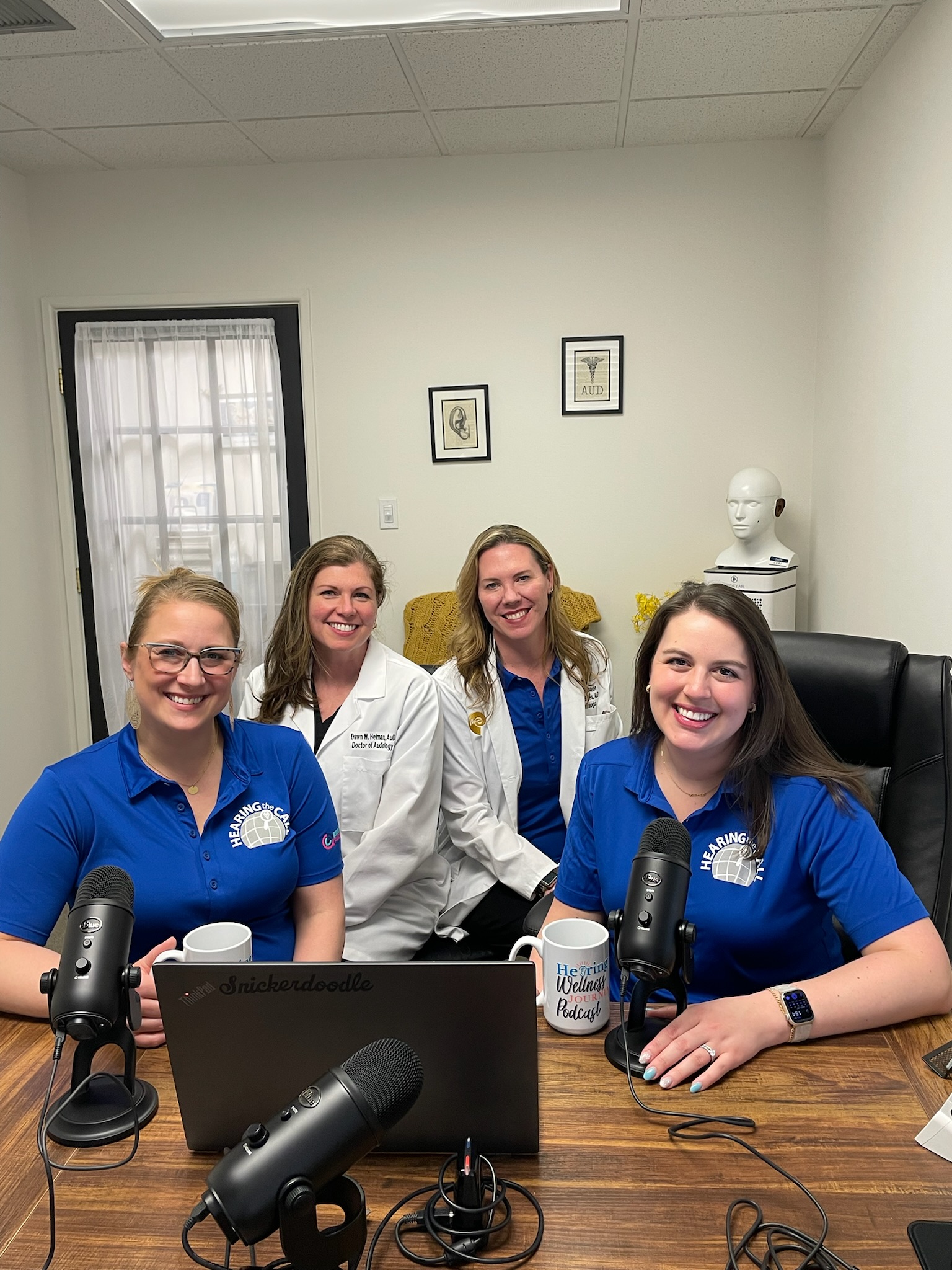
We are blessed with the opportunity to help people every day who have varying degrees of hearing loss and hearing disorders. We moderate this podcast to give you the ability to listen in on others' stories of triumph and perseverance.
Stay Connected
Never miss a podcast update, webinar or the latest news
We do not share any personal information with third parties.
CHECK OUT OUR
Resources
Advanced Audiology Consultants
Our Team of Audiologists are located in Oak Brook, Illinois and are here to help you hear.
EntreAudiology
Practice Locator
Need a recommendation for a qualified audiologist? We have a practice locator to help you find a reputable practice.
Hearing Aide Certification Online Course
Teaching nurses, CNA's, and caregivers how to help assist someone who wears hearing aids.
Hearing Wellness Journey Aural Rehab Course
Teaching you everything you need to be as successful as possible with your hearing aids with a series of videos.
Contact Us
Would you like to be a part of our podcast?
We welcome you to share your story too!